
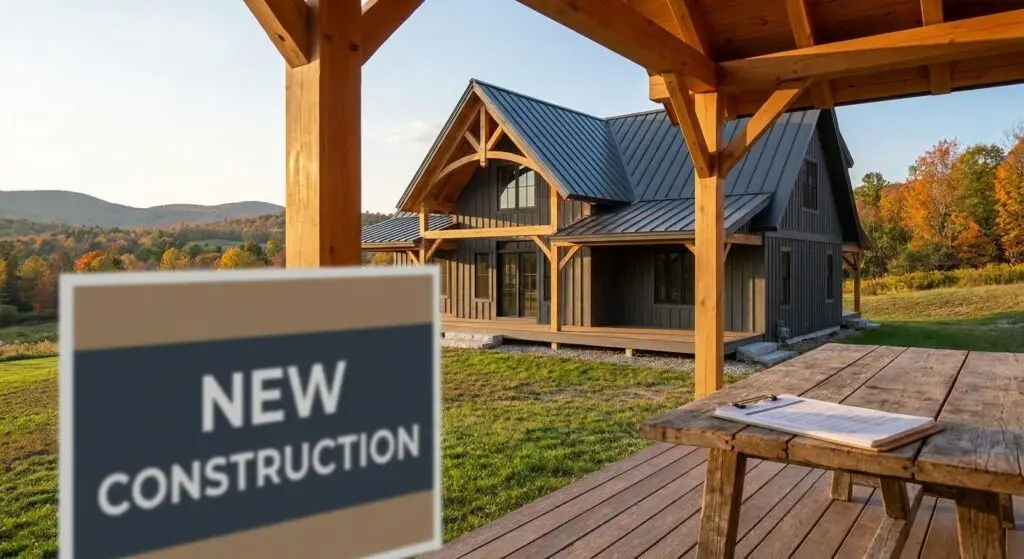
Building a new home in New Hampshire means dealing with a lender, a builder, and eventually an insurance company that has never seen your address before, because until the certificate of occupancy is issued, your address technically doesn't exist as a finished structure.
- New construction home insurance nh requires builder’s risk coverage before a standard HO-3 policy can start, typically at closing.
- Replacement cost endorsements matter more for new builds since 2026 rebuild costs in NH run well above older comparable homes.
- Amherst and Nashua-area new builds often qualify for new-roof and updated-wiring discounts most existing homes can’t claim.
- Bundling auto and home coverage through one NH agency is the fastest way to offset higher new-construction premiums.
Why this matters
A new construction home in New Hampshire isn't insured the same way as a 1998 colonial down the street. Lenders won't fund the loan without proof of coverage, but a standard homeowners policy can't legally attach until the home passes final inspection and gets its certificate of occupancy. That gap is where a lot of buyers get stuck: either uninsured during the final weeks of framing and drywall, or overpaying for a generic policy that doesn't reflect what the home actually cost to build.
Getting home insurance for Amherst NH homeowners set up correctly before closing avoids both problems. The policy needs to match the build cost, not a county tax assessment that hasn't caught up to 2026 construction pricing.
Who this is for
This guide is for anyone under contract on a new build in New Hampshire: spec homes in Amherst and Bedford, custom builds on rural lots near Merrimack, or a modular home going up in the Lakes Region. It's also for buyers converting a builder's risk policy into a permanent homeowners policy at closing, and for anyone whose lender flagged a coverage gap during underwriting.
What to look for in new construction home insurance for NH homeowners
Builder's risk coverage during the construction phase
A standard homeowners policy won't cover a house that's still a frame with no windows. Builder's risk insurance covers the structure, materials on-site, and theft of fixtures during construction, and most NH lenders require proof of it before releasing draw funds. Coverage typically runs from groundbreaking through the certificate of occupancy, then gets replaced by the permanent policy at closing.
Replacement cost, not actual cash value
Actual cash value pays out what the home is worth after depreciation. Replacement cost pays what it costs to rebuild it at 2026 material and labor prices, which in NH have climbed enough that an ACV policy on a brand-new home can leave you $50,000 to $80,000 short after a total loss. New builds should never carry anything but a guaranteed or extended replacement cost endorsement.
Water and ice dam protection
New Hampshire winters put stress on roofs that have never seen a season yet. Ice dam coverage and water backup endorsements matter more for new construction than people expect, since finished basements with sump pumps are standard in most 2026 builds and a single backup event can run $10,000 or more in cleanup.
Discounts tied to new systems
Insurers price risk on wiring age, roofing material, and plumbing type. A new build with copper or PEX plumbing, a 2026-code electrical panel, and a fresh architectural shingle roof qualifies for discounts an older home simply can't get. If your quote doesn't reflect those, the carrier is pricing the home like it's 20 years old.
Flood zone verification, even inland
NH doesn't require flood insurance statewide, but river towns near the Merrimack and Contoocook see periodic flooding that catches new-construction buyers off guard because they assumed a fresh foundation meant no flood risk. Check the FEMA flood zone designation for the parcel before skipping this coverage. It's a separate policy from homeowners insurance either way.
Coverage continuity at closing
The single most common gap: builder's risk expires the day construction wraps, but the permanent homeowners policy doesn't always start the same day closing happens. Confirm the effective date on the new policy lines up exactly with the lender's requirement, not a few days after.
Get your new-build policy set before closing
Call or text for a quick review of your builder’s risk timeline and coverage start date.
Top picks for new construction home coverage in NH
Guaranteed replacement cost endorsement, the non-negotiable pick. This add-on rebuilds the home at current cost even if it exceeds the policy limit, which matters because 2026 lumber and labor pricing moves faster than most policy reviews happen. Verdict: Buy.
Water backup and sump pump failure coverage, the one most people skip. Standard policies exclude backup damage by default, and new builds with finished lower levels see this claim more than older homes without them. Coverage typically adds a modest premium increase for a limit around $10,000 to $25,000. Verdict: Buy.
Ordinance or law coverage, the wildcard. If a partial loss forces a rebuild under 2026 code (different from the code when the home was permitted), this pays the gap between old and new code compliance costs. It's cheap and easy to overlook on a brand-new home because buyers assume current code already applies. Verdict: Consider.
Extended dwelling coverage above 100% of stated value, the safe pick for custom builds. Custom finishes and upgraded materials often price higher than a builder's baseline estimate, so a 10-25% cushion above dwelling value protects against underinsurance. Verdict: Buy for custom builds, Skip for standard spec homes already quoted at full replacement cost.
Scheduled personal property for pre-move-in purchases, the one that's easy to forget. New homeowners often buy furniture, appliances, and electronics before move-in and store them off-site or in a garage bay. Standard personal property limits may not cover items not yet inside the finished home. Verdict: Consider if you're furnishing before the closing date.
What to avoid
- A policy quoted off the builder's original bid price. Change orders and upgrades during a 2026 build routinely push final cost 8-15% above the initial bid, and a policy locked to the old number underinsures the home from day one.
- Skipping builder's risk because it's almost done. Theft of appliances and fixtures spikes in the final weeks before closing, which is exactly when buyers assume the risk has passed.
- Bundling home coverage with an out-of-state carrier unfamiliar with NH code requirements. Local underwriting matters for ice dam claims and snow load specifics that a national call center adjuster won't recognize as routine.
Verdict comparison table
| Coverage feature | Why it matters for new construction | Verdict |
|---|---|---|
| Guaranteed replacement cost | Covers 2026 rebuild pricing above policy limit | Buy |
| Water backup / sump failure | Common in finished basements on new builds | Buy |
| Ordinance or law coverage | Bridges code-change rebuild gap | Consider |
| Extended dwelling limit | Covers custom upgrades over builder bid | Buy for custom, Skip for spec |
| Scheduled personal property | Covers pre-move-in furniture and appliances | Consider |
If the home sits on acreage or doubles as a second property, the coverage math shifts again. Vacation home insurance for Amherst NH properties handles occupancy gaps differently than a primary residence policy. And once the home is insured, bundling in auto insurance for Amherst NH drivers is usually the fastest multi-policy discount available, especially if you're also confirming you meet New Hampshire's minimum auto insurance requirements for a newly registered household vehicle.
FAQ
What’s the best home insurance for new construction homes in NH?
The best option pairs builder’s risk coverage during the build with a guaranteed replacement cost homeowners policy at closing. A local NH agency can time the switch so there’s no coverage gap between the two.
Is builder’s risk insurance required in New Hampshire?
Most lenders require it before releasing construction draw funds, even though the state doesn’t mandate it directly. It typically runs from groundbreaking through the certificate of occupancy.
How much does new construction home insurance cost in NH?
Pricing depends on square footage, materials, and location, but new builds often qualify for discounts on wiring, roofing, and plumbing that offset the higher rebuild cost used to calculate premiums in 2026.
Does a new home need flood insurance in New Hampshire?
Only if the parcel sits in a FEMA-designated flood zone, which happens more often near the Merrimack and Contoocook Rivers than most new buyers expect. It’s a separate policy from standard homeowners coverage.
Can I switch from builder’s risk to a homeowners policy on the same day as closing?
Yes, and it should be confirmed in writing before closing. A mismatched effective date is the most common coverage gap new construction buyers run into.
Do new construction homes get insurance discounts?
Yes. New wiring, updated plumbing, and a 2026-code roof typically qualify for discounts that older comparable homes in the same town don’t get.
What’s the difference between actual cash value and replacement cost for a new home?
Actual cash value pays depreciated worth after a loss, while replacement cost pays what it costs to rebuild at current prices. New builds should always carry replacement cost, ideally the guaranteed version.
One last thing
The detail that catches the most new-construction buyers off guard isn't the premium, it's the effective date mismatch between builder's risk expiring and the homeowners policy starting. Confirm that date in writing before closing, not the week of.
Related guides
- Home insurance for Amherst NH homeowners
- Vacation home insurance for Amherst NH properties
- Auto insurance for Amherst NH drivers
- How to meet New Hampshire's minimum auto insurance requirements