
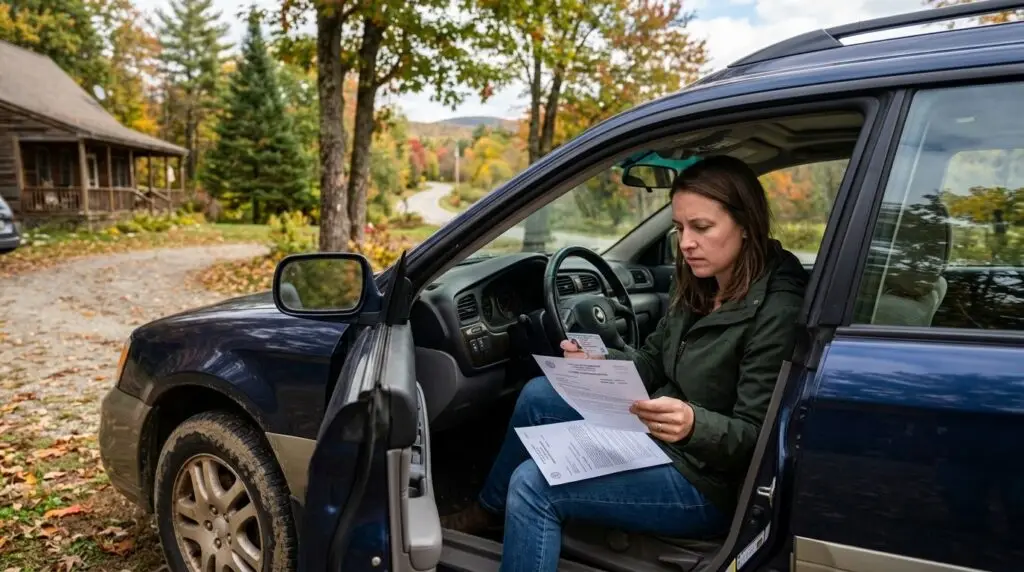
Auto insurance for drivers with a suspended license in NH is coverage built around one problem: reinstating your license usually requires proof of financial responsibility, and most standard carriers won't write that proof for you. New Hampshire drivers coming off a suspension need a policy that satisfies the state's SR-22 filing requirement, not just a cheap rate. The stakes are different from a routine renewal — miss a payment or let the policy lapse, and the suspension can restart from zero.
- Auto insurance suspended license NH cases almost always require an SR-22 filing before the DMV reinstates driving privileges.
- Themello Agency places suspended-license drivers with high-risk carriers that file SR-22 forms directly with New Hampshire’s DMV.
- Non-owner policies work for suspended drivers who don’t own a car but still need proof of coverage to reinstate.
- A single lapse in an SR-22 policy resets the suspension clock in 2026 — payment timing matters more than price.
- Rates drop once the SR-22 period ends, typically three years from the reinstatement date in New Hampshire.
Why this matters for suspended-license drivers in NH
New Hampshire is the only state that doesn't require standard drivers to carry auto insurance if they can post a bond or otherwise prove financial responsibility. That exemption disappears the moment a license gets suspended for a DUI, an at-fault accident without insurance, or too many points. At that stage, the DMV requires an SR-22 on file for a set period, and the policy behind it has to stay active without a gap.
Drivers searching for auto insurance suspended license NH options aren't shopping for the lowest premium first — they're shopping for a carrier that (a) will write high-risk business and (b) files SR-22 forms correctly and on time. A policy that looks cheap but comes from a carrier unfamiliar with New Hampshire's SR-22 process can delay reinstatement by weeks. SR-22 insurance for New Hampshire drivers covers the filing mechanics in more detail if you're at the start of this process.
Confirm why your license was suspended
The reason for suspension determines what kind of proof New Hampshire's DMV wants and for how long.
- Check your suspension notice for the specific statute cited, not just "suspended"
- Note whether it's DUI-related, accident-related, or points-based — filing periods differ
- Ask the DMV directly how long the SR-22 requirement runs for your case
- Confirm whether reinstatement also requires a fee payment separate from insurance
Get proof of financial responsibility in place before you reapply
New Hampshire won't process reinstatement without an SR-22 already filed by an insurer.
- Request quotes specifically for high-risk auto insurance with SR-22 filing, not standard policies
- Ask each carrier how they file — electronically is faster than paper in most 2026 cases
- Confirm the filing goes to the New Hampshire DMV, not just your state file
- Keep a copy of the filing confirmation for your own records
Decide whether you need a car-owner or non-owner policy
Not every suspended driver owns a vehicle, and that changes which policy fits.
- If you own a car that's sitting unused, insure it under a standard high-risk policy
- If you don't own a car but drive occasionally (borrowed or rented), a non-owner policy satisfies the SR-22 requirement without insuring a specific vehicle
- Non-owner policies typically carry lower limits than owned-vehicle policies, so check what New Hampshire's minimums require
- Non-owner car insurance for New Hampshire drivers breaks down when this option makes sense
Shop carriers that actually write high-risk business
Many standard insurers decline SR-22 cases outright or price them so high they're not competitive.
- Ask directly: "Do you write SR-22 policies in New Hampshire?" before requesting a quote
- Compare at least three high-risk quotes — spreads between carriers on suspended-license cases are wide
- Ask whether the carrier has a track record filing SR-22s with New Hampshire's DMV specifically
- An independent agency that shops multiple high-risk carriers at once saves the back-and-forth of calling each one
Keep the policy active without a single lapse
The SR-22 requirement isn't just about having a policy — it's about that policy staying continuously active.
- Set up autopay so a missed payment doesn't trigger a cancellation notice to the DMV
- Know that carriers are required to report lapses on SR-22 policies, unlike standard policies
- Budget for the full SR-22 period, generally three years in New Hampshire, before shopping for a cheaper standard policy
- If you're already dealing with a related violation, car insurance after a DUI in New Hampshire walks through how that timeline overlaps
Meet New Hampshire's minimum coverage requirements exactly
SR-22 filings confirm you're carrying at least the state's required liability limits — get the numbers wrong and the filing gets rejected.
- Confirm current liability minimums with your agent before binding a policy
- Don't assume your prior policy's limits still meet the requirement after a suspension
- Ask whether your specific violation requires higher-than-minimum limits
- How to meet New Hampshire's minimum auto insurance requirements lists the current figures
Plan for the rate to drop once the filing period ends
SR-22 pricing is temporary even though it feels permanent while you're in it.
- Mark your calendar for the exact date your SR-22 requirement expires
- Shop again once it ends — high-risk carriers don't always offer their best rate to loyal customers
- Ask your agent to flag the expiration date so you don't keep paying high-risk pricing after you no longer need to
- Best high-risk auto insurance for New Hampshire drivers covers what to expect once you're out of the SR-22 window
Get an SR-22 quote reviewed today
Call, text, or start your quote online — no pressure, just a plain-language answer.
Comparison: coverage options for suspended-license drivers in NH
| Option | Best for | Key limitation |
|---|---|---|
| High-risk owned-vehicle policy | Drivers reinstating a license and keeping their car | Premiums run well above standard rates during the SR-22 period |
| Non-owner SR-22 policy | Drivers with no car who occasionally borrow or rent one | Coverage doesn't extend to a specific vehicle you own |
| Standard carrier switch mid-filing | Drivers assuming any insurer will do | Many standard carriers decline to file SR-22s at all — a wasted call |
| Staying with your prior insurer | Drivers who had continuous coverage before suspension | Some insurers drop SR-22 clients rather than file for them |
Verdict: a high-risk carrier that files SR-22 electronically with New Hampshire's DMV is the only reliable path back to a valid license in 2026 — shopping standard carriers first just burns time.
Common mistakes suspended-license drivers make in NH
- Assuming any insurer will file an SR-22 — many decline outright, and finding that out after applying wastes weeks during a suspension
- Letting the policy lapse to save money — a single missed payment gets reported to the DMV and can restart the suspension clock
- Insuring a car that's not actually being driven while ignoring that a non-owner policy might fit their situation better
- Shopping only once — high-risk premiums vary widely by carrier, and a single quote rarely reflects the market
- Forgetting the SR-22 expiration date and continuing to pay high-risk rates long after the requirement ends
FAQ
Do I need SR-22 insurance to get my license back in New Hampshire?
Most suspensions from a DUI, an at-fault accident without insurance, or excessive points require an SR-22 filing before New Hampshire’s DMV reinstates the license. Check your specific suspension notice, since the requirement and its length depend on the violation.
How long does an SR-22 requirement last in New Hampshire?
The typical SR-22 period in New Hampshire runs around three years, though the exact length depends on the violation that triggered the suspension. The filing needs to stay continuous for that entire window without a lapse.
Can I get auto insurance with a suspended license in NH if I don’t own a car?
Yes, a non-owner SR-22 policy provides the proof of financial responsibility New Hampshire requires without insuring a specific vehicle. It works for drivers who occasionally borrow or rent a car during the filing period.
Will my premium go back down after the SR-22 period ends?
Rates typically drop once the SR-22 filing requirement ends and the violation ages off your driving record. Shopping again at that point, rather than staying with the same high-risk carrier, usually finds a better rate.
What happens if my SR-22 policy lapses in New Hampshire?
Carriers are required to report SR-22 lapses directly to New Hampshire’s DMV, and a lapse can restart the suspension period. Autopay removes most of the risk of this happening by accident.
Does every high-risk carrier file SR-22 forms in New Hampshire?
No — some standard and even some high-risk insurers decline to file SR-22 paperwork at all. Confirm directly with each carrier before requesting a quote to avoid wasting time during a suspension.
Is non-owner insurance cheaper than a standard high-risk policy?
Non-owner policies generally carry lower limits and narrower coverage than owned-vehicle high-risk policies, which usually makes them less expensive. They only work if you don’t own a vehicle that needs its own coverage.
One last thing
The detail most suspended-license drivers miss in New Hampshire: the SR-22 filing requirement is tied to the insurer, not the driver, so switching carriers mid-period means the new insurer has to re-file before the DMV recognizes continuous coverage — plan the switch for right after your period ends, not during it.
Related guides
- SR-22 insurance for New Hampshire drivers
- Car insurance after a DUI in New Hampshire
- Non-owner car insurance for New Hampshire drivers
- Best high-risk auto insurance for New Hampshire drivers
- How to meet New Hampshire's minimum auto insurance requirements