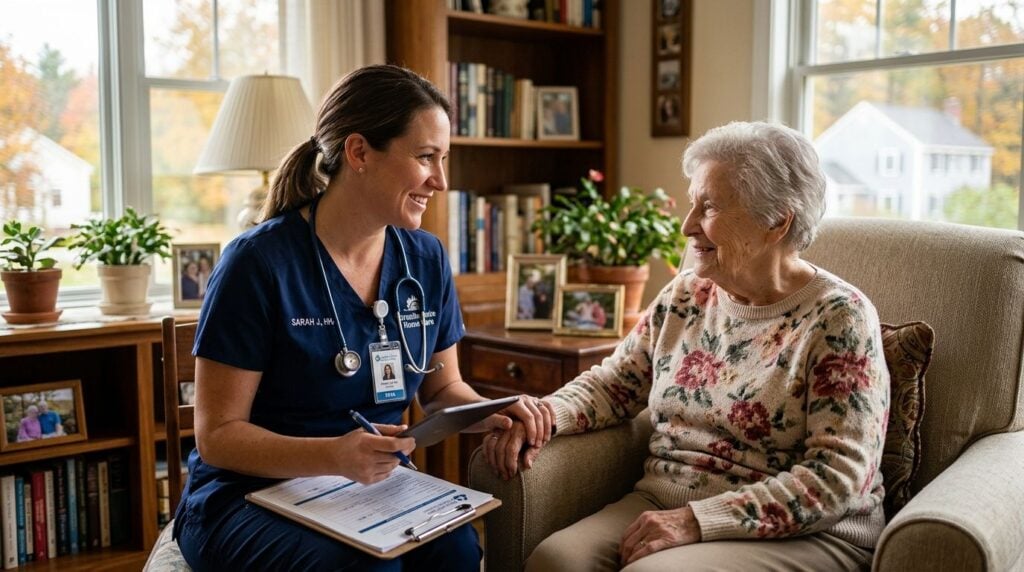
New Hampshire home health care agency insurance is a package of business coverages built around caregivers who work in clients' homes rather than a fixed office, with the goal of protecting the agency from injury claims, driving accidents, and care-related liability. Home health agencies carry a different risk mix than a retail shop or a contractor — the exposure follows the aide into someone else's living room, kitchen, and driveway, often several times a day.
- Business insurance for New Hampshire home health care agencies starts with workers’ compensation and general liability, then adds professional liability and commercial auto.
- New Hampshire law requires workers’ comp for any business with one or more employees, including part-time and per diem aides.
- Agencies that skip commercial auto coverage on caregiver vehicles often find a personal auto policy denies a work-related claim.
- A business owners policy bundles general liability and property coverage into one renewal for smaller agencies.
- Professional liability covers care-delivery mistakes that general liability will not touch.
Why this matters for home health care agencies
An aide who slips on a client's icy front step, misses a medication dose, or gets into a fender-bender driving between visits creates three completely different claims — and three different policies respond to them. General liability, professional liability, and commercial auto do not overlap the way agency owners assume they do.
New Hampshire's home health sector runs on part-time and per diem staffing more than most industries, which changes the workers' compensation math. Under New Hampshire law (RSA 281-A), workers' comp is required for any employer with one or more employees — full-time, part-time, or per diem. A roster of ten aides working 15 hours a week each still triggers full coverage requirements, not a scaled-down version.
Winter driving adds a second layer specific to this state. Aides covering rural routes in Coos or Grafton counties face road conditions from November through April that raise accident frequency, which is exactly when auto claims hit agencies with no dedicated business auto coverage.
Confirm your licensing and coverage baseline
Before comparing quotes, know which coverages are non-negotiable under New Hampshire rules and which are optional but recommended.
- Verify your NH Bureau of Home Health and Hospice Care Services license status is current
- Check whether your Medicaid or managed-care contracts specify minimum liability limits
- Confirm every W-2 employee, including per diem staff, is counted for workers' comp purposes
- Document which aides use personal vehicles for client visits versus agency-owned vehicles
- Ask your current carrier whether coverage extends to in-home services or only an office location
Carry workers' compensation for every caregiver on payroll
Workers' comp is the coverage New Hampshire regulators check first, and the one agencies most often underestimate because per diem staff feel like contractors even when they are classified as employees.
- Cover full-time, part-time, and per diem aides — NH law does not exempt part-time workers
- Classify job duties correctly; a home health aide and an office scheduler carry different rate classes
- Report payroll accurately at audit time to avoid a surprise premium adjustment
- Include injuries sustained at a client's home, not just on agency property
- Confirm the policy responds to repetitive-motion injuries common in patient transfers
General liability insurance for New Hampshire small businesses is the next layer most agencies need alongside workers' comp, since the two rarely come bundled by default.
Add general liability for client-site incidents
General liability covers third-party bodily injury and property damage — a family member who trips over an aide's bag, a spilled tray that ruins flooring, a broken lamp during a transfer.
- Confirm the policy covers incidents at client residences, not just your office
- Check per-occurrence and aggregate limits against your active caseload size
- Add products-completed operations if the agency supplies any equipment or supplies
- Review coverage for damage to a client's property during personal care tasks
- Ask whether defense costs sit inside or outside the liability limit
Cover the vehicles your aides drive between visits
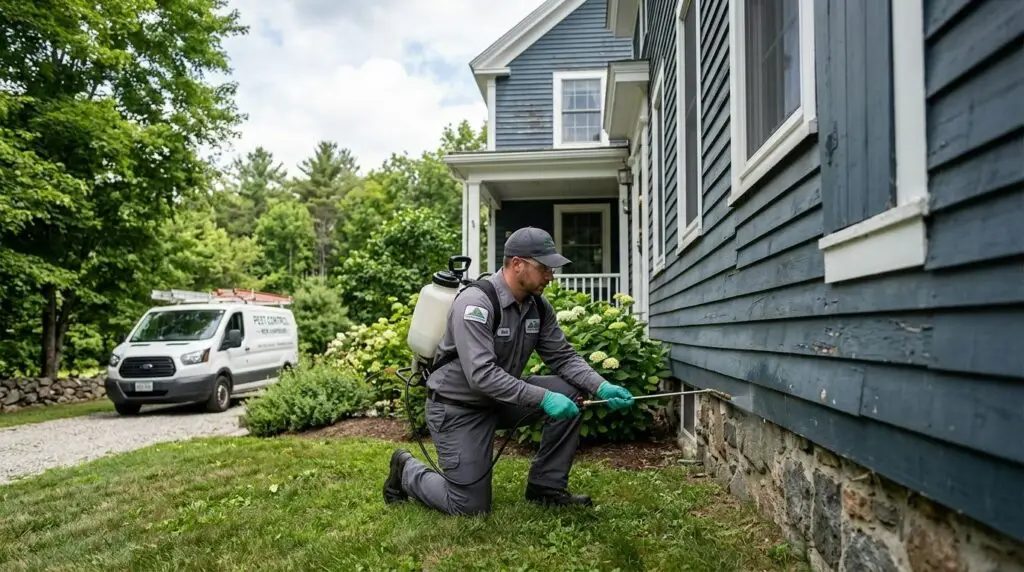
Most agencies discover this gap after a claim, not before it. A personal auto policy typically excludes accidents that happen while driving for business, even when the aide owns the car and only gets mileage reimbursement.
- Confirm whether aides drive personal vehicles, agency vehicles, or a mix
- Add hired and non-owned auto coverage when staff use personal cars for visits
- Carry commercial auto on any vehicle titled to the agency
- Set liability limits above New Hampshire's state minimums given the volume of short daily trips
- Match your mileage reimbursement policy language to your insurance application — inconsistencies drive claim denials
Commercial auto insurance for New Hampshire business fleets covers agency-titled vehicles directly, and a hired and non-owned endorsement extends protection to staff-owned cars used for work.
Add professional liability for care-delivery errors
General liability will not respond to a missed medication, a stale care plan, or a documentation error behind a client complaint. That is professional liability — errors and omissions — territory.
- Cover claims alleging improper care, missed visits, or documentation failures
- Confirm the policy addresses privacy claims from mishandled client health records
- Check whether licensed nurses and unlicensed aides are both covered under one policy
- Read claims-made versus occurrence language before switching carriers mid-year
- Ask whether prior-acts coverage applies when you move insurers
Screen employment practices exposure before it becomes a claim
Home health agencies hire fast to keep up with caseload, and speed creates employment practices exposure — wrongful termination, discrimination, and harassment claims from staff, not clients.
- Document background check procedures for every hire, given the in-home access aides receive
- Keep disciplinary and termination records consistent across all staff
- Train supervisors on documentation standards before a claim, not after
- Review contractor classifications against IRS and NH Department of Labor tests
- Confirm the policy covers wage-and-hour disputes common in per diem staffing
Employment practices liability insurance in New Hampshire is the policy that handles those staff-side claims.
Bundle coverage where it genuinely saves work
Smaller agencies often qualify for a business owners policy, which combines general liability and commercial property into one renewal instead of two policies with two deadlines.
- Ask whether your revenue and employee count qualify for BOP eligibility
- Compare BOP limits against buying general liability and property separately
- Confirm professional liability and workers' comp are still purchased separately — a BOP includes neither
- Check renewal terms; some lock multi-year rates, others renew annually
- Review whether business income coverage is included if a covered event halts operations
Review coverage annually as caseload and staff count change
An agency that added five aides and a second service county since last renewal is running on outdated limits, and carriers do not catch that on their own.
- Update payroll figures before your workers' comp audit, not during it
- Raise liability limits if caseload or service area grew in 2026
- Re-check vehicle counts and driver rosters every renewal cycle
- Confirm new service lines, such as private-duty nursing, fall inside existing policy language
- Revisit umbrella limits if revenue crossed a new threshold this year
Get your agency coverage reviewed
Call, text, or start a quote for a quick review of your 2026 coverage.
Comparing the core coverages
| Coverage | Best for | Key limitation |
|---|---|---|
| Workers' compensation | Any agency with paid staff, full-time or per diem | Does not cover client injuries or auto accidents |
| General liability | Client-site injury or property damage claims | Excludes professional care errors |
| Commercial auto and hired/non-owned | Aides driving between client visits | Personal auto policies typically exclude business use |
| Professional liability (E&O) | Care errors, documentation mistakes, privacy claims | Does not cover slip-and-fall or auto claims |
| Business owners policy | Smaller agencies with an office and limited payroll | Includes neither workers' comp nor professional liability |
| Umbrella liability | Agencies whose caseload outgrew their base limits | Sits above other policies; needs qualifying underlying limits |
A New Hampshire home health care agency running caregivers between client homes needs workers' compensation, general liability, professional liability, and commercial auto working together — no single policy covers all four exposures.
“If your aides drive their own cars to visits, your agency’s biggest uninsured claim is sitting in the driveway, not in the client’s home.”
Common mistakes New Hampshire home health agencies make
- Treating per diem staff as exempt from workers' comp. New Hampshire counts them the same as full-time employees under RSA 281-A.
- Assuming a caregiver's personal auto policy covers work driving. Most personal policies exclude business-use accidents outright.
- Skipping professional liability because "we are not a medical practice." Care-delivery errors are the claim type most specific to home health.
- Under-reporting payroll at audit time. That produces a premium true-up bill mid-year, after the money is already spent.
- Renewing without updating staff and vehicle counts. A policy written for 8 aides does not protect an agency that reached 20 in 2026.
FAQ
What insurance does a home health care agency need in New Hampshire?
A New Hampshire home health care agency needs workers’ compensation, general liability, professional liability, and commercial auto or hired and non-owned auto coverage. Agencies with company vehicles or larger payrolls often add umbrella liability on top.
Is workers’ compensation required for home health aides in New Hampshire?
Yes. New Hampshire law requires workers’ compensation for any employer with one or more employees, including part-time and per diem home health aides.
Does general liability cover a caregiver’s mistake at a client’s home?
No. General liability covers third-party injury and property damage, not care-delivery errors. Professional liability responds to missed medications, documentation mistakes, and improper care allegations.
Do home health aides need commercial auto insurance in New Hampshire?
Aides driving personal vehicles for client visits usually need a hired and non-owned auto endorsement on the agency policy, because personal auto insurance typically excludes business-use accidents. Agency-titled vehicles need standard commercial auto coverage.
Can a home health agency use a business owners policy instead of separate policies?
A business owners policy works for smaller agencies and bundles general liability with commercial property in one renewal. It does not include workers’ compensation or professional liability, so both are purchased separately.
How much does business insurance cost for a New Hampshire home health agency?
Cost depends on payroll size, vehicle count, service area, and claims history, so it varies agency to agency. A coverage review with a licensed New Hampshire agent produces an accurate figure faster than a generic online form.
What happens if an agency operates without workers’ compensation in New Hampshire?
Operating without required workers’ compensation exposes the agency to state penalties and leaves it paying employee injury costs directly. Licensed home health agencies also put their state license status at risk.
Is professional liability the same as errors and omissions insurance?
Yes, professional liability and errors and omissions describe the same coverage for mistakes in professional services. For home health agencies it covers care-delivery and documentation claims that general liability excludes.
One last thing
The claim that catches New Hampshire home health agencies off guard is rarely a client injury. It is a caregiver's own auto accident on the way to a visit, filed against a personal policy that denies it because the trip was for work. Checking hired and non-owned auto coverage before your 2026 renewal closes that gap in a single conversation.
Related guides
- Workers compensation insurance for New Hampshire small businesses
- How to choose a business owners policy in New Hampshire