

Trupanion is the best pet insurance company in New Hampshire for 2026 if your dog or cat has a chronic or hereditary condition, Healthy Paws wins on lifetime unlimited payouts, and Pumpkin is the best budget pick for owners who want preventive care bundled in without add-ons.
- Trupanion is the best pet insurance company in New Hampshire for 2026 for chronic and hereditary conditions.
- Healthy Paws pays no annual or lifetime dollar cap once a pet is enrolled.
- Pumpkin bundles preventive care into every plan instead of selling it as an add-on.
- Embrace fits multi-pet households with a discount for a second or third animal.
- Every company on this list is licensed by the New Hampshire Insurance Department to sell here.
Why this matters
Pet insurance is health coverage for an animal, not a homeowner's policy add-on, but the two intersect the moment a dog bites a mail carrier or knocks over a guest. New Hampshire homeowners already carry dog liability coverage inside a standard homeowners or renters policy, and that protection has nothing to do with vet bills. Pet insurance picks up where liability coverage stops: it reimburses you when your own animal needs surgery, chemotherapy, or a broken-leg cast, not when your animal hurts someone else.
New Hampshire does not run a state pet insurance exchange. Every company on this list sells accident-and-illness or accident-only policies directly to residents, and each is licensed by the New Hampshire Insurance Department. Waiting periods, payout structure, and pre-existing condition rules vary enough between insurers that grabbing the first ad you see is a mistake worth avoiding in 2026.
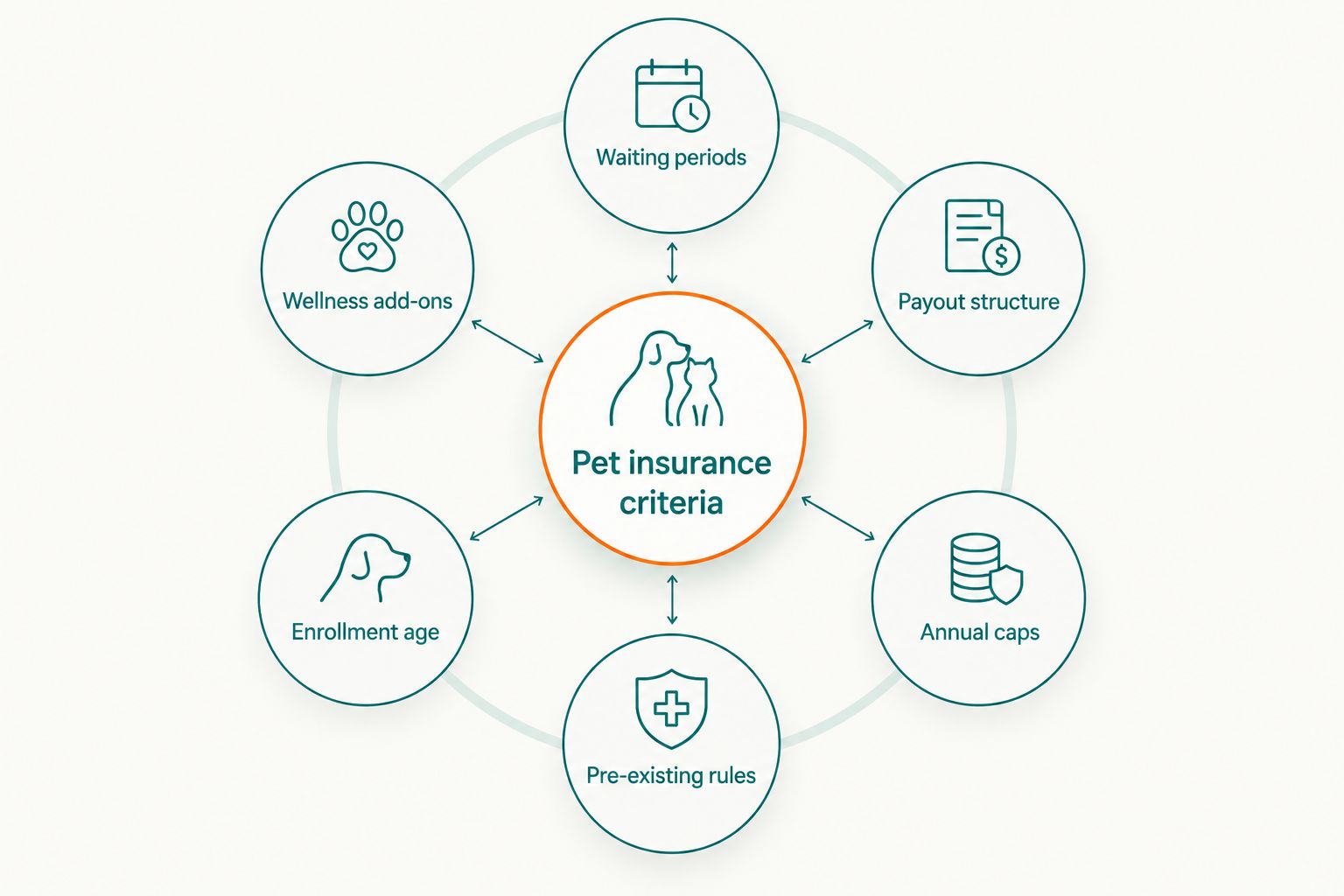
What makes the best pet insurance company in New Hampshire
- Waiting periods — how many days pass before illness or accident coverage actually starts
- Payout structure — a flat percentage reimbursement versus a fixed benefit schedule
- Annual and lifetime caps — whether a per-incident, per-year, or lifetime dollar limit applies
- Pre-existing condition rules — whether a condition diagnosed before enrollment is excluded permanently
- Enrollment age limits — the oldest age a pet can join a brand-new policy
- Wellness add-ons — whether routine care, vaccines, and dental cleanings are sold separately
Pet insurance companies in New Hampshire at a glance
| Company | Best for | Standout feature | Key limitation |
|---|---|---|---|
| Trupanion | Chronic or hereditary conditions | No per-condition payout cap | No wellness or routine-care add-on |
| Healthy Paws | Lifetime unlimited coverage | No annual or lifetime dollar cap | Stops enrolling pets over age 14 |
| Embrace | Multi-pet households | Multi-pet discount plus a shrinking deductible | Routine care sold as a separate rider |
| ASPCA Pet Health Insurance | Flexible coverage tiers | Accident-only up through full comprehensive plans | Lower tiers exclude illness entirely |
| Fetch | Extra perks beyond vet bills | Covers lost-pet advertising and boarding costs | Longer waiting period on orthopedic claims |
| Pumpkin | Preventive care bundled in | Preventive essentials included on every plan | Preventive package isn't optional or removable |
1. Trupanion: best pet insurance for chronic or hereditary conditions
Trupanion covers hereditary and congenital conditions the same way it covers accidents, without a separate cap chipping away at the payout over the life of the policy. Its software integration lets a growing number of New Hampshire vet clinics get paid directly at checkout instead of making the owner front the bill and wait for reimbursement.
Trupanion pros:
- No per-condition, per-year, or lifetime payout cap
- Direct-to-vet payment available at participating clinics
- Covers hereditary and congenital conditions from day one after the waiting period
Trupanion cons:
- No wellness or preventive-care add-on at all
- Premiums increase as the pet ages, with no price protection built in
Best for: dog breeds prone to hip dysplasia, cats prone to kidney disease, or any owner who wants no ceiling on a single condition. Verdict: Buy if a chronic condition is the main worry for 2026.
2. Healthy Paws: best pet insurance for lifetime unlimited coverage
Healthy Paws pairs a straightforward accident-and-illness plan with no annual or lifetime dollar cap, which matters most for a pet that develops cancer or another expensive, ongoing condition. The tradeoff is a firm enrollment cutoff: pets over 14 can't join a new policy.
Healthy Paws pros:
- No annual or lifetime payout cap on any plan
- Fast, mobile-friendly claims submission
- Simple two-tier deductible and reimbursement structure
Healthy Paws cons:
- Does not reimburse exam fees
- Closed to new enrollment once a pet turns 14
Best for: younger dogs and cats where lifetime cost protection matters more than exam-fee reimbursement. Verdict: Buy while the pet is still under the enrollment cutoff.
3. Embrace: best pet insurance for multi-pet households
Embrace builds in a discount for insuring a second or third pet and rewards claim-free years with a shrinking deductible, which lowers the cost of staying insured over time. Routine care isn't included automatically — it's a separate wellness rider you add on top.
Embrace pros:
- Multi-pet discount applies automatically at enrollment
- Deductible shrinks each year without a filed claim
- Covers exam fees related to a covered illness or accident
Embrace cons:
- Wellness and routine care cost extra as a rider
- Orthopedic conditions carry a longer waiting period than accidents
Best for: households with two or more dogs or cats who want the discount to offset the extra premiums. Verdict: Buy for multi-pet families going into 2026.
4. ASPCA Pet Health Insurance: best pet insurance for flexible coverage tiers
ASPCA Pet Health Insurance sells everything from an accident-only plan up to a comprehensive accident-and-illness plan, which lets an owner start cheap and upgrade later as the pet ages. It also insures more species than most competitors, including some birds and other exotic pets.
ASPCA pros:
- Multiple coverage tiers to match budget and pet age
- Covers exotic pets beyond dogs and cats
- Preventive-care add-on available separately
ASPCA cons:
- Entry-level accident-only tier excludes illness completely
- Reimbursement percentage varies by tier and can confuse new owners
Best for: owners who want to start with a lean plan and scale coverage up later. Verdict: Hold — compare the mid-tier plan against Embrace before committing.
5. Fetch: best pet insurance for extra perks beyond vet bills
Fetch covers the usual accident-and-illness claims but adds perks most competitors skip, like reimbursement for lost-pet advertising and boarding costs if the owner is hospitalized. Orthopedic conditions carry a longer waiting period than straightforward accidents, which matters for breeds prone to joint issues.
Fetch pros:
- Covers lost-pet advertising and reward costs
- Reimburses boarding fees during an owner's hospital stay
- Behavioral therapy coverage available on most plans
Fetch cons:
- Longer waiting period on orthopedic conditions than on accidents
- Premiums climb faster for senior pets than some competitors
Best for: owners who value the extra perks as much as the core medical coverage. Verdict: Hold — read the orthopedic waiting-period terms closely before enrolling a large-breed puppy.
6. Pumpkin: best pet insurance for preventive care bundled in
Pumpkin builds a preventive essentials package into every plan instead of selling it as an optional add-on, so vaccines and wellness exams are already accounted for in the premium. The tradeoff is that the package can't be removed to lower the monthly cost.
Pumpkin pros:
- Preventive essentials included automatically, no add-on needed
- Straightforward accident-and-illness structure with one reimbursement percentage
- Simple online enrollment and claims process
Pumpkin cons:
- Can't opt out of the preventive package to lower the premium
- Fewer customization options than Embrace or ASPCA
Best for: owners who want one predictable plan without comparing add-ons. Verdict: Buy for a no-fuss option in 2026.
If you run a pet business, this guide isn't for you
This list covers personal pet insurance for a family dog or cat. If you groom, board, or treat animals for a living, you need commercial coverage instead — liability, bailee coverage, and equipment protection, not a medical reimbursement plan for one animal. Business insurance for pet groomers and boarding and veterinary clinic insurance cover a completely different set of risks than the policies above.
“Pick the waiting period first; the premium is meaningless if a claim gets denied before coverage even starts.”
How we ranked these pet insurance companies
Each company was measured against the six criteria above: waiting periods, payout structure, annual and lifetime caps, pre-existing condition rules, enrollment age limits, and whether wellness care is bundled or sold separately. No two companies on this list share the same best for label, so the ranking works as a decision tree rather than a leaderboard — match your pet's age and risk profile to the right row in the table.
Which pet insurance company should you choose in 2026?
Trupanion is the default pick for anyone whose pet already has, or is prone to, a chronic or hereditary condition — no payout cap beats a lower monthly premium once a real claim shows up. Healthy Paws is the second look for a younger pet where lifetime unlimited coverage matters more than exam-fee reimbursement. Pumpkin is the simplest choice for an owner who wants one predictable plan without comparing riders. Whichever you pick, enroll before symptoms appear — every insurer on this list excludes pre-existing conditions once a vet has documented them.
FAQ
What is the best pet insurance company in New Hampshire for 2026?
Trupanion is the best overall pick for 2026 because it has no per-condition payout cap, which matters most for chronic or hereditary conditions. Healthy Paws and Pumpkin are strong alternatives depending on your pet’s age and budget.
Is pet insurance required in New Hampshire?
No, pet insurance is not required by New Hampshire law. It’s optional coverage you buy directly from a licensed insurer, unlike auto liability insurance which the state mandates for drivers.
Does homeowners insurance cover vet bills for my own injured pet?
No, homeowners and renters insurance covers liability if your pet injures someone else, not medical bills for your own animal. Vet bills for your pet require a separate pet insurance policy.
How much does pet insurance cost in New Hampshire?
Cost depends on the pet’s age, breed, and the plan’s deductible and reimbursement percentage rather than a fixed statewide rate. Check current pricing directly with each insurer since it varies by pet.
Is Healthy Paws or Trupanion better for an older pet?
Trupanion has no upper age cutoff for new enrollment, while Healthy Paws stops accepting new enrollees once a pet turns 14. For a senior pet not yet insured, Trupanion is the more workable option.
Do pet insurance companies cover pre-existing conditions?
No, virtually every pet insurer excludes conditions diagnosed before enrollment permanently. Many insurers will reconsider a curable condition after roughly 12 months without symptoms, but the exclusion window varies by company.
What’s the waiting period for pet insurance?
Most insurers use around a 14-day waiting period for illness coverage and a shorter window for accidents, though the exact number varies by company. New Hampshire does not set a state-mandated waiting period.
Can I use any vet with pet insurance in New Hampshire?
Yes, nearly every major pet insurer reimburses claims rather than restricting you to a network, so any licensed vet or emergency clinic works. Trupanion is the exception that can pay some clinics directly through its software.
Check your home policy’s pet liability coverage
A quick review confirms your homeowners policy still covers your dog or cat correctly.
One last thing
If your dog or cat is already a senior, the enrollment age cutoff matters more than the monthly premium. Healthy Paws stops taking new enrollees after age 14, while Trupanion and several others will insure a pet at any age — just at a higher price point once they're older. Enroll before the cutoff, not after a diagnosis forces the decision.
Related guides
- Best home insurance companies for New Hampshire homeowners
- How to determine home insurance coverage needs in New Hampshire