
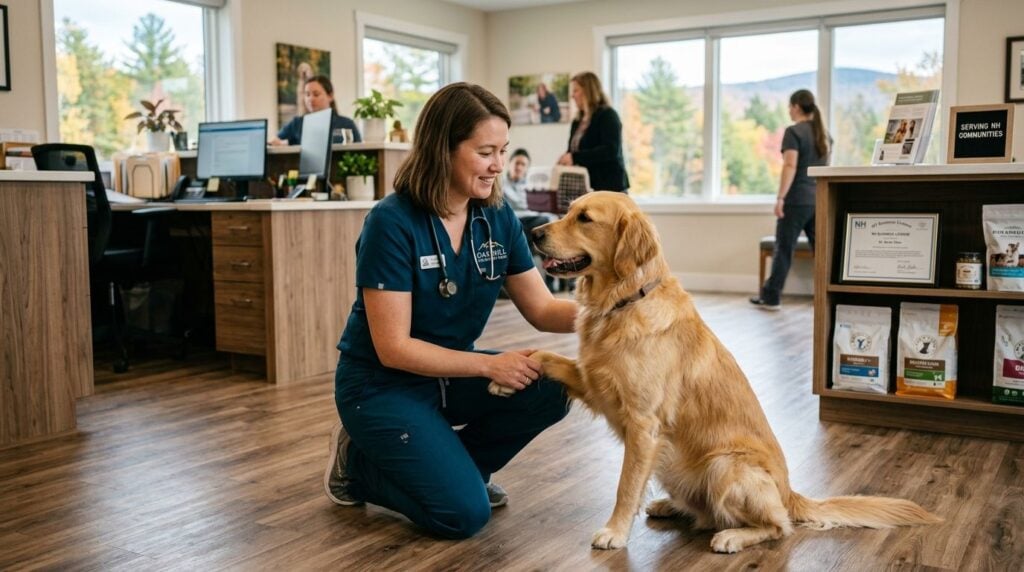
Veterinary clinic insurance in New Hampshire pairs a business owners policy with veterinary professional liability and workers' compensation, built around live animals, controlled substances, and licensed medical work a standard office policy never anticipates. A dog bite in the lobby, a bad reaction to anesthesia, and a break-in at the pharmacy cabinet are three different claims types, and a generic small-business policy usually only answers one of them.
- Veterinary clinic insurance in New Hampshire needs a business owners policy plus veterinary professional liability — general liability alone won’t cover a botched-surgery claim.
- Workers’ compensation is mandatory in New Hampshire for any clinic with paid staff, including part-time vet techs.
- Boarding, grooming, or overnight care adds care-custody-control exposure most standard BOPs exclude.
- Clinics storing controlled substances need coverage built for DEA-regulated inventory, not generic business property limits.
Why business insurance for veterinary clinics in New Hampshire matters
NH clinics handle live animals, sharp instruments, anesthesia, and client-owned pets worth real money to their owners — exposure a retail shop or office never sees. A single fall in the parking lot, a bad anesthesia reaction, or a pharmacy break-in can trigger three separate claims: general liability, professional liability, and property. Practices carrying only general liability insurance built for a generic small office end up underinsured the day a client sues over a missed diagnosis.
New Hampshire's mix of small-town mixed-animal practices and multi-doctor small-animal hospitals means coverage has to flex — from farm-call auto exposure to indoor boarding liability, sometimes inside the same practice. Heading into 2026, more NH clinics are adding boarding, grooming, or telehealth services on top of core veterinary work, and each addition changes what the policy needs to cover.
Build the base: a business owners policy for the clinic itself
A business owners policy (BOP) bundles the property and liability coverage every clinic needs before layering on veterinary-specific protection. It's the foundation, not the finish.
- Slip-and-fall coverage for clients and delivery drivers in the lobby and parking lot
- Property coverage for the building, exam tables, X-ray units, and ultrasound equipment
- Business interruption income if a fire or burst pipe shuts the clinic for weeks
- Equipment breakdown coverage for anesthesia machines and in-house lab analyzers
A BOP is the starting point for almost every NH clinic in 2026 — skip it and a single equipment failure comes straight out of the practice's cash flow.
Add veterinary professional liability, not just general liability
General liability covers slip-and-falls and property damage. It does not cover a claim that a diagnosis was wrong or a surgery went badly. That's what veterinary professional liability is for.
- Misdiagnosis or delayed-diagnosis claims from pet owners
- Surgical complications during spay, neuter, or orthopedic procedures
- Medication errors, including dosage mistakes involving controlled substances
- Client disputes over an unsuccessful or disputed treatment outcome
Many small practices lean on a consultant-style professional liability coverage structure adapted for medical-style work, then confirm the carrier explicitly rates veterinary services rather than general consulting.
Carry workers' compensation for every paid employee
New Hampshire requires workers' compensation for any business with employees, and clinics have some of the higher-risk daily tasks in the small-business world: restraining large or scared animals, handling needles, and lifting sedated patients.
- Vet techs restraining a 90-pound dog during an exam or blood draw
- Needle-stick injuries during vaccination or diagnostic work
- Slip injuries on wet kennel or treatment-room floors
- Repetitive strain from lifting and positioning anesthetized animals
Workers' compensation coverage isn't optional once a clinic has even one part-time tech on payroll — NH law doesn't carve out small staffs.
Insure boarding, grooming, and overnight care separately
A clinic that boards animals overnight or runs a grooming add-on takes on care-custody-control (bailee) exposure a standard BOP frequently excludes or caps low.
- Care, custody, and control coverage for animals boarded overnight
- Escape or injury liability for daycare and playgroup services
- Coverage for grooming-related nicks, clipper burns, or shampoo reactions
- Kennel fire or smoke damage protection for boarded animals
Cats boarded overnight or held for exams need handling protocols that protect the animal and the tech at the same time — clinics that document their approach to safe cat restraint tools alongside their boarding liability coverage see fewer claims tied to panicked, scratching cats during intake and discharge.
Add commercial auto for house calls and mobile care
Mixed-animal practices in rural New Hampshire regularly drive to farms and barns, and even small-animal clinics send techs out with personal vehicles for pickups or emergencies.
- Farm-call and ranch-visit auto coverage for mixed-animal vets
- Non-owned auto coverage when staff use personal vehicles for clinic errands
- Cargo coverage for mobile equipment and medications transported off-site
- Coverage for clinic-branded vehicles used on after-hours emergency calls
Review cyber and employment practices exposure
Clinics store client payment data and patient medical records digitally, and most run on a mix of full-time and part-time staff — both create exposure that's easy to overlook until 2026 brings a scheduling dispute or a ransomware attempt.
- Data breach response costs if client payment or patient records are exposed
- Employment practices claims tied to hiring, scheduling, or termination disputes
- Ransomware or system-lock costs that freeze billing and scheduling software
- Wrongful termination defense costs for part-time and seasonal staff
Coverage comparison for NH veterinary clinics
| Coverage type | Best for | Key limitation |
|---|---|---|
| Business owners policy | Solo and small multi-doctor practices | Excludes malpractice and boarding liability |
| Veterinary professional liability | Any clinic performing surgery or diagnosis | Doesn't cover the building or equipment |
| Workers' compensation | Clinics with any paid staff | Doesn't cover client or patient injuries |
| Care, custody & control (bailee) | Clinics offering boarding or daycare | Often capped per animal — check the limit |
| Commercial auto | Mixed-animal and mobile/house-call practices | Personal auto policies typically exclude business use |
Get your clinic’s coverage checked
A quick review shows what’s covered and what’s missing before 2026 renewal.
Common mistakes NH veterinary clinics make
- Treating the practice like a retail office and buying a generic BOP with no malpractice rider
- Skipping workers' comp because "it's just a couple of part-time techs" — New Hampshire law doesn't exempt small staffs
- Assuming a landlord's policy covers the exam rooms and lab equipment inside a leased space
- Adding boarding or daycare services without checking whether the existing policy covers animals in overnight care
- Underinsuring controlled-substance storage, leaving DEA-regulated inventory unprotected after a break-in
FAQ
What insurance does a veterinary clinic need in New Hampshire?
A New Hampshire veterinary clinic needs a business owners policy, veterinary professional liability, and workers’ compensation at minimum. Clinics offering boarding, grooming, or house calls add care-custody-control and commercial auto coverage on top.
Is veterinary malpractice insurance the same as general liability?
No. General liability covers slip-and-falls and property damage, while veterinary professional liability covers misdiagnosis, surgical complications, and medication errors. A clinic needs both, not one instead of the other.
Does New Hampshire require workers’ compensation for a vet clinic?
Yes, any New Hampshire business with employees must carry workers’ compensation, including clinics with only part-time vet techs. This applies in 2026 the same as in prior years.
How much does veterinary clinic insurance cost in New Hampshire?
Cost varies by practice size, staff count, and whether the clinic offers boarding or surgery. A quick review of current coverage and claims history gives a clinic the clearest starting point.
Does veterinary clinic insurance cover boarding and grooming?
Only if care-custody-control (bailee) coverage is added — a standard business owners policy often excludes or caps liability for animals in a clinic’s overnight care.
What’s the difference between a BOP and a professional liability policy for vets?
A business owners policy covers the building, equipment, and general liability claims. Professional liability covers claims tied to the medical judgment and treatment decisions made by the veterinary staff.
Do mobile or mixed-animal vets need commercial auto insurance?
Yes. Personal auto policies typically exclude business use, so a vet driving to farm calls or house visits needs commercial auto coverage for the vehicle and any equipment carried inside it.
Can a veterinary clinic get cyber liability coverage in New Hampshire?
Yes, cyber liability is available for clinics that store client payment data or digital patient records, covering breach response and ransomware-related costs.
One last thing
Ask directly whether the care-custody-control sublimit on a clinic's policy is per animal or per incident. Most practices never check until a boarded Great Dane needs emergency surgery mid-stay and the claim caps out at a fraction of the actual vet bill — a detail worth confirming before 2026 renewal, not after a claim.
Related guides
- Business insurance for pet groomers and boarding in New Hampshire
- How to choose a business owners policy in New Hampshire