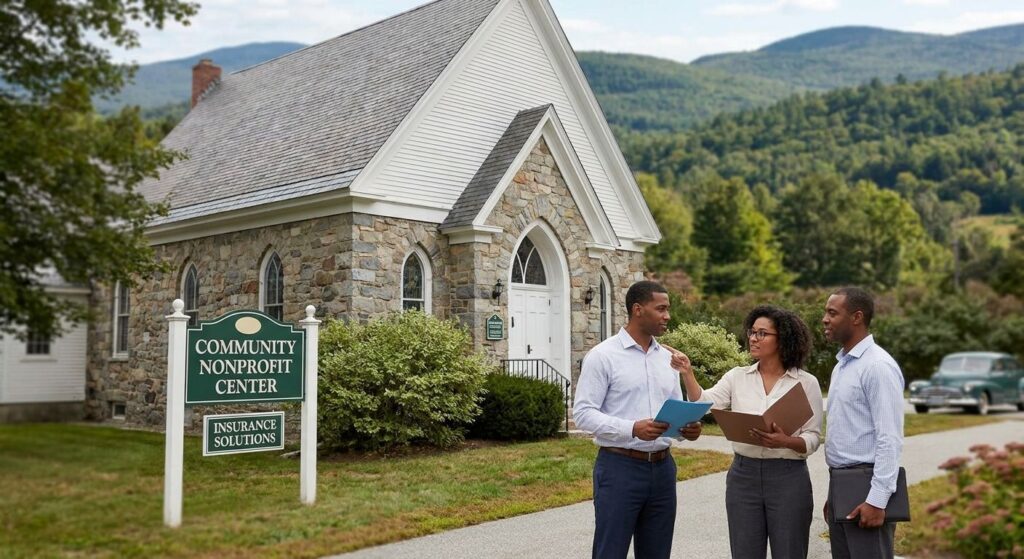
Business insurance for churches and nonprofits in New Hampshire covers the building, the people inside it, and the volunteers who run programs, with the aim of keeping a mission-driven organization solvent after a slip-and-fall, a burst pipe, or a data breach in the donor database. Congregations and nonprofits carry risks that a typical small business doesn't: unsupervised minors in Sunday school, volunteer drivers using personal vehicles for church errands, and a board of unpaid directors who can still be named in a lawsuit.
- General liability and property coverage form the base of business insurance for churches and nonprofits in NH — most policies bundle both.
- Volunteer drivers and church vans need commercial auto coverage, not a personal policy rider.
- Directors and officers liability protects unpaid board members from personal exposure in a lawsuit.
- Any nonprofit running a daycare, food pantry, or after-school program needs coverage scoped to that specific activity.
- A local review in 2026 catches gaps that a generic nonprofit insurance quote misses, especially around NH-specific building codes and flood zones.
Why business insurance matters for churches and nonprofits in NH
New Hampshire churches and nonprofits operate on tight, donor-funded budgets, which means a single uninsured claim can wipe out a year of program funding. A congregation running a food pantry, a thrift shop, or a preschool takes on liability exposure closer to a small retail business than to a typical house of worship from decades ago.
Older church buildings across New Hampshire, many built well before modern electrical and plumbing codes, carry higher property risk than newer commercial construction. Nonprofits that lease space, rent out their hall for weddings and community events, or run a licensed daycare program add layers of exposure that a basic property policy doesn't touch.
General liability insurance for New Hampshire small businesses is the starting point for most churches and nonprofits, but it's rarely the whole picture once staff, volunteers, and vehicles enter the equation.
Cover your building and its contents
Property coverage insures the sanctuary, offices, fellowship hall, and the contents inside — pews, sound equipment, kitchen appliances, office computers. Start here because a lapse in property coverage after a fire or storm hits the organization's ability to operate at all, not just its finances.
- Confirm replacement cost coverage, not actual cash value, on the building itself
- List high-value contents separately: sound systems, instruments, commercial kitchen equipment
- Check flood exclusions — standard property policies in New Hampshire don't cover flood
- Ask whether the policy covers off-site events, like a church picnic at a rented pavilion
- Review coverage for a parsonage or rectory if the organization owns one
Protect against injury and accident claims
General liability covers bodily injury and property damage claims from anyone on the premises: a visitor who slips on ice in the parking lot, a child injured during a youth group activity, a vendor whose equipment gets damaged during setup for a fundraiser. This is the coverage most churches already carry, and it's the one insurers ask about first.
- Verify the policy covers off-premises events the organization sponsors
- Check limits against the size of your largest annual event (weddings, festivals, fundraisers)
- Confirm coverage for volunteer-led activities, not just staff-led ones
- Ask about abuse and molestation coverage — many standard GL policies exclude it entirely
- Review medical payments coverage for minor injuries that don't rise to a lawsuit
Insure your paid staff
If the church or nonprofit has even one paid employee — a pastor, a bookkeeper, a preschool teacher — New Hampshire requires workers' compensation coverage in most cases. This protects the organization from covering an injured employee's medical bills and lost wages out of pocket, and it protects the employee too.
- Confirm which roles count as employees versus independent contractors under NH law
- Include part-time and seasonal staff, not just full-time positions
- Check whether stipended volunteers (common in youth ministry) need to be classified as employees
- Review workers' compensation insurance for New Hampshire small businesses requirements against your actual payroll structure
A local review catches misclassifications that a generic online quote tool doesn't flag — a common gap once nonprofits start paying stipends to part-time youth leaders or music directors.
Cover your volunteers and drivers
Volunteers who drive church vans, run errands in personal vehicles for the organization, or transport kids to youth events create auto liability exposure that a personal car insurance policy usually excludes once the trip is tied to organizational business. This is one of the most overlooked gaps in nonprofit coverage.
- Add hired and non-owned auto coverage for volunteers using personal vehicles
- Insure any church-owned van, bus, or trailer under a commercial auto policy
- Confirm coverage extends to trips outside New Hampshire for retreats or mission trips
- Review commercial auto insurance for New Hampshire business fleets if the organization owns multiple vehicles
Protect leadership decisions
Directors and officers (D&O) liability protects the unpaid board members and officers who run a nonprofit from personal financial exposure if someone sues over a governance decision — a hiring dispute, a mismanaged fund, a bylaw disagreement. Board members often assume their volunteer status shields them from liability. It doesn't.
- Confirm the policy covers claims alleging wrongful acts by the board, not just staff
- Check whether employment practices liability (wrongful termination, harassment claims) is included or needs to be added
- Review coverage limits against the size of your annual budget and donor base
- Ask whether former board members remain covered for decisions made during their term
Secure member and donor data
Churches and nonprofits collect sensitive information — donor payment details, member contact lists, minors' records from youth programs — and most run that data through cloud-based donor management software with limited internal IT support. A breach or ransomware incident hits a small nonprofit's reputation and finances harder than it hits a larger business with a dedicated security team.
- Confirm the policy covers notification costs if donor data is exposed
- Check whether online giving platforms and payment processors are covered under the policy or need separate vendor terms
- Review cyber liability insurance for New Hampshire small businesses if the organization processes online donations or stores member records digitally
- Ask about coverage for a compromised email account used to solicit fraudulent donations
Get your nonprofit’s coverage reviewed
A quick call or text covers property, liability, auto, and cyber gaps together.
Review renovation and building projects
Many New Hampshire churches sit in buildings 50 to 150 years old, and capital campaigns for roof repairs, accessibility ramps, or hall expansions are common. A standard property policy usually doesn't extend to a building mid-renovation, which leaves the project uninsured during construction.
- Confirm whether the general contractor or the church carries builders risk coverage
- Check that the policy covers materials stored on-site before installation
- Review builders risk insurance for home renovation projects in NH language against the scope of your specific project
- Ask when standard property coverage resumes once the project is complete
Bundle coverage for cost efficiency
Most New Hampshire churches and nonprofits carry property, general liability, and workers' comp through the same carrier under a package policy, sometimes called a Business Owners Policy (BOP) with nonprofit-specific endorsements. Running separate policies with different carriers usually costs more and creates coverage gaps at the seams.
- Ask whether the carrier offers a nonprofit or religious organization endorsement package
- Confirm renewal dates line up across policies to simplify annual review
- Check for multi-policy discounts when bundling auto, property, and liability
- Review coverage every year as the organization adds staff, vehicles, or programs
Comparing coverage options for NH churches and nonprofits
| Coverage type | Best for | Key limitation |
|---|---|---|
| General liability | Any church or nonprofit with public foot traffic | Rarely includes abuse/molestation coverage by default |
| Property (building + contents) | Organizations that own their building | Excludes flood; needs separate flood policy |
| Workers' compensation | Any organization with paid staff | Doesn't cover unpaid volunteers unless separately endorsed |
| Commercial/non-owned auto | Organizations with volunteer drivers or church vehicles | Personal auto policies typically exclude organizational use |
| D&O / management liability | Nonprofits with a governing board | Doesn't cover criminal acts or fraud |
| Cyber liability | Organizations collecting online donations or member data | Often sold as a rider, not automatic in a package policy |
Verdict: a bundled BOP with nonprofit endorsements covers most day-to-day risk, but D&O, cyber, and non-owned auto usually need to be added separately — skipping them is where most claims fall through.
Common mistakes churches and nonprofits make
- Treating volunteer drivers like employees under a personal auto policy. Personal policies frequently exclude use tied to organizational business, leaving the driver and the church exposed after an accident.
- Assuming a general liability policy covers abuse claims. Most standard GL policies exclude molestation and abuse coverage entirely; it has to be added as a specific endorsement.
- Skipping D&O coverage because the board is unpaid. Volunteer status doesn't shield board members from being named personally in a lawsuit over a governance dispute.
- Under-insuring renovation projects funded by capital campaigns. A mid-construction fire or storm loss often falls outside standard property coverage if builders risk wasn't added first.
- Letting coverage sit unreviewed for years. A nonprofit that added a preschool, a food pantry, or a second van since its last policy review is likely carrying gaps nobody caught.
FAQ
What business insurance do churches need in New Hampshire?
Most New Hampshire churches need property coverage, general liability, workers’ compensation for paid staff, and auto coverage for volunteer drivers and church vehicles. Larger organizations with a board typically add directors and officers liability and cyber coverage for donor data.
Do nonprofits in NH need workers’ compensation insurance?
Yes, if the nonprofit has even one paid employee, New Hampshire generally requires workers’ compensation coverage. This applies to paid pastors, bookkeepers, and program staff, not just full-time roles.
Does general liability cover volunteer activities?
Standard general liability usually covers volunteer-led activities on the organization’s premises, but off-site events and abuse-related claims often need separate endorsements. Check the policy language before assuming coverage extends to every volunteer program.
Is flood insurance included in a church’s property policy?
No, standard property insurance excludes flood damage. Churches near rivers or lakes in New Hampshire need a separate flood policy to cover that risk.
What is D&O insurance and why does a nonprofit board need it?
Directors and officers liability protects board members and officers from personal financial exposure if the nonprofit is sued over a governance decision. Unpaid board status does not remove personal liability risk in most cases.
How much does business insurance cost for a small nonprofit in NH?
Cost depends on the size of the building, payroll, number of vehicles, and programs run (daycare, food pantry, events). A local review compares quotes against your specific activities rather than a generic estimate.
Do church vans need commercial auto insurance?
Yes, any vehicle owned by the church or nonprofit and used to transport members, youth groups, or supplies needs a commercial auto policy, not a personal auto policy.
Does cyber insurance matter for a small church?
It matters whenever the church accepts online donations, stores member or donor records digitally, or uses cloud-based giving platforms. A data breach or compromised email used for fraudulent solicitations creates cost exposure regardless of organization size.
One last thing
The gap that shows up most often in a 2026 policy review isn't the big stuff — it's the church van driven by a volunteer under a personal auto policy that excludes organizational use, or a preschool program bolted onto an existing GL policy without a daycare-specific endorsement. If your nonprofit runs a licensed childcare or after-school program, check how that activity is scoped against business insurance for daycare centers in New Hampshire requirements — the liability profile is closer to a licensed daycare than to a typical Sunday school hour.
Related guides
- Builders risk insurance for home renovation projects in NH
- How to insure a home-based business in New Hampshire
- Business insurance for New Hampshire farms
- Umbrella insurance for New Hampshire homeowners