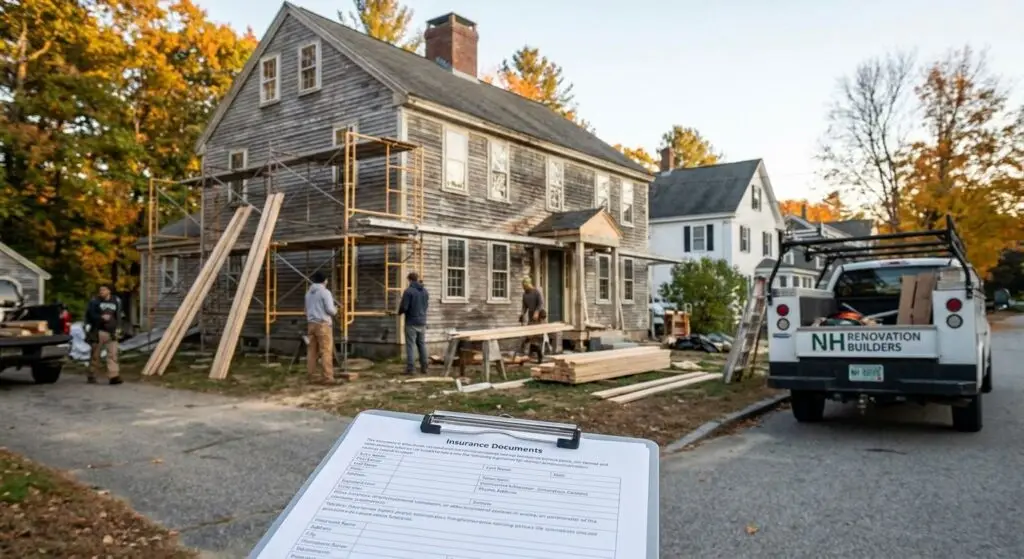
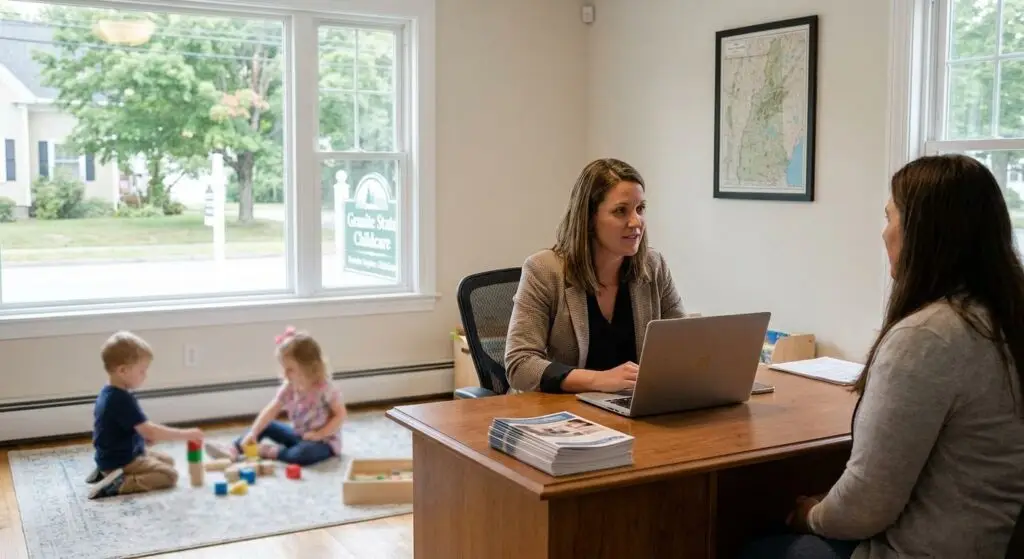
Running a licensed daycare in New Hampshire means you're on the hook for kids, staff, a building full of gear, and probably a van full of car seats — and one bad claim can wipe out a small operation fast. This guide breaks down business insurance for daycare centers NH owners actually need in 2026, what to skip, and which coverage to prioritize first.
- General liability is the non-negotiable base layer for business insurance for daycare centers NH-wide — buy it before anything else.
- New Hampshire law requires workers’ compensation the day you hire your first employee, daycare or not.
- A daycare van or a car used for pickup lines needs commercial auto — personal policies exclude business use.
- Abuse and molestation coverage is usually excluded from standard general liability and has to be added separately.
- Bundling general liability, property, and a BOP endorsement typically costs less than buying each policy alone in 2026.
Why this matters
A licensed daycare in New Hampshire operates under RSA 170-E, the state's child day care licensing statute, which sets staffing ratios, facility standards, and inspection requirements — but licensing doesn't touch insurance. That's a separate decision, and it's the one that determines whether a slip-and-fall claim, a staff injury, or a fender-bender in the pickup line puts your center out of business or just costs you a deductible.
General liability insurance for New Hampshire small businesses is the starting point for almost every licensed center, but a daycare's risk profile looks nothing like a retail shop or a consulting firm. You've got minors in your care, food service, nap rooms, playground equipment, and often a fleet of car seats strapped into a minivan. Generic small-business policies get built around office risk, not this.
Who this is for
This is for licensed home-based and center-based daycare operators in New Hampshire — from a two-employee in-home provider in Amherst to a 40-child center in Manchester with a full staff roster and a 12-passenger van. If you're caring for other people's children on a paid basis anywhere in the state, this applies to you whether you've got one assistant or fifteen.
What to look for in business insurance for daycare centers NH
General liability with adequate per-occurrence limits
This covers the bodily injury and property damage claims that come standard with childcare — a fall on the playground, a burn from lunch prep, a parent tripping on the ramp at drop-off. Most small-business general liability policies in 2026 are written with $1 million per-occurrence and $2 million aggregate limits, which is the baseline you want to see, not the ceiling.
Workers' compensation, even for one employee
New Hampshire's workers' comp law, RSA 281-A, kicks in the moment you have a single employee on payroll — there's no small-business exemption. Skip it and a staff injury during nap-time supervision becomes a personal liability, not an insurance claim.
Abuse and molestation liability
Most general liability forms explicitly exclude abuse and molestation claims, which is exactly the category of lawsuit a childcare business faces the most exposure to. This has to be added as its own endorsement or standalone policy — assuming it's baked into your GL policy is the single most common gap centers discover after it's too late.
Commercial property coverage that matches your actual building contents
Cribs, changing tables, kitchen equipment, playground structures, and electronics add up fast, and a homeowner's or renter's policy won't cover business property even in a home-based daycare. Get the building and contents scheduled at replacement cost, not actual cash value — depreciation on a decade of daycare furniture leaves you underfunded after a fire or pipe burst.
Commercial auto for any vehicle used in the business
If you drive kids, run errands for supplies, or operate a van for pickup and drop-off routes, a personal auto policy's business-use exclusion means you're uninsured the moment there's a claim. This is one of the most overlooked pieces of business insurance for daycare centers NH-wide, because the vehicle often started as someone's personal car.
Employment practices liability if you have staff
Hiring, firing, and scheduling disputes generate lawsuits regardless of business size, and daycare centers with hourly staff turnover see this more than most industries. It's usually a low-cost add-on next to workers' comp, and it's worth pricing even if you never expect to need it.
Top picks for daycare business coverage in 2026
General Liability Insurance — the non-negotiable base layer. Look for $1 million per-occurrence / $2 million aggregate limits, and confirm the policy actually names childcare operations rather than a generic professional services classification. Verdict: Buy.
Workers' Compensation Insurance — required under New Hampshire law from employee number one. A center with even two part-time aides needs this in place before their first shift, not after an incident. Review coverage through workers' compensation insurance for New Hampshire small businesses. Verdict: Buy.
Commercial Auto Insurance — the coverage owners skip most often because the van feels like a personal vehicle. If it's used for pickup routes, field trips, or supply runs, it needs a commercial policy, not a personal endorsement. Details are on commercial auto insurance for New Hampshire business fleets. Verdict: Buy if any vehicle touches business use.
Abuse and Molestation Liability Endorsement — the coverage most standard GL policies exclude by default, and the one your license renewal doesn't check for. Confirm this is written as a specific endorsement with its own limit, not assumed inside general liability. Verdict: Must-add.
Business Owner's Policy (BOP) Bundle — the safe pick for pairing property and liability under one renewal date instead of juggling separate carriers. Works well for centers with a single location and straightforward property needs; larger or multi-site operations usually outgrow it. Verdict: Consider for single-location centers, Skip for multi-site operators who need scheduled coverage per building.
What to avoid
- A generic small-business policy sold without a childcare classification. If the underwriter doesn't specifically code your business as child day care, the policy may not respond the way you expect when a claim involving a minor comes in.
- Assuming your homeowner's policy covers an in-home daycare. Most homeowner's policies exclude business activity outright, and some carriers will drop the policy entirely once they learn you're running a licensed daycare from the property.
- Treating contractor-style coverage as a shortcut. Packages built for trades, like business insurance for contractors in New Hampshire, are structured around job-site risk and equipment, not childcare exposure — the limits and exclusions don't line up.
Get a quick review of your daycare’s coverage
See where your current policy has gaps before a claim finds them.
Verdict comparison table
| Coverage | Required by NH law? | Typical limit (2026) | Verdict |
|---|---|---|---|
| General liability | No, but functionally essential | $1M/occurrence, $2M aggregate | Buy |
| Workers' compensation | Yes, at 1+ employees | State-mandated minimums | Buy |
| Commercial auto | No, but excludes personal policy gaps | Varies by vehicle/use | Buy if vehicle used for business |
| Abuse/molestation endorsement | No | Separate limit, often $1M | Must-add |
| BOP bundle | No | Property + liability combined | Consider for single location |
FAQ
What is the best business insurance for daycare centers in NH?
A combination of general liability, workers’ compensation, and an abuse/molestation endorsement covers the core exposure for most licensed daycare centers in New Hampshire in 2026. Centers with a vehicle used for pickup or field trips also need commercial auto coverage.
Is workers’ compensation required for a home daycare in New Hampshire?
Yes, once you hire even one employee, RSA 281-A requires workers’ compensation coverage regardless of business size. This applies to home-based providers exactly the same as center-based operations.
Does homeowner’s insurance cover an in-home daycare business?
No, standard homeowner’s policies exclude business activity, including licensed in-home childcare. Some insurers will cancel a homeowner’s policy if they discover undisclosed daycare operations at the property.
How much general liability coverage does a daycare need?
Most licensed daycare centers carry $1 million per-occurrence and $2 million aggregate limits as a baseline in 2026. Centers with higher enrollment or multiple locations often carry higher limits or an umbrella layer on top.
Is abuse and molestation coverage included in general liability?
No, most standard general liability policies exclude abuse and molestation claims by default. It has to be added as a specific endorsement with its own coverage limit.
Do I need commercial auto insurance if I only use my car for pickup and drop-off?
Yes, using a personal vehicle for any daycare-related driving, including pickup routes, triggers the business-use exclusion on a personal auto policy. Commercial auto coverage closes that gap.
What’s the difference between a BOP and separate general liability and property policies?
A business owner’s policy bundles general liability and commercial property under one policy and renewal date, usually at a lower combined cost than buying each separately. Multi-site or higher-risk centers sometimes outgrow a BOP and need scheduled, separate policies instead.
Does licensing under RSA 170-E include insurance requirements?
No, New Hampshire’s child day care licensing statute covers staffing ratios and facility standards, not insurance. Insurance coverage is a separate decision the operator makes independently of the licensing process.
One last thing
The gap that actually closes daycare centers in New Hampshire isn't the policy owners forget to buy — it's the abuse and molestation exclusion buried in a standard general liability form that nobody reads until a claim gets denied. Pull your current policy and check for that exclusion by name before your 2026 renewal, not after.
Related guides