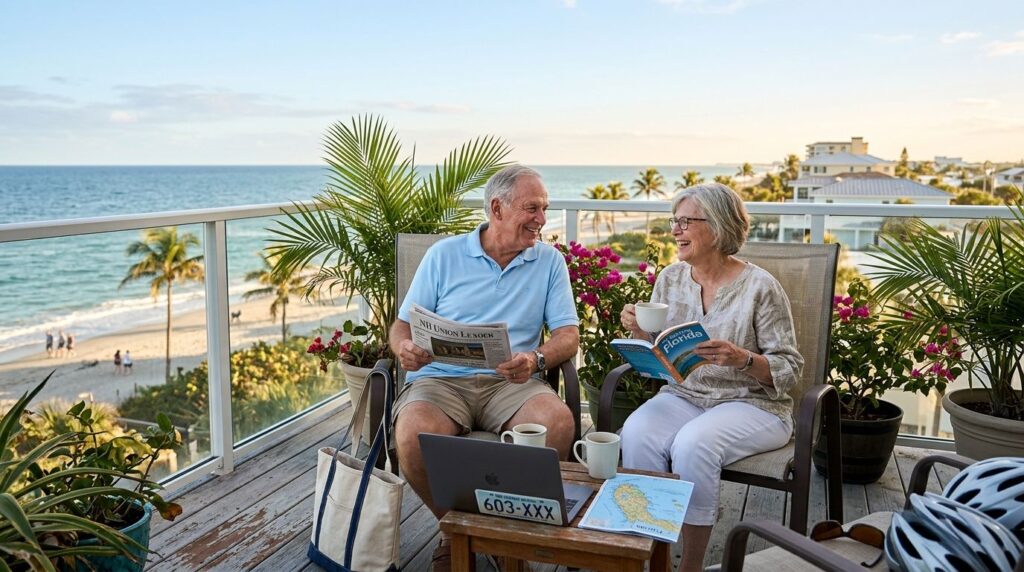
New Hampshire snowbirds insurance is coverage built for residents who keep a home in New Hampshire but spend winter months in Florida, structured so both properties, both vehicles, and daily liability stay protected without paying full price for a house that sits empty half the year. The gap between this and a standard NH homeowners or auto policy comes down to three things: extended vacancy on the NH property, a car parked for months at a stretch, and liability exposure that now runs across two states instead of one.
- Insurance for snowbirds in New Hampshire and Florida needs a vacancy plan for the NH home, not just a Florida rental or condo policy.
- Standard homeowners policies commonly restrict coverage after 30 consecutive days of vacancy — a real risk for a house empty from November to April.
- New Hampshire is the only state that does not require drivers to carry auto insurance, which does not mean skipping coverage on a car parked all winter.
- Low-mileage auto insurance and vacant-home endorsements are the two fixes most NH snowbirds are missing in 2026.
- Umbrella coverage matters more once you’re splitting time and liability across two homes and two sets of neighbors.
Why insurance for snowbirds matters in New Hampshire
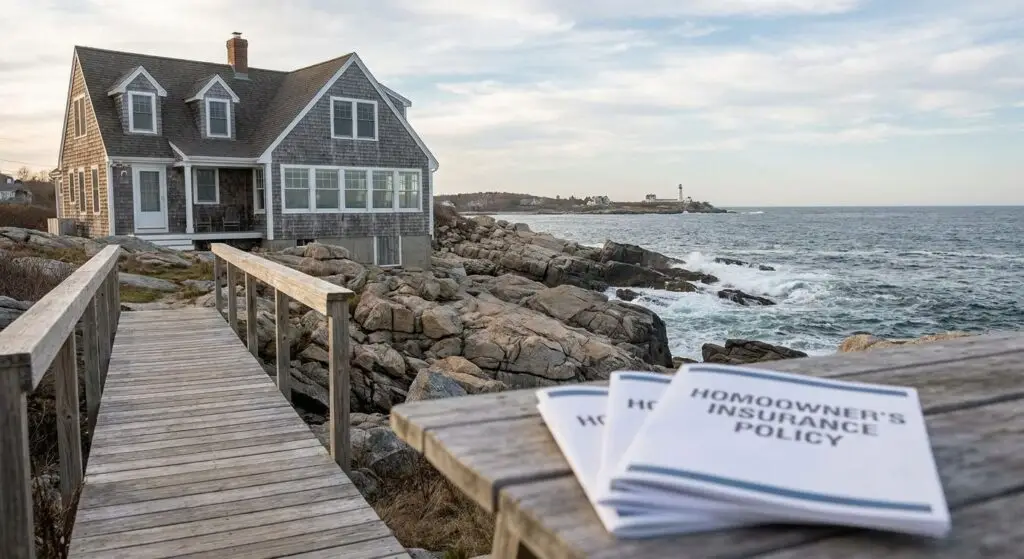
A New Hampshire home left unoccupied from late fall through spring is a different risk than one lived in year-round. Pipes freeze without daily eyes on the thermostat, break-ins go unnoticed longer, and most standard home policies start limiting or excluding coverage — theft, vandalism, water damage — once a property crosses roughly 30 consecutive days vacant. That clause is written into most standard homeowners forms, and a six-month Florida stay blows past it every year.
New Hampshire also stands alone as the only state that doesn't legally require drivers to carry auto insurance. That fact gets misread by some snowbirds as permission to let coverage lapse on a car sitting in a NH garage all winter — a mistake, since an uninsured vehicle still carries liability exposure if it's stolen, vandalized, or driven by a house-sitter. The insurance for snowbirds new hampshire florida question isn't about whether coverage is legally required; it's about whether the coverage you have matches how the property and vehicle are actually being used for six-plus months of the year.
Update your New Hampshire home policy for extended vacancy
A standard homeowners policy assumes someone is home. Once that stops being true for months at a time, the policy needs to reflect it, not just hope nothing happens while you're in Florida.
- Ask directly whether your current policy has a vacancy clause and what triggers it
- Add a vacancy endorsement or rider if the home will sit empty more than 30 days
- Arrange for someone to check the property in person every 1-2 weeks
- Shut off the main water valve if the home isn't winterized for occupancy
- Install a smart thermostat or freeze sensor that alerts you remotely
- Review vacation home insurance for out-of-state owners if the NH property functions more like a part-time residence than a primary home
Review liability coverage across two properties
Liability doesn't pause when you leave the state. A dog off-leash in a Florida community, a slip on NH ice before you close up for the season, a guest injured at either address — all of it can land on your policy.
- Confirm both homes carry adequate personal liability limits, not just dwelling coverage
- Check whether your NH policy liability follows you to Florida for incidents involving your property or belongings
- Ask if a single umbrella policy can sit over both homes instead of buying separate excess coverage
- Document any shared responsibilities with a house-sitter or property manager in writing
Adjust your auto policy for seasonal driving
A car that sits in a New Hampshire garage from November to April doesn't need the same coverage structure as one driven daily.
- Report actual annual mileage to your carrier instead of leaving an outdated estimate on file
- Ask about low-mileage auto insurance if the NH vehicle logs under 7,500-10,000 miles a year
- Keep comprehensive coverage active even while the car is parked — theft and weather damage still apply
- Confirm whether a second vehicle registered and driven in Florida needs its own policy or can be added to the NH policy
- Skip the temptation to drop coverage to save money during the winter months; a lapse can raise rates later
Coordinate life insurance and beneficiary details
Splitting time between two states is a good trigger to check that a life insurance policy still matches where you actually live and who you actually want covered.
- Confirm beneficiary designations are current, especially after a move, remarriage, or new grandchild
- Check whether your policy has any state-specific riders tied to New Hampshire residency
- Review whether existing coverage still fits your household's needs now that retirement or part-time living has changed the budget picture
Bundle policies to cut administrative overhead
Managing separate home, auto, and umbrella policies across two states gets complicated fast, especially at renewal time when you might be in Florida and the paperwork lands in New Hampshire.
- Ask whether home, auto, and umbrella coverage can sit under one account with one renewal date
- Set up autopay and digital document delivery so nothing depends on being physically present at either address
- Look into bundling home and auto insurance if you're currently juggling separate carriers for each policy
Time your renewals around travel dates
A policy that renews while you're mid-move between states is how coverage gaps happen. Line up renewal and payment dates with your actual travel schedule instead of leaving it to chance.
- Request renewal dates that fall outside your travel windows when possible
- Set calendar reminders 30 days ahead of any renewal, wherever you're staying that month
- Keep a digital folder with both properties' policy numbers and carrier contacts accessible from either address
Comparing coverage options for NH snowbirds
| Option | Best for | Key limitation |
|---|---|---|
| Standard homeowners policy, no changes | Owners who never leave the NH home vacant more than a few weeks | Vacancy clauses can void claims after roughly 30 days empty |
| Vacant-home endorsement | Snowbirds leaving the NH home empty 4-6 months a year | Adds a line item to the policy and requires periodic property checks |
| Named low-mileage auto policy | Vehicles parked in NH all winter | Only helps if mileage is reported accurately each year |
| Umbrella policy over both homes | Owners who want one liability layer instead of two separate excess policies | Requires both underlying home and auto policies to meet minimum limits first |
The straightforward read: a standard, unmodified homeowners policy is a Skip once the New Hampshire home sits vacant more than a month at a stretch — a vacancy endorsement or a full vacant home insurance setup is the Buy for anyone doing six months in Florida every year.
Common mistakes New Hampshire snowbirds make
- Assuming the standard homeowners policy still applies at month five of vacancy. Most don't, and claims filed after the vacancy clause kicks in get denied outright.
- Letting auto coverage lapse because New Hampshire doesn't legally require it. A parked, uninsured car is still a liability and theft risk, and a lapse can raise future rates.
- Buying a separate Florida policy without telling the NH carrier anything changed. Two disconnected policies often duplicate some coverage and miss other gaps entirely.
- Skipping the property-check routine. A frozen pipe discovered in April instead of December is a much bigger claim, and some carriers require proof of periodic checks to pay out.
- Forgetting umbrella coverage entirely. Liability exposure doubles when you're splitting time between two homes, two communities, and sometimes two vehicles.
Get a quick review before you head south
A short call covers vacancy, auto, and liability gaps before winter.
FAQ
What’s the best insurance for New Hampshire snowbirds wintering in Florida?
There’s no single best policy — it’s a New Hampshire home policy with a vacancy endorsement, a properly reported auto policy for the parked vehicle, and often an umbrella policy layered over both. A quick coverage review before the fall move confirms all three line up.
Do I need a vacant home endorsement if I’m only gone four months?
Most standard homeowners policies restrict coverage after roughly 30 consecutive days of vacancy, so a four-month absence almost always crosses that line. Skipping the endorsement risks a denied claim on exactly the kind of damage — burst pipes, theft, vandalism — that tends to happen while a house sits empty.
Is New Hampshire really the only state without mandatory auto insurance?
Yes, New Hampshire is the only state that doesn’t legally require drivers to carry auto insurance. That doesn’t mean a car left in a New Hampshire garage all winter should go uninsured, since liability and theft risk don’t disappear just because the vehicle isn’t being driven.
Should I buy separate insurance for my Florida address?
If you own or rent property in Florida, it typically needs its own policy tailored to that state’s requirements, including flood coverage in many areas. The New Hampshire and Florida policies should be reviewed together so liability limits and coverage dates don’t leave a gap.
How much does insurance cost for a snowbird with two homes?
Cost depends on the value of both properties, vehicle usage, and how much liability coverage you carry across both states, so it varies by household. A coverage review is the fastest way to get an accurate answer for your specific setup.
Can I lower my auto insurance rate if my car sits unused for months?
Reporting accurate low annual mileage to your carrier can qualify a New Hampshire vehicle for a lower rate, since insurers price partly on how much a car is actually driven. Comprehensive coverage should stay active even during months the car isn’t moving.
What happens to my home insurance claim if my New Hampshire house floods while I’m in Florida?
Standard homeowners policies exclude flood damage regardless of occupancy status, so a separate flood policy is the only way that claim gets paid. Vacancy adds a second layer of risk on top, since damage discovered late is usually more extensive.
Do I need umbrella insurance if I already have home and auto coverage in New Hampshire?
Umbrella coverage adds liability protection above your home and auto policy limits, which matters more once you’re managing risk across two states and two properties. It’s not required, but it closes a gap that standard limits often don’t cover.
One last thing
The detail most NH snowbirds miss isn't the big one — it's the property-check requirement buried in a vacancy endorsement. Some carriers will deny a claim outright if you can't show the home was checked on a set schedule, so keep dated notes or photos from every visit, not just a mental note that someone stopped by in January 2026.
Related guides
- How to bundle home and auto insurance in New Hampshire
- Umbrella insurance for New Hampshire homeowners