
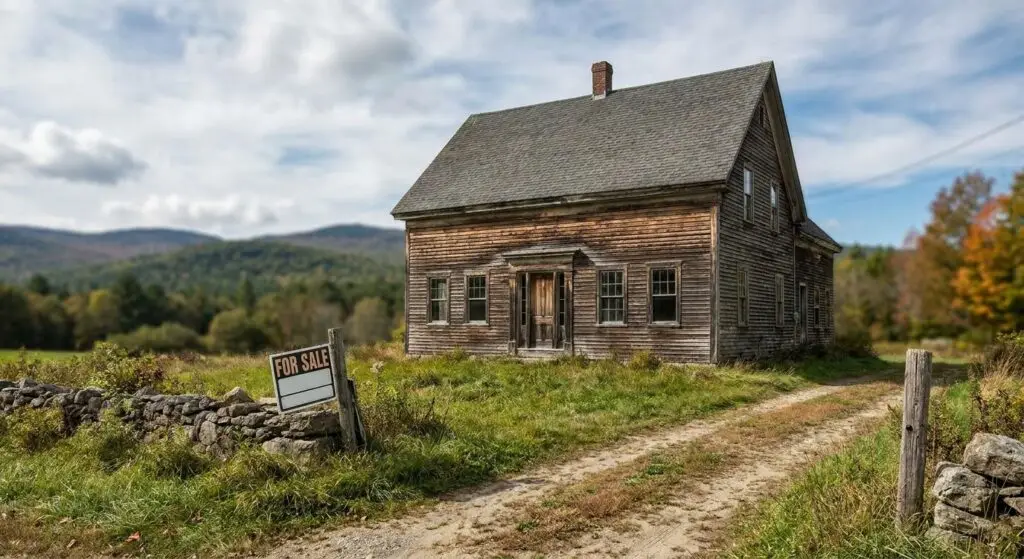
Leaving a house empty in New Hampshire for more than 30 days does something most homeowners never expect: it can quietly void the fire, water, and vandalism coverage on your existing policy. If you're inheriting a property, relocating for work, or waiting on a sale to close, you need a plan for vacant home insurance in New Hampshire before the house sits empty — not after a pipe bursts.
- Standard NH homeowners policies suspend vandalism and water-damage coverage after 30-60 days vacant — a vacant home policy keeps it active.
- Vacant home insurance New Hampshire runs higher than standard coverage but restores fire, liability, and freeze protection.
- Call your carrier the day the home empties — undisclosed vacancy is the top reason NH claims get denied.
- Weekly inspections and documented winterization are usually required before a vacant policy will pay out.
Why this matters
Insurers treat an empty house as a bigger risk than an occupied one, plain and simple. Nobody's there to catch a slow leak, spot a break-in, or notice smoke before it becomes a total loss. Most standard HO-3 forms in New Hampshire include a vacancy clause that suspends coverage for theft, vandalism, glass breakage, and water damage once a home sits empty for 30 to 60 consecutive days — the exact window depends on your carrier.
That clause doesn't cancel your whole policy. It just strips out the coverage you're most likely to need on a vacant property. If a pipe freezes in a house with nobody checking on it during a New Hampshire winter, and the home has been empty for 45 days, a standard policy may deny that claim outright. That's the gap vacant home insurance in New Hampshire is built to close, and it's worth understanding your baseline coverage before you make any changes — see how to determine your home insurance coverage needs in New Hampshire for the full breakdown.
What you'll need
- The exact date the home became vacant (move-out date, closing date, or last night anyone stayed there)
- Proof of winterization if the vacancy runs through NH's heating season (typically October through April)
- A quote for a dedicated vacant dwelling policy — most standard carriers won't extend a normal HO-3 past 60 days empty
- A person or service checking the property on a set schedule, with a way to log those visits
- Photos of the home's condition at the start of vacancy, in case a claim needs to prove pre-existing state
The steps
1. Confirm the home actually qualifies as vacant
Insurers draw a line between "vacant" and "unoccupied," and the distinction changes your options. A vacant home has no furniture and nobody living there. An unoccupied home still has furnishings and belongings but no resident — think of a house between tenants versus a house waiting to close on a sale. Vacant properties carry more risk in an insurer's eyes because there's less to signal that someone still cares for the place day to day.
Common mistake: assuming a furnished home that's empty for six months still counts as "occupied" for policy purposes. It doesn't, and if you don't flag it, your insurer will.
2. Call your carrier before the 30-day mark
Don't wait for a claim to find out your coverage lapsed. Contact your current insurer as soon as you know the home will sit empty and ask directly how their vacancy clause applies. Some New Hampshire carriers offer a short-term vacancy permit or endorsement that extends standard coverage for 60 to 90 days without forcing a full policy switch.
Common mistake: telling the agent "it's just temporary" and leaving it at that. Get the vacancy date and the coverage change documented in writing.
3. Shop a dedicated vacant dwelling policy
If the home will sit empty longer than your current carrier allows, you need a vacant dwelling form — often labeled DP-1 or a vacant home endorsement. These policies typically cover fire, lightning, and windstorm as a baseline, with theft and vandalism available as add-ons. Expect a higher premium than your standard homeowners policy; insurers price for the added risk of nobody being on-site.
This is also where landlords and rental owners in transition tend to land — if the vacancy is tied to a property between tenants, landlord insurance for New Hampshire rental property owners may fit better than a straight vacant dwelling form.
Common mistake: buying the cheapest vacant policy available without checking whether it includes liability coverage. A slip-and-fall on an empty property still exposes you.
4. Winterize and secure the property
New Hampshire winters are the single biggest driver of vacant-home claims. Shut off the water main, drain the pipes, or maintain a minimum interior temperature (most carriers specify 55°F or install a water-flow monitoring device) to prevent freeze damage. Board or lock all points of entry and consider a monitored alarm system — some vacant policies require one before they'll issue coverage.
Common mistake: turning the heat off completely to save money. A frozen and burst pipe usually costs far more than the heating bill you were trying to avoid.
5. Set a documented inspection schedule
Most vacant dwelling policies in 2026 require proof that someone is checking the property, often weekly. Keep a simple log: date, time, visitor name, and condition notes. If you ever file a claim, this log is the difference between a smooth payout and a denial for "failure to maintain."
Common mistake: relying on a neighbor's casual "I'll keep an eye on it" without any record of actual visits.
6. Review liability coverage separately
An empty structure still creates liability exposure — trespassers, contractors doing repairs, or a real estate agent showing the property. Confirm your vacant policy includes liability, and if the home has a pool or other attractive nuisance, address that specifically; see how to add pool liability coverage to a New Hampshire policy if that applies.
7. Reassess the moment circumstances change
Vacancy status isn't permanent, and neither should your policy be. If the home sells, gets a new tenant, or moves into active renovation, switch coverage immediately rather than letting an outdated vacant policy ride. A home under renovation needs builders risk coverage, not a standard vacant dwelling form — see builders risk insurance for home renovation projects in NH if repairs are the reason the house is empty.
Get a vacant home quote today
Talk through your coverage options before the house sits empty another day.
Troubleshooting
A claim got denied for undisclosed vacancy. Insurers can deny claims retroactively if they discover the home was vacant and you didn't report it. Fix this going forward by notifying your carrier the same day vacancy begins — there's no grace period worth risking.
Pipes froze despite winterizing. Check whether the water main was fully shut and drained, not just the faucets turned off. A partial winterization job is the most common cause of a "we winterized it" claim that still gets denied.
Can't find a carrier writing vacant dwelling policies in New Hampshire. Not every insurer offers this coverage. Work with an agency that places policies across multiple carriers rather than a single-company agent — Themello Agency writes across several NH-approved insurers specifically for this reason.
Premium jumped more than expected. Vacant dwelling premiums run higher because the risk profile is higher, full stop. Ask about bundling other coverage — homeowners who combine vacant home coverage with an auto or umbrella policy often reduce the overall spread; see umbrella insurance for New Hampshire homeowners for how that layer works.
The home is empty because of active renovation. A vacant dwelling policy isn't built for construction risk. Switch to a builders risk policy for the renovation period, then move back to a vacant or standard policy once work wraps.
Showings are ongoing while the home sits vacant for sale. Confirm liability coverage extends to real estate showings specifically — some vacant policies exclude business-related foot traffic unless it's added as an endorsement.
Tools and resources
- How to determine home insurance coverage needs in New Hampshire — start here if you're unsure what your current policy actually covers
- Landlord insurance for New Hampshire rental property owners — for vacancy tied to a rental turnover
- Builders risk insurance for home renovation projects in NH — for vacancy tied to construction
- How to insure a seasonal camp in New Hampshire — similar logic applies to camps left empty during off-season months
What to do next
Once vacancy coverage is in place, revisit your broader home insurance needs before the property goes back to occupied status. That review catches gaps a temporary vacant policy wouldn't have covered — read how to determine home insurance coverage needs in New Hampshire for the full checklist.
FAQ
What counts as a vacant home in New Hampshire for insurance purposes?
A home is considered vacant when it has no furnishings and nobody living there, typically after 30 to 60 consecutive days. An unoccupied home still has belongings but no resident, and carriers treat the two categories differently.
Does standard homeowners insurance cover a vacant home in New Hampshire?
No, most standard HO-3 policies suspend theft, vandalism, and water-damage coverage once a home has been vacant for 30 to 60 days. Fire and liability coverage often continue, but the gaps are significant enough that most owners need a vacant dwelling policy.
How much does vacant home insurance cost in New Hampshire in 2026?
Vacant dwelling premiums run higher than standard homeowners coverage because insurers price for the added risk of an empty structure. Exact rates depend on the home’s value, location, and how the property is secured, so get a direct quote rather than assuming a flat markup.
Is vacant home insurance the same as unoccupied home insurance?
No, they’re related but not identical. Unoccupied policies cover furnished homes without a resident, while vacant policies cover empty structures with no belongings, and the risk pricing differs between the two.
How long can a home in New Hampshire sit vacant before insurance is affected?
Most carriers apply their vacancy clause at 30 to 60 days, though the exact threshold varies by policy. Check your declarations page or call your agent directly rather than assuming a standard number.
Do I need a special policy if my home is vacant during a renovation?
Yes, an active renovation on a vacant property usually needs builders risk insurance rather than a standard vacant dwelling policy. Builders risk is built for construction-related exposure that a vacant dwelling form doesn’t cover.
Will my insurer cancel my policy if I don’t report a vacant home?
Insurers can deny claims or cancel coverage if they discover an undisclosed vacancy, especially after a loss occurs. Reporting vacancy the day it begins protects your claim rights going forward.
Can I get liability coverage on a vacant home in New Hampshire?
Yes, most vacant dwelling policies offer liability coverage as part of the base policy or as an add-on. Confirm it’s included before you buy, since some low-cost vacant policies strip liability out entirely.
One last thing
Frozen pipes are the single most avoidable claim on a vacant New Hampshire home, and the fix costs almost nothing compared to the damage. Keep the heat running at a minimum interior temperature or install a water-flow shutoff device — either one is cheaper than a single burst-pipe repair, and most vacant policies in 2026 either require it or reward it with a better rate.
Related guides
- Vacation home insurance for out-of-state owners in New Hampshire
- Landlord insurance for New Hampshire rental property owners
- Builders risk insurance for home renovation projects in NH
- How to insure a seasonal camp in New Hampshire