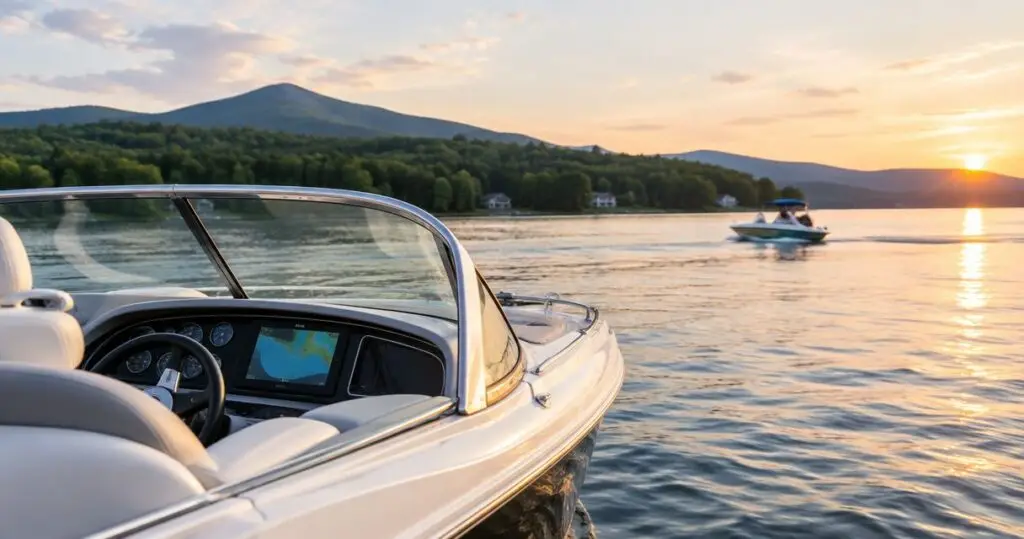
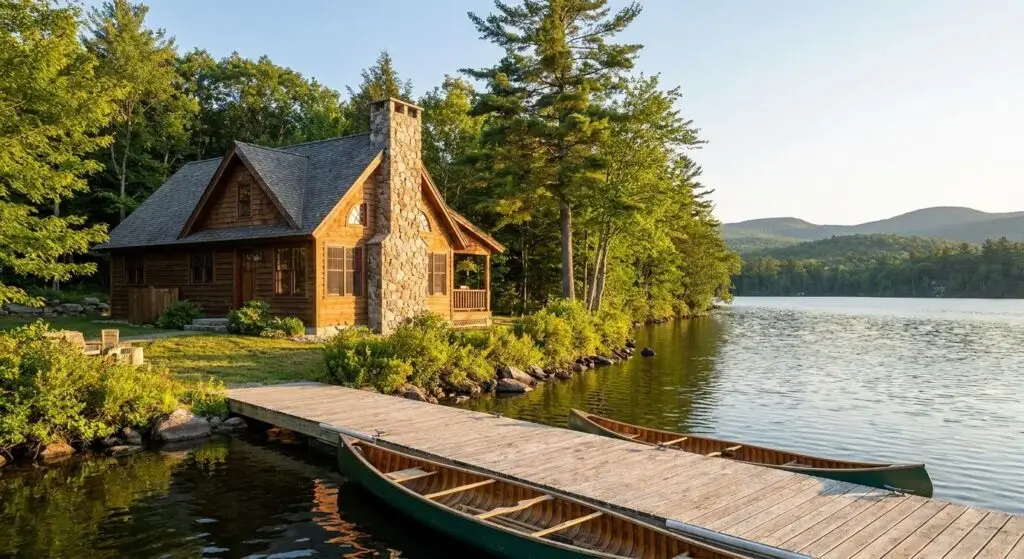
New Hampshire lake properties carry risks a standard subdivision homeowners policy was never built for — shoreline erosion, seasonal vacancy, boat traffic, and flood exposure most carriers exclude by default. This guide ranks the coverage priorities that actually protect a camp on Winnipesaukee, Sunapee, Winnisquam, or any of the state's other lakes in 2026, and what to skip if a quote tries to upsell you on it.
- Best homeowners insurance for lake property NH needs flood coverage added separately — standard policies exclude it.
- Boat and dock liability is the most-skipped coverage on NH lakefront policies — buy it before summer guests arrive.
- Seasonal or vacation-home endorsements matter for owners who occupy the camp part of the year — treat it as a Buy.
- Umbrella liability is worth adding wherever there’s a dock, a swim area, or watercraft — Consider it non-negotiable.
Why this matters
A standard New Hampshire homeowners policy prices risk off the average house on the average street. A camp on the water isn't that house. It sits closer to a natural body of water, it's often vacant for months at a time, and it usually comes with a dock, a boat, or both — three things that change the liability math fast.
New Hampshire has more than 1,000 lakes and ponds, and a large share of shorefront homes on them are seasonal or owned by people who live somewhere else for most of the year. That single fact — occupancy pattern — drives more claim denials than any other issue on lakefront policies written the wrong way. Get the umbrella insurance for New Hampshire homeowners conversation right at the start and everything downstream gets easier.
How this list was built
This ranking weighs the risks specific to shorefront and near-shore property in New Hampshire: proximity to water, seasonal occupancy, watercraft exposure, older camp construction, and rebuild costs that run higher than inland homes because of access and permitting. Coverage priorities are ordered by how often they get missed on a first-pass quote, not by premium size. A camp bought as a rental, a full-time residence, or a weekend retreat will weight these differently — the order below reflects the most common lake-property risk profile in 2026.
The coverage priorities, ranked
1. Replacement cost on the dwelling — the one everyone underestimates
Lake camps get renovated in pieces over decades — a new deck one year, a finished basement the next — and the insurance limit rarely gets updated to match. A 1970s camp with a 2020s kitchen and a walkout lower level can easily be underinsured by tens of thousands of dollars if the dwelling limit was set at purchase and never revisited.
Ask for a current replacement cost estimate, not the tax-assessed value. Verdict: Buy — and revisit the number every two to three years, not just at renewal.
2. Flood insurance — the coverage a standard policy doesn't include
Standard homeowners policies exclude flood damage caused by rising water, period. For a property near a lake, that's not a theoretical gap — it's the single most relevant exclusion on the policy. Flood coverage through the National Flood Insurance Program carries a 30-day waiting period before it takes effect, so this isn't something to shop for the week before spring runoff.
If the property sits in or near a mapped flood zone, this stops being optional. Verdict: Buy, and buy it early enough in 2026 that the waiting period isn't a problem when water levels rise.
3. Boat and dock liability — the most-skipped coverage on the list
A homeowners policy typically caps or excludes liability tied to boats above a certain size or horsepower, and docks with diving boards or swim platforms raise the liability exposure the moment guests start using them. This is the gap that shows up after a guest gets hurt off the dock, not before.
Boat insurance for New Hampshire lake owners closes that gap with liability and physical damage coverage sized to the actual watercraft, not a generic homeowners add-on. Verdict: Buy if there's a boat, a dock, or both on the property.
4. Seasonal or vacation-home endorsement — for part-time occupancy
Insurers price risk differently when a home sits empty for weeks or months at a stretch, because unoccupied structures take longer to catch problems — a burst pipe, a break-in, storm damage — before anyone notices. A standard year-round homeowners policy can leave coverage gaps or even void claims tied to vacancy periods it wasn't written to expect.
Vacation home insurance for out-of-state owners in New Hampshire is built around exactly this occupancy pattern. Verdict: Buy for any camp occupied fewer than nine or ten months a year.
5. Detached structure coverage — boathouse, shed, dock
Lakefront lots collect more detached structures than the average property: boathouses, storage sheds, pump houses, sometimes a guest bunkhouse. Standard policies cap coverage for these as a percentage of the dwelling limit, and that percentage often falls short once you add up everything actually sitting on the lot.
Walk the property with whoever writes the policy and list every structure by name. Verdict: Consider — worth a line-item review rather than accepting the default percentage.
6. Wood stove and alternative heating rider
A lot of older NH camps run on wood heat, especially properties that were built as true seasonal cabins before conversion to year-round use. Underwriters treat wood stoves as a distinct risk factor and some policies won't cover fire loss connected to a stove that was never disclosed or inspected.
Verdict: Consider it required disclosure, not an optional add-on, if there's a stove on the property.
7. Umbrella liability increase
Docks, swim areas, and boat traffic all raise the odds of a liability claim beyond what a standard homeowners limit covers. An umbrella policy sits on top of the homeowners and auto liability limits and picks up where those stop.
Verdict: Buy for any lake property with a dock, a swim area, or regular boat guests — this is the coverage that protects everything else on this list from a single bad afternoon.
Get your lake home coverage reviewed
A quick review catches flood, dock, and vacancy gaps before they become claims.
Comparison: coverage priorities at a glance
| Coverage | Why it matters on a lake property | Verdict |
|---|---|---|
| Replacement cost dwelling | Older camps get under-reported renovation value | Buy |
| Flood insurance | Standard policies exclude rising-water damage entirely | Buy |
| Boat/dock liability | Homeowners policies cap or exclude watercraft exposure | Buy |
| Seasonal home endorsement | Part-time occupancy changes claim eligibility | Buy |
| Detached structures | Boathouses/sheds often exceed the default coverage percentage | Consider |
| Wood stove rider | Undisclosed stoves can void fire claims | Consider |
| Umbrella liability | Docks and boat guests raise liability exposure fast | Buy |
How to actually get these in place
- Review the dwelling replacement cost and the flood question in the same conversation — they're both tied to how close the structure sits to the water.
- Confirm the boat, dock, and any rental use are disclosed up front. Undisclosed watercraft or rental income are the two most common reasons a lake-property claim gets contested.
- Call or text before binding anything for the season — a quick review of the existing policy against this list takes less time than filing a claim that gets denied on a technicality.
What to avoid
- A homeowners quote with no flood question asked at all. If nobody asked about proximity to water, the flood exclusion wasn't priced in — and it's still excluded.
- A boat added as a "personal property" rider instead of proper watercraft coverage. It looks cheaper on paper and pays out far less when something actually happens on the water.
- A vacancy clause nobody read. Some standard policies reduce or suspend coverage after a set number of consecutive vacant days — exactly the pattern a seasonal camp falls into every winter.
FAQ
What is the best homeowners insurance for a lake property in NH?
The best homeowners insurance for a lake property in New Hampshire combines standard dwelling coverage with a flood policy, boat/dock liability, and a seasonal-occupancy endorsement if the camp isn’t used year-round. No single standard policy covers all of these by default in 2026.
Does homeowners insurance cover flood damage in New Hampshire?
No. Standard homeowners policies exclude flood damage from rising water, including lake overflow. Flood coverage has to be added separately, typically through the National Flood Insurance Program, which carries a 30-day waiting period before it takes effect.
Do I need separate boat insurance for a lake house in NH?
Yes, for most boats above a modest size or horsepower. Homeowners policies cap or exclude watercraft liability, so a dedicated boat policy is the only way to cover injury or damage tied to actual boat use.
Is vacation home insurance different from a regular homeowners policy?
Yes. Vacation and seasonal home endorsements account for extended vacancy periods that a standard year-round policy doesn’t price for, which affects both premium and claim eligibility.
How much liability coverage does a lake property need?
There’s no fixed number, but any property with a dock, swim area, or regular boat guests should carry liability above the base homeowners limit, typically through an umbrella policy layered on top.
Does a wood stove affect homeowners insurance on a NH camp?
Yes. Insurers treat wood stoves as a distinct fire risk and some policies require disclosure and inspection before covering fire loss connected to the stove.
Can I rent out my NH lake house short-term with a standard homeowners policy?
Not fully. Rental use, even occasional, usually needs to be disclosed and may require landlord or short-term rental coverage instead of a standard homeowners policy.
When should I buy flood insurance for a lake property?
Buy it well before the season starts. NFIP flood policies carry a 30-day waiting period, so coverage bought right before spring runoff or a storm won’t be active in time.
One last thing
The claim that gets denied most often on NH lake properties isn't the big storm loss — it's the small, undisclosed thing: a boat nobody mentioned, a wood stove installed after the last inspection, a renovation that quietly raised the rebuild cost past the policy limit. A ten-minute walk-through with whoever writes the policy, done before renewal rather than after a loss, catches almost all of it.
Related guides
- Wood stove home insurance coverage in New Hampshire
- New construction home insurance in New Hampshire