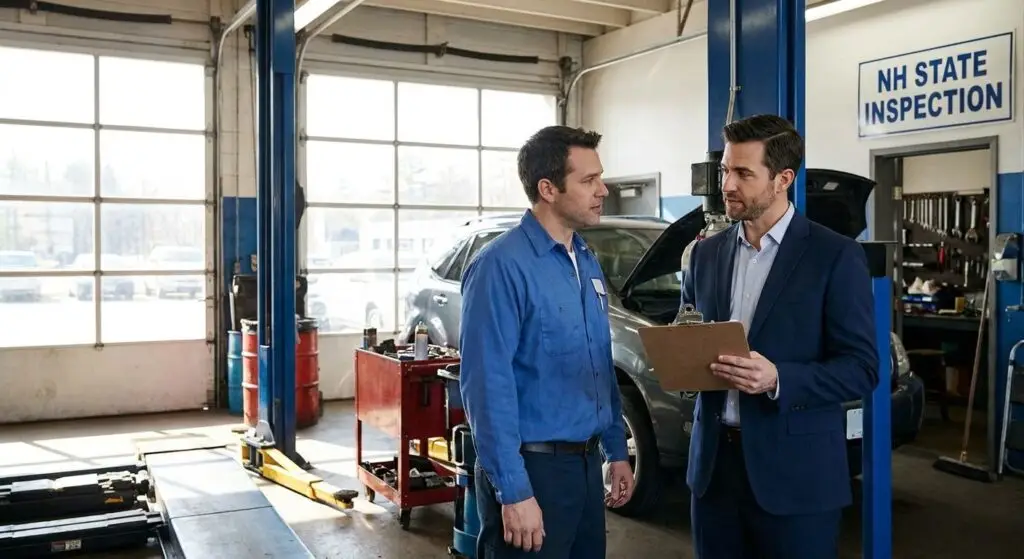
Auto repair shop insurance in New Hampshire has to cover the building, the tools, the trucks, and every customer vehicle sitting on your lot waiting for a brake job. One gap in that stack and a single claim can wipe out a season of margin.
- Garagekeepers Legal Liability is the coverage most NH shops skip and regret — it protects customer vehicles in your care, custody, or control.
- NH RSA 281-A requires workers’ compensation the day you hire your first employee, even part-time.
- General liability with $1 million/$2 million limits is the floor for auto repair shop insurance in New Hampshire, not the ceiling.
- Commercial auto insurance covers your tow truck and loaner cars — your personal auto policy will not.
- Bundling everything under a generic contractor’s policy leaves garagekeepers and tools & equipment gaps that show up right when you need them.
Why This Matters
A shop that carries only a basic business owner's policy is betting that nothing rolls off a lift, no customer's transmission catches fire on the rack, and no tech backs a loaner into a fuel pump. That's a bad bet in 2026, when parts costs and diagnostic equipment values are both up and a single totaled customer vehicle can run into five figures fast.
New Hampshire doesn't mandate general liability insurance for small businesses the way it mandates workers' comp, so plenty of shops run underinsured for years without knowing it. The gap usually isn't visible until a claim hits and the adjuster points out what the policy doesn't cover.
Who This Is For
This guide is built for independent repair shop owners in New Hampshire — general repair, brake and alignment specialists, transmission shops, and quick-lube operations with at least one bay and one employee on payroll. If you're a solo mobile mechanic with no fixed location, some of this still applies, but garagekeepers and commercial property weigh differently for you.
What to Look for in Auto Repair Shop Insurance in New Hampshire
Garagekeepers Legal Liability
This is the coverage that protects a customer's car while it's parked in your lot, up on your lift, or being test-driven by your tech. Without it, damage to a customer's vehicle while it's in your care typically falls back on your own pocket, not your general liability policy. Any shop that takes possession of vehicles — which is every repair shop — needs this line specifically, not a vague assumption it's baked into a generic policy.
General Liability Limits That Match Your Volume
A slip-and-fall in the waiting room, a customer injury in the bay, or damage to a neighboring property from a fire that starts in your shop all fall under general liability. Standard commercial policies write at $1 million per occurrence and $2 million aggregate, and that's a reasonable floor for a shop doing steady walk-in traffic. A shop running six bays and a busy Saturday schedule sees more foot traffic than a two-bay operation, and the limit should reflect that.
Commercial Auto for Your Fleet
If you run a tow truck, a parts-runner van, or loaner vehicles for customers, none of that is covered by a personal auto policy — full stop. Commercial auto insurance covers vehicles titled to the business and driven for business purposes, including the moment a tech takes a loaner out for a test drive after a repair.
Workers' Compensation Once You Hire
New Hampshire RSA 281-A requires workers' compensation coverage for employers with one or more employees, part-time or full-time. A repair shop with a single tech on the payroll is already required to carry it — there's no threshold to grow into. Skipping this isn't a coverage gap, it's a compliance violation with real penalties attached.
Tools and Equipment Coverage
Lifts, diagnostic scanners, alignment machines, and hand tools represent real capital sitting in an open bay. A standard property policy sometimes caps equipment coverage low or excludes mobile tools entirely, so shops need to confirm scanners and specialty tools are scheduled and valued correctly, not lumped into a generic contents limit.
Pollution and Environmental Liability
Used oil, coolant, brake fluid, and solvent disposal create exposure that a standard general liability policy usually excludes. Shops that store or dispose of these fluids on-site should ask specifically whether pollution liability is included or needs to be added as an endorsement.
The Coverage That Actually Fits an NH Repair Shop
Garage Liability and Garagekeepers Legal Liability — the non-negotiable. This pairing covers your operations plus every customer vehicle on the property, and it's the single line that separates auto repair shop insurance in New Hampshire from a generic small business policy. Buy.
General liability insurance for New Hampshire small businesses — the foundation policy. This is where slip-and-fall claims, property damage to a neighbor, and general premises exposure land, typically written with $1 million/$2 million limits as the baseline in 2026. Every shop needs this in place before anything else gets layered on top. Buy.
Workers' compensation insurance for New Hampshire small businesses — the one the state requires. RSA 281-A makes this mandatory at one employee, and a lift-related injury claim without coverage in place turns into a legal problem on top of a medical one. Buy.
Commercial auto insurance for New Hampshire business fleets — for the tow truck and the loaners. Any vehicle titled to the shop or driven regularly for shop business needs this, including test drives after a repair is finished. Buy if you run any fleet vehicle at all; Skip the add-on if every tech drives their own personal car and you own zero titled vehicles.
Tools and equipment (inland marine) coverage — the wildcard. This is the line shop owners forget until a scanner walks out the door or a lift gets damaged in a storm, and it's often cheap relative to what it protects. Consider it seriously if your diagnostic equipment and specialty tools represent a meaningful chunk of your operating capital.
What to Avoid
- A generic contractor's policy instead of a garage-specific one. Business insurance for contractors in New Hampshire is built around job sites and installed work, not customer vehicles parked on your lot — it typically won't include garagekeepers coverage at all.
- Treating loaner cars as an afterthought. A loaner driven by a customer while their car is in your bay creates liability exposure that needs to sit on your commercial auto policy, not an informal handshake agreement.
- Assuming a BOP covers tools automatically. Business owner's policies bundle property and liability, but tool and equipment sublimits inside a BOP are often too low for a shop running multiple lifts and diagnostic systems.
Coverage Comparison at a Glance
| Coverage | Who Needs It | Trigger | Verdict |
|---|---|---|---|
| Garagekeepers Legal Liability | Any shop holding customer vehicles | Vehicle in your care, custody, or control | Buy |
| General Liability | Every shop with foot traffic | Customer or third-party injury/property damage | Buy |
| Workers' Compensation | Any shop with 1+ employees | Hiring your first tech (RSA 281-A) | Buy |
| Commercial Auto | Shops with tow trucks or loaners | Vehicle titled to or used for the business | Buy if fleet exists |
| Tools & Equipment | Shops with scanners, lifts, specialty tools | Equipment value exceeds property sublimit | Consider |
| Pollution Liability | Shops storing/disposing of fluids | On-site fluid storage or waste handling | Consider |
FAQ
What is the best auto repair shop insurance in New Hampshire?
There’s no single best policy — most NH repair shops need general liability, garagekeepers legal liability, workers’ compensation, and commercial auto layered together in 2026. The right mix depends on whether you run a fleet, how many employees you have, and how much tool and equipment value sits in your bays.
Is workers’ compensation required for auto repair shops in New Hampshire?
Yes. New Hampshire RSA 281-A requires workers’ compensation coverage for any employer with one or more employees, including part-time techs. This applies regardless of shop size.
Does general liability cover a customer’s car while it’s being repaired?
No. General liability covers third-party injury and property damage from your operations, but damage to a vehicle actually in your possession falls under garagekeepers legal liability, a separate coverage line.
Do I need commercial auto insurance if I only have loaner cars?
Yes. Any vehicle titled to your business or used regularly for shop purposes, including loaners, needs to sit on a commercial auto policy rather than a personal one.
How much does auto repair shop insurance cost in New Hampshire?
Cost depends on shop size, employee count, fleet vehicles, and tool value, so a quick policy review is the fastest way to get an accurate number for your operation.
Can I use a general contractor’s business policy for my repair shop?
Not safely. A contractor’s policy is built around job sites and installed work, and typically excludes garagekeepers coverage that a repair shop needs for customer vehicles.
What happens if a customer’s car is stolen from my lot?
Garagekeepers legal liability is the coverage that responds to theft or damage of a customer vehicle while it’s in your care, custody, or control — general liability alone usually won’t cover it.
Is pollution liability necessary for a small repair shop?
If you store or dispose of used oil, coolant, or solvents on-site, pollution liability closes a gap that standard general liability policies typically exclude.
One Last Thing
The claim that catches most New Hampshire shop owners off guard isn't a customer injury — it's a customer's vehicle damaged or stolen while parked overnight, because garagekeepers coverage is the line most likely to be missing or underlimited. Check that number specifically before renewal season in 2026, not after a claim forces the question.
Related Guides