Business insurance for New Hampshire pest control companies means pairing a general liability and workers' compensation package with pesticide-specific coverage, since standard commercial policies rarely address chemical drift, licensing bonds, or technicians driving between job sites all day. A landscaping company and a pest control company both send trucks around the state, but only one is legally applying chemicals near someone's kitchen — that difference changes what you need to buy.
- Business insurance for New Hampshire pest control companies starts with general liability plus workers’ compensation, not just a generic BOP.
- NH RSA 281-A requires workers’ compensation once you hire your first employee, full-time or part-time.
- Standard general liability often excludes pollution and pesticide drift claims — a separate endorsement or policy closes that gap.
- Commercial auto is mandatory for branded trucks carrying chemicals; personal auto policies exclude business use.
- Bundling coverages under one business owners policy structure in 2026 is usually simpler to manage than four separate policies.
Why this matters for New Hampshire pest control companies
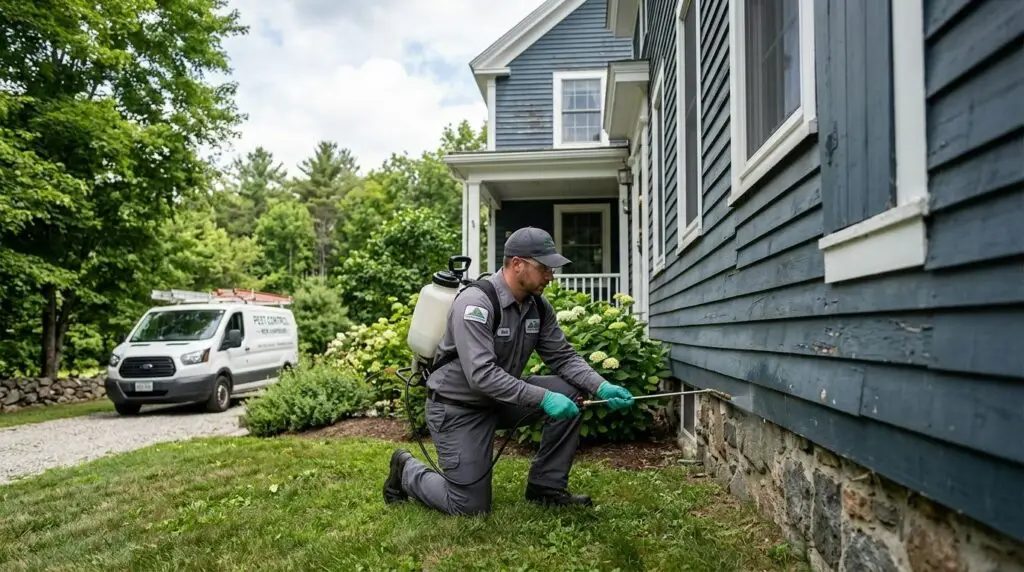
Pest control is a licensed trade in New Hampshire, and the state's Pesticide Control Board ties commercial applicator licensing to financial responsibility. That's a different starting point than most small service businesses face. A general liability insurance policy written for a generic contractor won't automatically cover a drift claim, a mislabeled chemical application, or damage to a client's HVAC system from a fumigation job.
Your risk profile also includes daily driving. Techs run multiple stops a day in a truck loaded with sprayers, bait stations, and chemical inventory — that's a commercial auto exposure most homeowners' policies and even some business auto forms don't anticipate correctly. In 2026, property managers and HOAs across New Hampshire are increasingly asking pest control vendors for certificates of insurance before signing a service agreement, which means gaps in coverage can cost you contracts, not just claims.
Confirm your workers' compensation requirement
New Hampshire law (RSA 281-A) requires employers to carry workers' compensation once they have one or more employees — full-time, part-time, or seasonal. Pest control companies that hire even one technician trigger this requirement immediately.
- Count every worker on payroll, including seasonal spring/summer hires for peak season
- Classify technicians correctly — misclassifying an employee as a 1099 contractor to skip coverage is a common audit trigger
- Get certificates of insurance from any subcontractor you use for overflow work
- Confirm your policy's classification code matches pest control operations, not general labor
- Review payroll changes annually since premium is tied to payroll totals
Carry general liability sized for pesticide application risk
General liability covers third-party bodily injury and property damage, but pesticide-related exclusions are common in off-the-shelf policies. Read the exclusions section before you assume you're covered.
- Confirm products-completed operations coverage applies to work performed, not just while on-site
- Ask specifically whether pesticide or chemical application is excluded or requires an endorsement
- Check that the policy covers damage to a client's property from equipment, not just the pesticide itself
- Commercial contracts and property management agreements commonly require $1 million per occurrence and $2 million aggregate — confirm your limits match what clients ask for
- Keep certificates of insurance ready to send same-day when a commercial client requests one
Insure company vehicles under commercial auto
A truck with your business name on the door, carrying chemical tanks and sprayers, is a commercial vehicle in the eyes of an insurer even if it's titled to the owner personally.
- Add every truck and van used for routes to a commercial auto policy, not a personal one
- Include hired and non-owned auto coverage if techs ever use personal vehicles for jobs
- Disclose that vehicles carry pesticide and chemical cargo — this affects underwriting
- List all drivers, including part-time and seasonal techs
- Review coverage before adding a new route vehicle rather than after an accident
Add pollution or pesticide liability coverage
Standard general liability policies routinely exclude pollution, and regulators and courts have treated pesticide drift as a pollution event in past claims nationally. This is the coverage gap that catches pest control operators off guard most often.
- Ask your agent directly whether pollution/pesticide liability is excluded from your GL policy
- Add a pesticide/pollution liability endorsement or standalone policy if drift, runoff, or contamination claims aren't covered
- Document application methods and label compliance — claims investigators look at this first
- Keep this coverage active continuously; a lapse can leave older applications uninsured if a claim surfaces later
- Tie renewal of this coverage to your state pesticide applicator license renewal date so nothing lapses quietly
Cover equipment and chemical inventory
Sprayers, bait station inventory, traps, and stored chemical stock represent real replacement cost that a general property policy may undervalue.
- Inventory equipment carried in trucks separately from what's stored at a shop or warehouse
- Consider inland marine coverage for tools and equipment that travel between job sites
- Value chemical inventory at replacement cost, not purchase cost, since prices shift year to year
- Secure storage to reduce theft exposure, which insurers factor into pricing
- Update your equipment list annually as you add sprayers or vehicles
Structure your business owners policy correctly
A business owners policy bundles property, general liability, and business interruption into one package, which is often simpler to manage than four standalone policies for a pest control operation.
- Confirm the BOP includes a pesticide or pollution endorsement rather than assuming it's automatic
- Add business interruption coverage sized to how long you'd need to replace a damaged shop or fleet vehicle
- Review the policy every year — a BOP written for your first year in business may not fit your current headcount
- Ask what's excluded before renewal, not after a claim
- Confirm workers' compensation is added separately since most BOPs don't include it
Add umbrella coverage once revenue grows
An umbrella policy extends the limits on your general liability and commercial auto once a single claim could exceed what those policies pay out.
- Layer umbrella coverage on top of GL and commercial auto rather than replacing either
- Reconsider your umbrella limit as revenue and fleet size grow year over year
- Check whether larger commercial contracts specify a minimum umbrella or excess liability requirement
- Confirm the umbrella policy actually extends pesticide/pollution coverage, since some umbrella forms exclude pollution entirely
Get your pest control policy reviewed
Call, text, or start a quote for a quick coverage review.
Comparison: coverage options for New Hampshire pest control companies
| Coverage | Best for | Key limitation |
|---|---|---|
| General liability | Bodily injury and property damage from routine service calls | Often excludes pollution/pesticide drift without an endorsement |
| Workers' compensation | Any company with one or more employees | Mandatory under NH RSA 281-A — not optional past your first hire |
| Commercial auto | Trucks carrying chemicals and equipment between jobs | Personal auto policies exclude business use entirely |
| Pollution/pesticide liability | Drift, runoff, and contamination claims | Rarely bundled automatically into a standard BOP |
| Umbrella insurance | Companies with growing revenue or large commercial contracts | Only extends limits — doesn't add new coverage types on its own |
Verdict: a New Hampshire pest control company needs general liability, workers' compensation, commercial auto, and a pollution/pesticide endorsement as the baseline — a bare BOP without that endorsement leaves the largest exposure in the business uncovered.
Common mistakes New Hampshire pest control companies make
- Assuming a personal auto policy covers a branded work truck. It doesn't, and a claim denial after an accident is the most common way operators find out.
- Skipping pollution liability because general liability "seems close enough." Drift and contamination claims are exactly the kind of loss standard GL policies are written to exclude.
- Classifying full-time techs as 1099 contractors to avoid workers' comp. NH RSA 281-A applies based on actual working relationship, not the label on a 1099 form.
- Underinsuring chemical inventory stored at a shop or garage. Replacement cost for a season's worth of product adds up faster than most owners estimate.
- Letting a certificate of insurance lapse before a big renewal season. Property managers and HOAs increasingly check this before signing, and a lapse can cost the contract, not just coverage.
FAQ
What insurance does a pest control company need in New Hampshire?
A New Hampshire pest control company needs general liability, workers’ compensation (once you have one or more employees), commercial auto for service vehicles, and a pollution or pesticide liability endorsement. A business owners policy can bundle several of these, but pollution coverage and workers’ comp are usually added separately.
Is workers’ compensation insurance required for pest control businesses in New Hampshire?
Yes. NH RSA 281-A requires workers’ compensation coverage once a business has one or more employees, including part-time and seasonal hires. This applies to pest control companies the same as any other employer in the state.
Does general liability insurance cover pesticide drift claims?
Not automatically. Standard general liability policies commonly exclude pollution, and pesticide drift is often treated as a pollution event. A pollution or pesticide liability endorsement closes this gap.
How much liability insurance do pest control companies need in New Hampshire?
Commercial contracts and property management agreements commonly require $1 million per occurrence and $2 million aggregate in general liability coverage. Check individual client contracts, since some commercial accounts set higher minimums.
Do I need commercial auto insurance for a pest control truck?
Yes, if the vehicle is used for business — carrying equipment, chemicals, or branded with your company name. Personal auto policies generally exclude business use, which leaves a gap after an accident.
What’s the difference between a BOP and separate business insurance policies?
A business owners policy bundles property, general liability, and business interruption coverage into one package, which simplifies management for a small pest control operation. Workers’ compensation and pollution/pesticide liability are typically still purchased separately.
Does my pest control business need pollution liability insurance?
Most pest control operators do, since chemical application carries drift and contamination risk that standard general liability policies exclude. It’s one of the most commonly missed coverages in this trade.
Can a pest control company operate without a business owners policy in New Hampshire?
Legally, yes, but most commercial clients and HOAs in 2026 request a certificate of insurance before signing a service agreement, which effectively requires liability coverage to win contracts.
One last thing
Most pest control operators focus on the pesticide risk and forget the paperwork risk: commercial clients, HOAs, and property managers are increasingly requiring the vendor's policy to name them as an additional insured before work starts. That's a five-minute request to your agent, but missing it in 2026 has cost more contracts than an actual claim ever has.
Related guides
- Commercial auto insurance for New Hampshire business fleets
- How to choose a business owners policy in New Hampshire
- Umbrella insurance for New Hampshire business owners