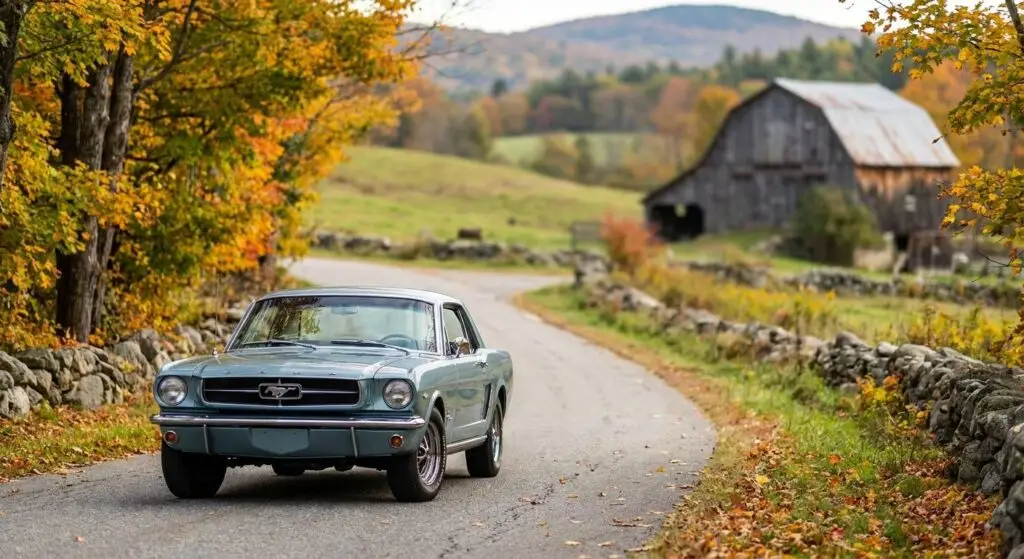
Collector cars in New Hampshire don't fit a standard auto policy, and insuring one the wrong way can leave a six-figure restoration covered for scrap value. This guide breaks down what actually matters when you're shopping classic car insurance in New Hampshire, and where the common mistakes happen.
- Classic car insurance in New Hampshire runs on agreed value, not actual cash value — mismatch that and a total loss pays out far below what the car is worth.
- Most agreed-value policies cap annual mileage between 2,500 and 7,500 miles; daily-driving a collector car voids the point of the policy.
- New Hampshire is the only state with no mandatory minimum auto insurance law, but lienholders and garages still require proof of coverage.
- Garage-kept, low-mileage collectors are the easiest Buy — anything driven regularly or stored outdoors needs a different setup.
Why this matters
A standard auto policy values your car at actual cash value — what a comparable used car sells for today. Run that math on a 1969 Camaro or a numbers-matching Corvette and the payout after a fire or a flood won't come close to covering the restoration receipts. Classic car insurance in New Hampshire exists specifically to fix that gap, but only if the policy is set up correctly from day one, in 2026 and beyond.
Who this is for
This guide is built for New Hampshire owners of vehicles that qualify as collector, antique, or classic under a specialty program — typically cars over 15-20 years old that are garage-kept, driven occasionally, and maintained in original or restored condition. If your car sits under a cover most of the winter and comes out for shows, cruise nights, and the occasional Sunday drive, you're the buyer this article is written for. If you're commuting in a vintage car five days a week, skip ahead to the what-to-avoid section — that's a different insurance problem.
What to look for in classic car insurance for NH collectors
Agreed value coverage
Agreed value locks in the payout amount at the start of the policy, based on an appraisal, photos, or documented purchase price. That number is what you get on a total loss, full stop, no depreciation argument with an adjuster. For any car worth restoring, this single feature is the reason to buy a specialty policy instead of adding the car to a standard auto plan.
Mileage limits and usage rules
Collector policies trade a lower premium structure for a promise: you won't use the car as transportation. Expect annual caps in the 2,500 to 7,500 mile range, and expect the insurer to ask how the car is used — shows, parades, club events, and occasional pleasure driving qualify; daily commuting typically doesn't. Go over the cap or misrepresent usage and you risk a denied claim, not just a rate hike.
Storage and garaging requirements
Most specialty programs require the car be kept in an enclosed, locked structure when not in use — a garage, not a driveway or a carport. If your classic lives in a detached garage on a New Hampshire property, that structure's own coverage matters too, especially if it's a converted barn or a building added after the main house was insured.
Spare parts and trailer coverage
Collectors accumulate spare engines, transmissions, trim, and glass that a standard policy won't touch. Confirm whether spare parts are covered on their own limit, and whether a trailer used to haul the car to shows is covered under the same policy or needs its own line.
How it coordinates with your daily driver
A classic car policy runs alongside your regular auto insurance, not instead of it — the two need to be written so a claim on one doesn't create a coverage gap on the other. Auto insurance for low-mileage drivers in New Hampshire covers the everyday-car side of that equation for anyone who's cut back on driving in general, which is common among collectors who've shifted miles to the weekend car.
New Hampshire's minimum insurance law
New Hampshire doesn't require drivers to carry auto insurance if they can prove financial responsibility another way — the only state in the country set up that way. That doesn't mean a classic car goes uninsured: a lienholder, a car club event, or a transport company will still ask for proof of coverage. How to meet New Hampshire's minimum auto insurance requirements breaks down what financial responsibility actually means if you're weighing whether coverage is optional for a car that rarely leaves the garage.
Top picks by collector scenario
The garage queen — the safe pick
One car, one owner, driven under 2,500 miles a year, stored in an attached or detached garage year-round. Agreed value coverage with a low mileage tier is the cleanest fit here, and premiums reflect the reduced risk. Verdict: Buy — this is the scenario collector policies were built for.
The empty-nester with a garage full of history
Couples who've downsized but kept the collector cars often have more garage space than daily-driver needs, and that garage is now protecting real value. If your household fits that profile, home insurance for empty nesters in New Hampshire is worth a review alongside the auto side, since the structure housing the collection needs coverage that matches what's parked inside it. Verdict: Consider — check both policies together, not separately.
The seasonal-property collector
Some NH collectors keep a classic at a lake house or seasonal property rather than the primary residence, especially owners who split time between states. Vacation home insurance for out-of-state owners in New Hampshire matters here because an unoccupied or seasonally-occupied structure has different requirements than a primary home, and a car stored there needs the garaging address on the policy to match. Verdict: Consider — confirm the storage address is listed correctly, or a claim can get complicated fast.
The active show-circuit driver
Owners who put 6,000-7,500 miles a year on a collector car chasing shows and cruise-ins across New England sit near the top of most mileage caps. This still works under a specialty policy, but it needs the higher mileage tier declared upfront, not estimated low to save a few dollars. Verdict: Buy, with the correct mileage tier — undercount the miles and a claim can be reduced or denied.
The daily-driven vintage car
If a classic car is your only transportation or gets driven more than a few thousand miles a year for regular errands, it doesn't fit the collector-policy model regardless of the car's age. Verdict: Skip — a standard auto policy, not a specialty collector program, is the right fit here.
What to avoid
- Stated value policies marketed as agreed value. Stated value still lets the insurer argue the payout down to actual cash value at claim time — read the policy language, not just the sales pitch.
- Underreporting mileage to get a lower rate. Insurers can and do pull odometer readings during a claim; a mismatch between reported and actual mileage is a fast way to get a payout reduced.
- Adding the classic to a standard policy for simplicity. It's simpler until there's a claim — actual cash value on a restored car almost always pays out less than the money already in it.
Get your classic car reviewed
A quick call covers agreed value, mileage tier, and storage in one pass.
Verdict comparison across scenarios
| Scenario | Typical annual mileage | Storage requirement | Coverage type | Verdict |
|---|---|---|---|---|
| Garage queen | Under 2,500 | Enclosed, locked | Agreed value | Buy |
| Empty-nester collection | 2,500-5,000 | Attached/detached garage | Agreed value + home review | Consider |
| Seasonal-property car | 2,500-5,000 | Storage at second property | Agreed value, address-matched | Consider |
| Active show driver | 5,000-7,500 | Enclosed | Agreed value, higher tier | Buy with correct tier |
| Daily-driven vintage car | Unlimited | Any | Standard auto policy | Skip |
FAQ
What is classic car insurance and how is it different from regular auto insurance in New Hampshire?
Classic car insurance in New Hampshire pays out an agreed value set when the policy is written, instead of the depreciated actual cash value a standard auto policy uses. It also comes with mileage caps and storage rules that a regular policy doesn’t require.
How much does classic car insurance cost in New Hampshire in 2026?
Cost depends on the car’s agreed value, mileage tier, and how it’s stored, so there’s no single figure that applies across the board in 2026. Lower mileage and enclosed storage generally push the premium down compared to a standard policy on the same car.
Do I need auto insurance if my classic car sits in storage all winter?
New Hampshire doesn’t legally require auto insurance if you can prove financial responsibility another way, but a stored classic still carries risk from fire, theft, and weather. Most owners keep comprehensive-only or a full collector policy active year-round for that reason.
Is agreed value coverage better than stated value for a classic car?
Agreed value is better because the payout amount is locked in before a claim happens, with no negotiation. Stated value policies often still let the insurer argue the payout down at claim time, so the difference matters more than the names suggest.
Can I drive my classic car every day and still get collector coverage?
No, daily driving disqualifies most collector policies, which are built around limited, occasional use. A car driven for regular errands or commuting needs a standard auto policy instead.
Does New Hampshire require minimum auto insurance for classic cars?
New Hampshire is the only state without a mandatory minimum auto insurance law, so a classic car isn’t legally required to carry coverage if you meet the state’s financial responsibility rules another way. Lienholders and some events still require proof of insurance regardless.
What mileage limit applies to classic car insurance policies?
Most agreed-value classic car policies cap annual mileage between 2,500 and 7,500 miles depending on the tier selected. Going over the declared limit without updating the policy can affect a claim.
Can classic car coverage run alongside my everyday car insurance?
Yes, a collector policy is written separately from your daily-driver auto policy, and both should be reviewed together so there’s no gap between them. That’s especially true if the classic and the daily car share a garage or a household.
One last thing
The single most common mistake isn't the coverage type — it's the mileage estimate. Owners round down to hit a lower rate tier, then find out during a claim that the odometer tells a different story than the application did. Declare the real number in 2026, even if it bumps the tier, because a slightly higher premium beats a reduced payout on a car that took years to restore.
Related guides