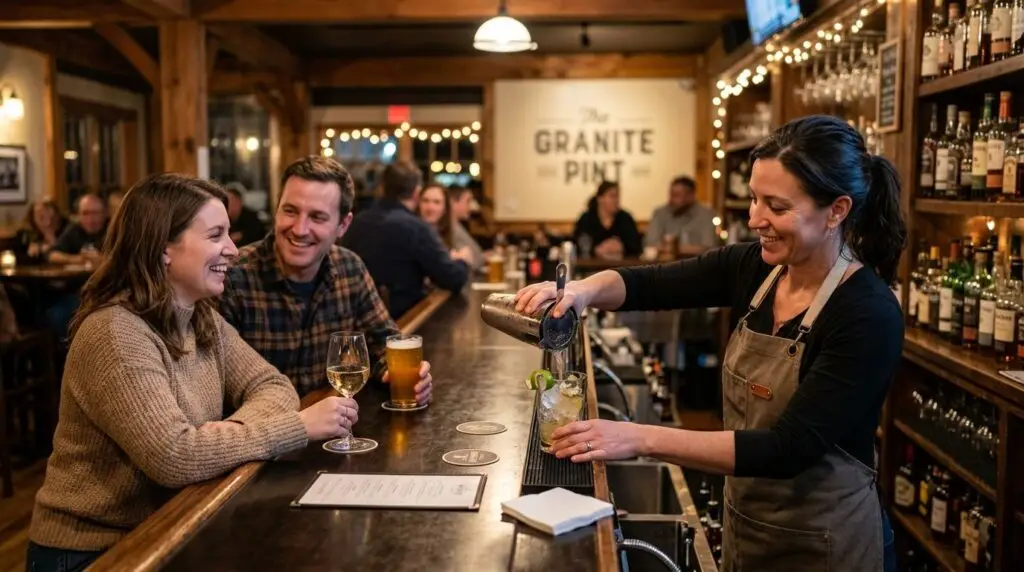
Liquor liability insurance for New Hampshire bars and restaurants covers claims when a patron you served alcohol to injures someone else or damages property, sitting alongside — not inside — the general liability policy that handles slip-and-falls and food complaints. A high-volume taproom pouring pints until 1 a.m. carries a different exposure than a farm-to-table restaurant serving wine with dinner, and the policy needs to match how alcohol actually moves through your business, not a generic template.
- New Hampshire law (RSA 179:59) requires liquor liability coverage before the state issues or renews an on-premise liquor license.
- Bars and nightclubs typically need a standalone liquor liability policy; restaurants often add it as a BOP endorsement instead.
- General liability almost never covers alcohol-related injury claims — liquor liability insurance in New Hampshire is a separate purchase.
- The Mello Agency reviews liquor liability alongside general liability and workers’ comp for New Hampshire restaurants and bars.
- Adding a full bar or extending hours without telling your carrier is the most common coverage gap going into 2026 renewals.
Why liquor liability insurance matters for New Hampshire bars and restaurants
New Hampshire ties liquor liability coverage directly to your liquor license under RSA 179:59 — no proof of coverage, no renewal. That's not a soft recommendation, it's a licensing requirement, and it applies whether you're pouring craft beer in Portsmouth or running a full bar in Manchester.
The legal drinking age in New Hampshire is 21, and over-service lawsuits routinely name both the server and the license holder, not just the intoxicated guest. Seasonal towns add another layer: bars near Lincoln, North Conway, and Waterville Valley see ski-season traffic spikes, while Laconia and Wolfeboro see summer lake crowds — both push liquor liability exposure up for a few months a year without necessarily raising your annual limits to match.
Confirm what your liquor license requires
Start with the license, not the policy. New Hampshire's Liquor Commission ties your on-premise license class directly to proof of liquor liability coverage, and mismatches here are what actually hold up renewals.
- Pull your current liquor license and check the class — full license, beverage license, or nightclub license
- Note your licensed hours, since service past 1 a.m. draws closer underwriting scrutiny
- Confirm whether the license covers indoor seating only or extends to an outdoor patio or beer garden
- Check for a separate catering or off-premise endorsement that needs its own liquor liability language
Separate your liquor liability exposure from general liability
General liability handles the injury that happens on your floor. Liquor liability handles the injury a patron you served causes after they walk out the door — and most standard general liability forms exclude alcohol claims entirely.
- Pull the last two years of incidents by cause — slip-and-fall versus alcohol-related — to see which exposure is bigger for your business
- Ask your current carrier directly whether liquor liability is excluded from your general liability form
- Check the general liability insurance for New Hampshire small businesses policy language for an alcohol exclusion clause before assuming you're covered
- Get liquor liability quoted as its own line item, never folded silently into a package rate
Match your limits to how alcohol drives revenue
A restaurant where beer and wine make up a small slice of sales carries a different underwriting profile than a bar where alcohol is most of the ticket.
- Calculate what share of gross receipts comes from alcohol sales — carriers ask for this number directly on the application
- Raise limits if you run happy hour specials, drink packages, or bottomless brunch
- Cover any outdoor beer garden, rooftop bar, or seasonal patio as its own line, not an afterthought
- Confirm limits stack with an umbrella policy if a judgment could exceed your primary liquor liability limit
Bundle liquor liability with the rest of your business insurance
Most New Hampshire restaurants and bars run liquor liability alongside general liability, property, and workers' comp under one coordinated program instead of juggling separate carriers with separate renewal dates.
- Package liquor liability with your business insurance for restaurants in New Hampshire so property and general liability renew on the same schedule
- Add workers' compensation if staff serve alcohol as part of their job duties — New Hampshire requires it for most employers with employees
- Layer an umbrella policy on top once your liquor liability limit looks thin against your revenue
- The Mello Agency reviews liquor liability, general liability, and workers' comp together for New Hampshire restaurants and bars so one thin limit isn't the only thing standing between a lawsuit and the business
Document responsible service training
Carriers price liquor liability lower for venues that can show an actual training program on file, not a poster behind the bar.
- Enroll bartenders and servers in a recognized responsible alcohol service course and keep completion records
- Log ID checks for any patron who looks under 30, not only under 21
- Put a written house policy in place for cutting off visibly intoxicated guests
- Keep incident reports for every refused service or removed guest — carriers ask for these at claims time and at renewal
Revisit coverage when your menu or hours change
A liquor liability policy written for a wine-and-dinner restaurant doesn't automatically flex when you add a late-night bar menu or start hosting DJ nights.
- Notify your carrier before extending hours past your current license limits
- Update the policy before adding a full bar if you currently only pour beer and wine
- Re-rate coverage before big one-off events — New Year's Eve, wedding buyouts, festival tie-ins
- Review the whole policy at every renewal, not only when something visibly changes
Liquor liability options for New Hampshire bars and restaurants
| Option | Best for | Key limitation | Verdict |
|---|---|---|---|
| Monoline liquor liability policy | Bars and nightclubs where alcohol drives most of the revenue | Doesn't cover slip-and-fall or food claims — needs a separate general liability policy | Buy |
| Liquor liability endorsement on a BOP | Restaurants where food is the primary business and alcohol is secondary | Endorsement limits are often lower than a standalone policy offers | Buy |
| Specialty/high-risk carrier | Late-night venues, live entertainment spots, or businesses with a prior claim | Underwriting takes longer and asks for more documentation upfront | Buy |
| No liquor liability coverage | No one serving alcohol for a fee in New Hampshire | Blocks license renewal under RSA 179:59 and leaves the business fully exposed | Skip |
Common mistakes New Hampshire bars and restaurants make
- Assuming general liability already covers alcohol claims — it almost never does, and finding out during a claim is the worst time
- Setting liquor liability limits off last year's sales instead of this year's bar program growth
- Forgetting to notify the carrier when hours change or a full bar gets added to a beer-and-wine license
- Treating responsible service training as a one-time class instead of an ongoing, documented program
- Letting liquor liability lapse mid-season, which then holds up the next liquor license renewal
Get your liquor liability reviewed
A quick review shows where your bar or restaurant’s coverage actually stands.
FAQ
What is liquor liability insurance and does New Hampshire require it?
Liquor liability insurance covers claims when a business that served alcohol is held responsible for injury or damage a served patron causes afterward. New Hampshire requires it under RSA 179:59 before the state issues or renews an on-premise liquor license.
Is liquor liability insurance separate from general liability?
Yes, liquor liability is a separate coverage from general liability in almost every standard policy. General liability handles slip-and-falls and property damage on-site; liquor liability handles what a served patron does after leaving.
How much liquor liability coverage does a New Hampshire bar need?
Coverage needs scale with how much of your revenue comes from alcohol sales and how late you’re licensed to serve. A bar running happy hour specials or late-night service typically needs higher limits than a restaurant pouring wine with dinner.
Does my restaurant need liquor liability if we only serve wine and beer?
Yes, liquor liability applies to beer and wine service, not just hard liquor. New Hampshire’s licensing requirement doesn’t distinguish by beverage type.
Does liquor liability cover food-borne illness claims too?
No, food-borne illness claims fall under general liability or a separate product liability endorsement, not liquor liability. Liquor liability is specifically tied to alcohol service and its aftermath.
What happens if my liquor liability lapses in New Hampshire?
A lapse can hold up your liquor license renewal since the state requires proof of coverage under RSA 179:59. It also leaves the business fully exposed if an over-service claim comes in during the gap.
Is liquor liability insurance required for a one-time event with alcohol?
Most one-time events serving alcohol in New Hampshire need a special one-day license, and that license typically carries its own liquor liability requirement. Check with the venue or your carrier before the event, not the week before.
Can I add liquor liability to my existing business owners policy?
Many restaurants add liquor liability as an endorsement to a business owners policy rather than buying a standalone policy. Bars and nightclubs where alcohol is the primary revenue source usually need a monoline liquor liability policy instead, since endorsement limits run lower.
One last thing
If your restaurant added a full bar or extended hours in 2026, tell your carrier before the next renewal — a policy written for beer and wine doesn't automatically extend to hard liquor or a 1 a.m. closing time, and that gap only surfaces after a claim, when it's too late to fix.
Related guides
- Workers' compensation insurance for New Hampshire small businesses
- Umbrella insurance for New Hampshire business owners