

Insuring a home purchased at auction in New Hampshire works like insuring any other home, with one twist: you have to move faster and disclose more, because auction sales skip the usual inspection period and seller disclosure form. Line up a quote before you bid, request a binder the moment you win, and expect the insurer to ask hard questions about vacancy and condition since nobody signed a disclosure statement vouching for the roof or the wiring.
The hidden cost most buyers miss isn't the premium itself — it's the coverage gap between winning the bid and closing the deed, a window where the home sits uninsured unless you act early.
- You can insure a home purchased at auction in New Hampshire before closing by getting a binder quote the day you win the bid.
- Vacant auction homes need a vacant-home endorsement or standalone vacant policy, not a standard homeowners form.
- No seller disclosure means insurers lean on inspections and photos — order one before or immediately after closing.
- Foreclosure and tax-lien auction properties often need short-term or builder’s risk coverage until renovations finish.
- FEMA flood zone status should be checked before you bid, not after, since flood coverage is a separate policy in 2026.
Why this matters
Auction sales close on a compressed timeline, and most contracts set a firm date with no financing or inspection contingency to hide behind. If you're insuring a home purchased at auction in New Hampshire and the deed transfers before your policy is bound, you're the owner of an uninsured asset the moment the gavel drops, or the moment the deed records for online auction platforms.
That's a different risk profile than a traditional purchase. Traditional buyers get 30 to 60 days with an inspection contingency, a seller disclosure, and a lender pushing the insurer for proof of coverage weeks ahead of closing. Auction buyers get none of that, so the insurer has less information and less time — which is exactly why a vacant home insurance policy or a binder-first approach matters more here than on a standard purchase.
How do you insure a home purchased at auction in New Hampshire?
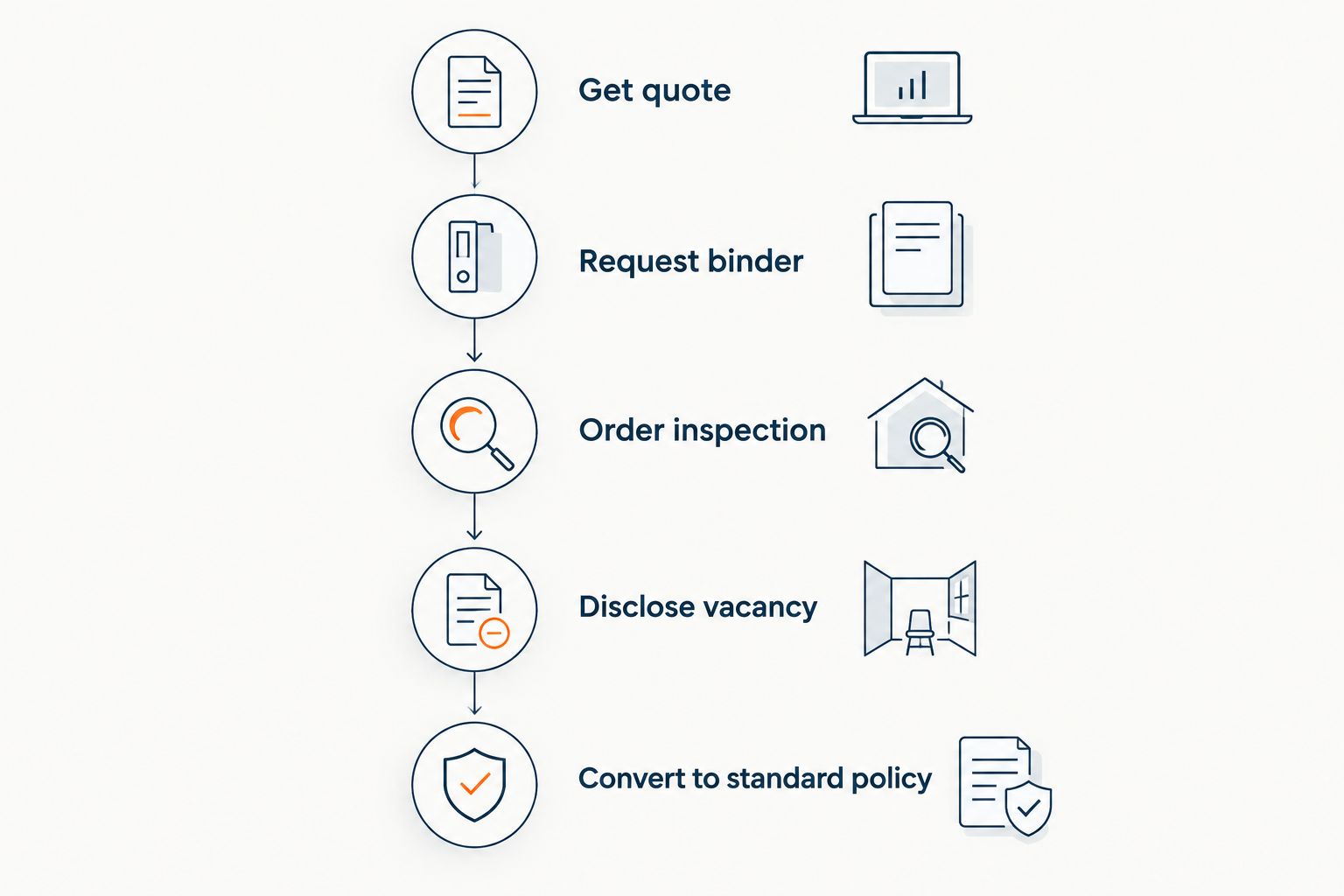
Follow these steps in order, starting before you place a bid:
- Get a preliminary quote before you bid. Share the address and any photos with an agent so you know roughly what coverage looks like before you're financially committed.
- Request a binder the day you win. A binder is temporary proof of coverage that lets you close on schedule even if the full underwriting file isn't finished yet.
- Order an inspection immediately. Since there's no seller disclosure form, the insurer wants eyes on the roof, electrical panel, heating system, and any water damage before writing a full-term policy.
- Disclose vacancy status. A home sitting empty for months at auction is a different risk than an occupied one — hiding this gets claims denied later.
- Check the FEMA flood zone before closing, not after, since auction listings rarely flag flood risk the way a standard MLS listing does.
- Line up builder's risk coverage if the home needs work before you can safely occupy it.
- Convert to a standard homeowners policy once the home is move-in ready and any renovation coverage lapses.
Cash-purchase auction homes
Cash buyers have no lender forcing a proof-of-insurance deadline, which means it's tempting to skip the binder and shop coverage later. That's the wrong move — the home is uninsured the moment you own it, lender or not. Verdict: bind coverage the same day you win, even without a lender pushing you.
Financed or lender-required auction purchases
Some auction platforms allow financed bids, and any lender involved will require a paid-in-full binder before releasing funds at closing. This scenario moves faster than a cash deal because the lender's timeline forces yours. Verdict: start the quote process before the auction closes, since lender underwriting adds days you don't have.
Foreclosure and tax-lien auction properties
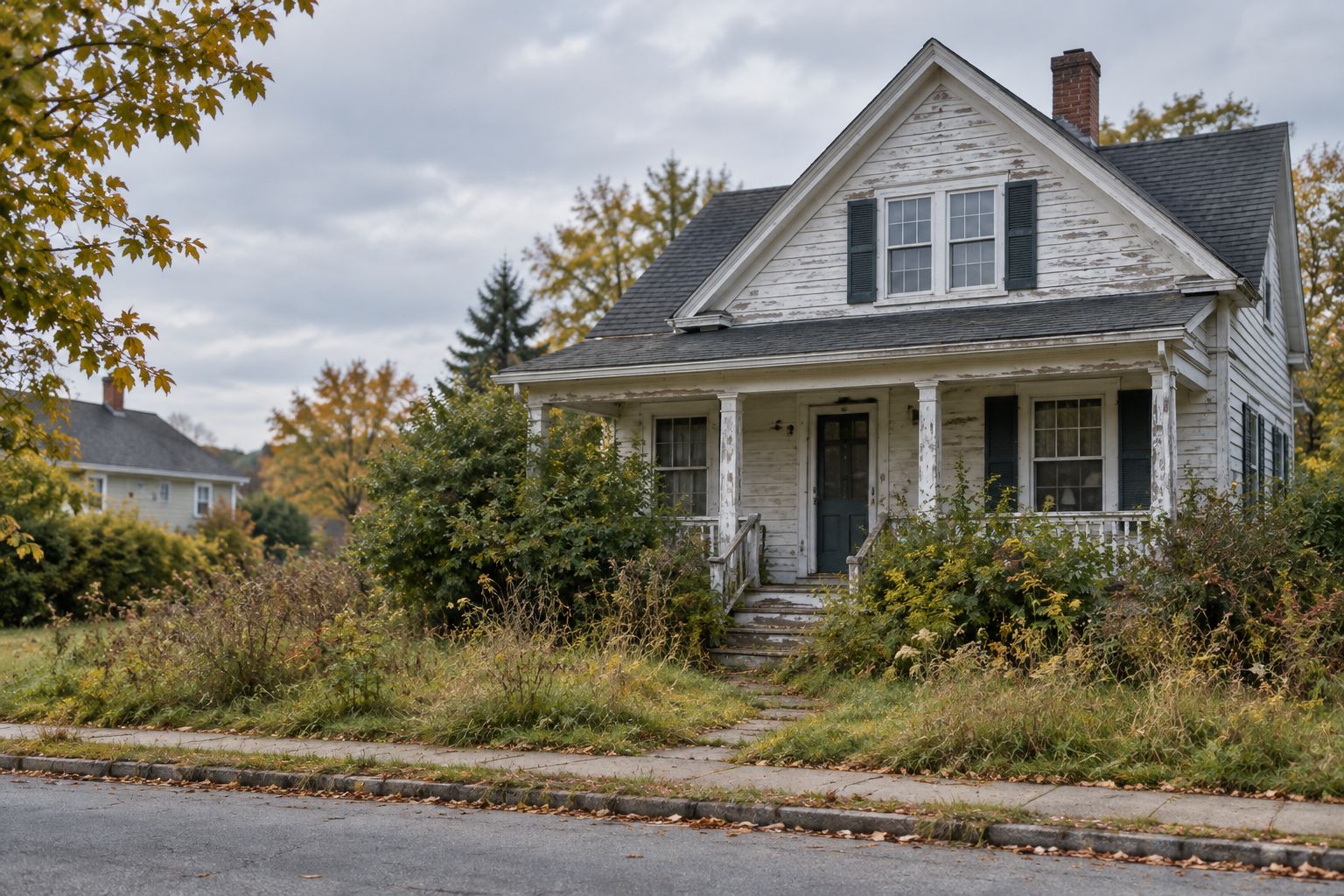
Homes coming out of foreclosure or a tax-lien sale often sat vacant or under-maintained for months, sometimes years. Insurers see these as elevated risk for vandalism, frozen pipes, and deferred maintenance, and many will only write a policy after an inspection confirms the systems work. Verdict: budget time for an inspection before assuming a standard policy will bind.
Homes needing renovation before you can live in them
If the property needs a new roof, electrical work, or plumbing before it's habitable, a standard homeowners policy usually won't cover it in that condition. Builder's risk insurance for renovation projects fills that gap until the home passes inspection for a standard policy. Verdict: don't let the renovation period go uninsured — builder's risk exists for exactly this window.
Why insuring an auction-bought home gets complicated
- No seller disclosure — insurers can't lean on a signed statement about known defects, so they rely more heavily on inspections and photos.
- Vacancy — a home sitting empty for an extended stretch before or after auction carries different risk than an occupied one, and most standard policies exclude vacancy-related claims past a set period.
- Compressed closing timelines — many auction contracts require closing within a set window with no financing or inspection contingency, leaving little runway to shop coverage.
- Deferred maintenance — foreclosure and tax-lien properties frequently have aging roofs, outdated wiring, or old heating systems that trigger underwriting flags.
- Unknown flood exposure — auction listings rarely disclose FEMA flood zone status the way a standard real estate listing does.
- Renovation gaps — homes that need work before they're habitable fall outside standard homeowners coverage until repairs are complete.
Do you need insurance the day you win an auction in New Hampshire?
Yes — the day you win the bid is the day your insurable interest starts, even if the deed doesn't record for another week or two. A binder policy covers that gap and can convert to full coverage once underwriting finishes.
Can you get insurance on a home in poor condition after auction?
Yes, but the path usually runs through builder's risk coverage or a specialty policy rather than a standard homeowners form. Once repairs bring the home up to insurable condition, it converts to a regular policy — insurers will typically want documentation of completed work first.
What happens if a home purchased at auction is vacant?
A vacant auction home needs a vacant-home endorsement or a standalone vacant dwelling policy, not a standard occupied-homeowner form. Standard policies commonly limit or exclude coverage for vandalism, theft, and water damage once a home sits empty past a set number of days, so the vacancy gap has to be closed separately.
Get a quote before you bid
Talk through your auction timeline before the gavel drops.
FAQ
How do you insure a home purchased at auction in New Hampshire?
You get a binder quote the day you win the bid, order an inspection since there’s no seller disclosure, and disclose vacancy status before the policy binds. Most buyers convert to a standard policy once the inspection clears and any repairs are done.
Do auction homes cost more to insure than regular purchases?
Auction homes are often priced higher for insurance underwriting because of vacancy history and unknown maintenance, not because the sale method itself changes the rate. The condition uncovered at inspection, not the auction label, drives the underwriting decision.
Can you insure a vacant home won at a New Hampshire auction?
Yes, through a vacant-home endorsement or a standalone vacant dwelling policy rather than a standard homeowners form. Standard policies typically restrict coverage once a home sits empty past a set number of days.
What is a binder and why does it matter for auction closings?
A binder is temporary proof of insurance that lets a closing proceed while full underwriting is still in progress. It matters for auction closings because the contract deadline rarely moves for a missing insurance file.
Do you need a home inspection before insuring an auction property?
Most insurers want one since there’s no seller disclosure form to lean on for an auction sale. The inspection covers the roof, electrical panel, heating system, and any signs of water damage.
Is flood insurance separate when buying a home at auction in New Hampshire?
Yes, flood coverage is always a separate policy from homeowners insurance, auction or not. Check the FEMA flood zone before you bid since auction listings rarely flag flood risk the way a standard MLS listing does.
What happens if a home needs renovation before you can insure it normally?
Builder’s risk insurance covers the property during the renovation period until it passes inspection for a standard homeowners policy. That gap is the most commonly skipped step by auction buyers in 2026.
Can you insure a foreclosure auction home the same way as a regular purchase?
Not always — foreclosure properties often carry deferred maintenance that pushes them toward a specialty or inspection-contingent policy first. Once repairs are documented, most convert to a standard homeowners policy.
One last thing
Most auction contracts and foreclosure sale terms don't extend the closing deadline for a missing insurance binder — start the quote conversation before you bid, not after you win, and you'll close on schedule instead of scrambling with a lender or the court on the other end of the phone in 2026.
Related guides
- Determining your home insurance coverage needs in New Hampshire
- Insuring older and historic homes in New Hampshire
- Appealing a high flood insurance premium in New Hampshire