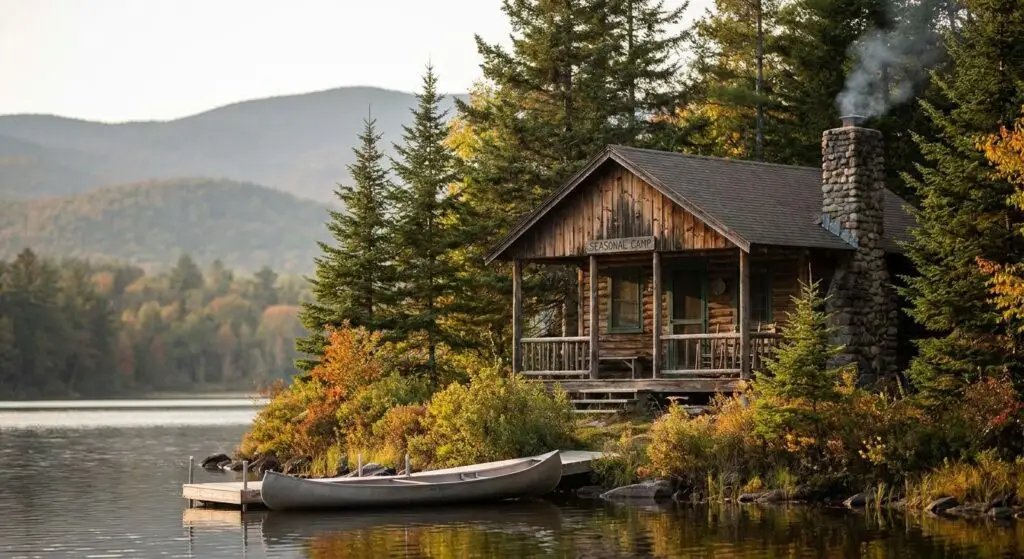
A seasonal camp in New Hampshire needs a different policy than a year-round house — most standard homeowners forms don't cover a building that sits empty from October to May, and that gap is exactly where camp owners get burned. Here's how to insure a seasonal camp in New Hampshire the right way, from picking the correct dwelling form to covering the dock nobody thinks about until it's gone.
- Seasonal camp insurance in New Hampshire requires a secondary-residence or seasonal dwelling form, not a standard HO-3 — buy the right form first.
- Lake camps in flood zones need a separate NFIP policy; the standard 30-day waiting period means you can’t bind it the week before ice-out.
- Wood stoves need a current inspection certificate or carriers will delay or deny binding coverage in 2026.
- Unoccupancy past 30-60 consecutive days without a vacancy endorsement can void a claim even on a valid policy.
- Docks, boathouses, and boats almost never fall under the dwelling policy — insure them separately or go uncovered.
Why this matters
Camps around Winnipesaukee, Sunapee, and Squam Lake get treated by too many owners like a smaller version of their primary home policy, and that assumption causes denied claims. A camp that's unheated and unoccupied for five or six months a year carries different risk than a house someone lives in daily — frozen pipes, break-ins nobody discovers for weeks, and dock damage from ice-out are the claims that actually happen on New Hampshire lake properties, and a generic homeowners form isn't built to answer for them.
2026 renewal season is already showing NH carriers tightening underwriting on older camp structures — knob-and-tube wiring, undocumented wood stoves, and fuse panels are getting flagged more often than they were even two years ago. Get ahead of it before your renewal notice shows up with a non-renewal instead of a premium.
What you'll need
- The camp's build year, square footage, and heating source (wood stove, propane, electric baseboard, none)
- Proof of a chimney/wood stove inspection if one is installed
- Flood zone designation for the property (check the FEMA map or ask your insurance agent)
- A rebuild cost estimate, not the tax-assessed value or purchase price
- Details on any dock, boathouse, or moored boat tied to the property
- Your current homeowners or vacation-home policy, if the camp is already insured
The steps
1. Confirm how the camp is currently classified
Carriers write camps under a few different labels — seasonal dwelling, secondary residence, or (incorrectly) vacant property — and the label determines what's actually covered. A camp misclassified as "vacant" instead of "seasonal" can see theft and vandalism claims denied outright. Pull your current policy declarations page and confirm which classification you're on before you assume anything is covered.
Common mistake: assuming a camp automatically qualifies as a seasonal residence just because it's near water — some carriers require a minimum number of occupied nights per year to keep that status.
2. Move to the right dwelling form
A standard HO-3 homeowners form is built for a primary, occupied residence. Seasonal camps generally need a DP-2 or DP-3 dwelling form, or a dedicated secondary/vacation-home policy that accounts for extended vacancy. If you own the camp but live elsewhere most of the year, this is the same underlying issue covered for vacation home insurance for out-of-state owners — the form has to match how the property is actually used, not how it's titled.
Common mistake: keeping a primary-residence homeowners policy on a camp because "it's cheaper," then finding out at claim time that the occupancy terms disqualify the claim.
3. Check the flood zone before you assume you're covered
Homeowners and dwelling policies exclude flood damage — full stop. Lakefront and riverfront camps in New Hampshire sit in or near FEMA-mapped flood zones more often than owners expect, and spring runoff plus ice-out damage is a real annual risk on these properties. NFIP flood policies carry a standard 30-day waiting period before coverage takes effect, so this isn't a step to handle the week before opening the camp for the season.
Expected outcome: you know your flood zone designation and either have a flood policy bound or have documented that the zone doesn't require one.
4. Get the wood stove properly covered
A large share of NH camps rely on a wood stove as primary or supplemental heat, and carriers now routinely ask for a current inspection certificate before binding or renewing coverage on a property with one. An uncertified stove is one of the fastest ways to get a binding delay or a flat decline in 2026. If your camp has a stove installed, review it against what's outlined for wood stove home insurance before your carrier asks.
Common mistake: installing or inheriting a wood stove and never getting the required inspection, then having it surface as a surprise underwriting condition at renewal.
5. Add a vacancy or unoccupancy endorsement
Most policies define a threshold — often 30 to 60 consecutive days — after which standard coverage narrows or lapses unless a vacancy endorsement is in place. A seasonal camp closed from Labor Day to Memorial Day blows past that threshold every single year without one. This endorsement is what keeps a burst pipe or a break-in from becoming an uncovered loss.
Expected outcome: the policy explicitly states how long the property can sit unoccupied without losing coverage, and you're inside that window or covered beyond it.
6. Insure the dock, boathouse, and boat separately
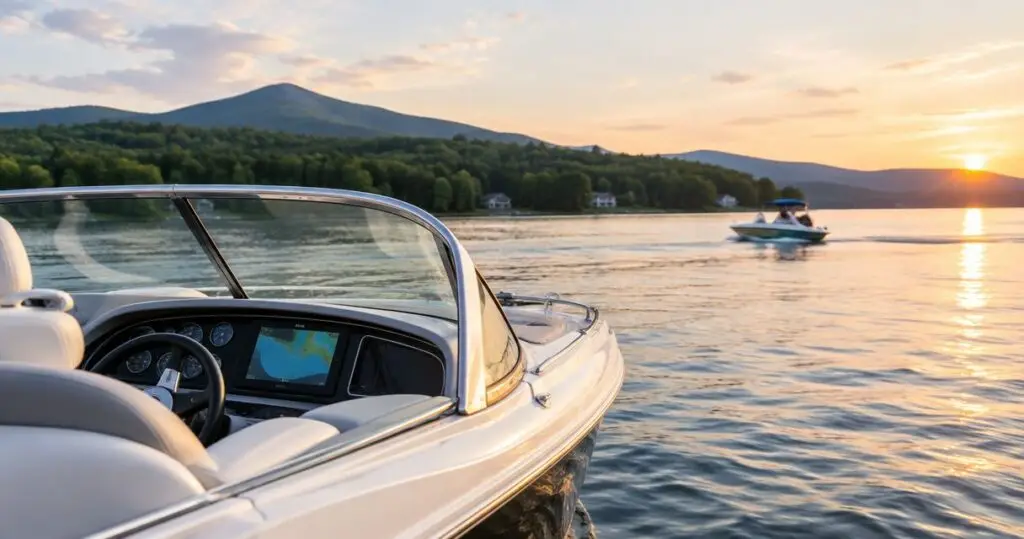
Docks, floats, boathouses, and any moored boat typically fall outside the dwelling policy entirely. If the camp has lake access with a dock or a boat tied to it, that needs its own line of coverage — boat insurance for lake owners covers exactly this gap. Owners who skip this step often discover it only after an ice shove takes out a dock in March.
Common mistake: assuming "the whole property" is covered under one homeowners policy, including the dock and boathouse.
7. Set liability limits that match how the camp is actually used
Lake camps host guests, kids jumping off docks, and boats coming and going — liability exposure is higher than a typical suburban home. Review your liability limit against that reality rather than the state minimum default your policy shipped with.
Expected outcome: liability coverage that reflects guest traffic, water access, and any recreational equipment on-site, not a generic figure.
8. Review coverage before opening the camp each spring
Do this every year, not just once. Rebuild costs shift, wood stove certifications expire, and flood maps get updated. A five-minute review before you open the camp for the 2026 season catches gaps before they become claims.
Troubleshooting
- Claim denied for a frozen/burst pipe: check whether the policy required freeze protection (monitored heat, drained plumbing, or a water shutoff) during vacancy — most seasonal forms require one of these.
- Carrier flags the property as "vacant" instead of "seasonal": confirm the minimum occupied-nights requirement with the carrier and document actual usage; a misclassification here is fixable before renewal, not after a claim.
- Binding delayed over the wood stove: get the Level 2 chimney/stove inspection scheduled immediately — this is the single most common holdup on camp policies with wood heat.
- Flood zone surprise at closing or renewal: pull the FEMA flood map designation yourself before you're told by an underwriter; it changes the timeline since NFIP has that 30-day wait.
- Dock or boat damage with no coverage: this almost always means the item was assumed to be under the dwelling policy — verify separately, don't assume.
- Rebuild cost estimate is years old: update it any time you renovate, or at minimum every few years, since underinsurance shows up hardest on total-loss claims.
Get your camp reviewed before opening day
Quick policy review by call or text, no pressure.
Tools and resources
- Current policy declarations page (to check classification and vacancy terms)
- FEMA flood map for the property address
- Wood stove/chimney inspection certificate
- A contractor-based rebuild cost estimate, not tax value
- New Hampshire lake properties homeowners coverage for a starting comparison of what a lake camp policy should include
What to do next
Once the camp itself is properly covered, look at what else ties to it — if you split time between the camp and a primary home out of state, vacation home insurance for out-of-state owners covers how that split occupancy gets underwritten. If liability is a concern given lake traffic and guests, umbrella insurance for New Hampshire homeowners extends limits beyond what the base dwelling policy carries.
FAQ
What kind of insurance does a seasonal camp in New Hampshire need?
A seasonal camp needs a dwelling form built for extended vacancy, such as a DP-2, DP-3, or dedicated secondary-residence policy, rather than a standard year-round homeowners form. It should also include a vacancy endorsement, flood coverage if the property sits in a flood zone, and separate coverage for any dock or boat.
Does homeowners insurance cover flood damage at a lake camp?
No, standard homeowners and dwelling policies exclude flood damage entirely. Lakefront camps need a separate NFIP flood policy, which carries a 30-day waiting period before it takes effect.
How long can a camp sit vacant before losing coverage?
Most policies set a threshold, often 30 to 60 consecutive days, after which coverage narrows unless a vacancy endorsement is added. Seasonal camps typically exceed this window every off-season, so the endorsement isn’t optional.
Is a wood stove hard to insure in a New Hampshire camp?
A wood stove itself isn’t hard to insure, but carriers usually require a current inspection certificate before binding or renewing coverage. Skipping this step is one of the most common reasons a camp policy gets delayed.
Do I need separate insurance for a dock or boathouse?
Yes, docks, boathouses, and moored boats generally fall outside the dwelling policy and need their own coverage. Ice-out damage to docks each spring is a common claim that goes uncovered when owners assume it’s included.
How much does seasonal camp insurance cost in New Hampshire?
Cost depends on the camp’s rebuild value, flood zone status, heating source, and liability exposure from lake access, so it varies property to property. A quick policy review is the fastest way to get an accurate number for a specific camp.
Can I insure a camp on the same policy as my primary home?
Generally no — a camp needs its own dwelling or secondary-residence policy separate from a primary home policy because the occupancy and vacancy terms differ. Some carriers offer discounts for holding both policies together even though they’re written separately.
What’s the biggest coverage gap owners miss on seasonal camps?
Unoccupancy limits and flood exclusions are the two gaps that cause the most denied claims. Both are avoidable with the right endorsement and a separate flood policy, but only if they’re addressed before a loss happens, not after.
One last thing
The claim that actually sinks camp owners isn't theft or fire — it's a frozen pipe discovered in April after a policy lapsed on an unoccupancy clause nobody read in 2026's renewal packet. Read the vacancy terms on your declarations page today, not at the next claim.
Related guides
- Umbrella insurance for New Hampshire homeowners
- Vacation home insurance for out-of-state owners in New Hampshire