
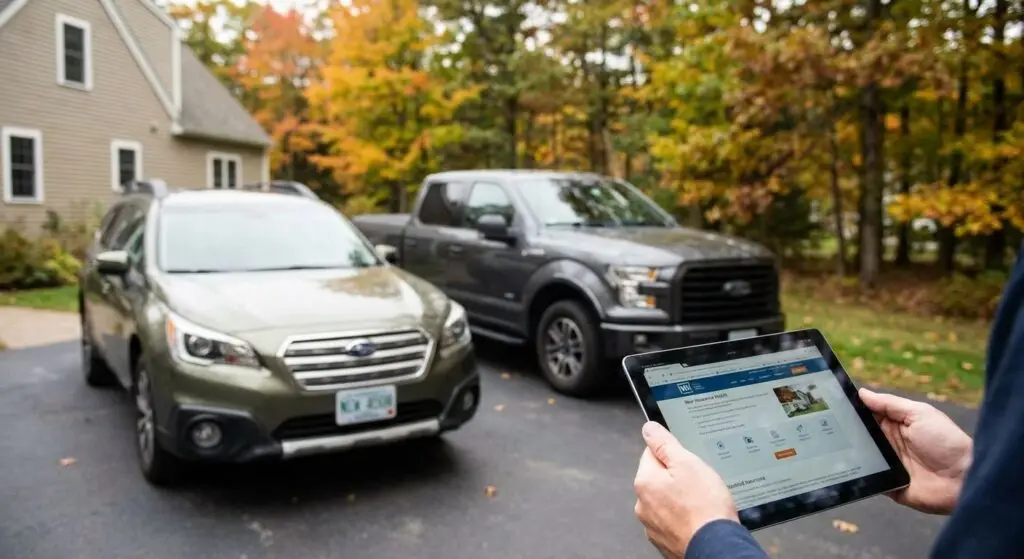
Insuring three vehicles separately in New Hampshire means three renewal dates, three sets of paperwork, and three chances to miss a multi-vehicle discount your household already qualifies for. One multi-car insurance policy fixes all three problems in a single afternoon.
- A multi-car insurance policy in New Hampshire puts every household vehicle on one carrier, one renewal date, one bill.
- Rate each driver to the car they actually drive most – mismatched assignments inflate premiums without adding coverage.
- New Hampshire is the only state without a mandatory auto insurance law, but a multi-car policy still needs to meet lender and liability requirements.
- Gather VINs, license numbers, and mileage estimates before you call – incomplete info is the #1 reason quotes come back high.
- Combining a multi-car policy with home insurance is worth asking about every time you requote in 2026.
Why this matters
New Hampshire is the only state in the country that doesn't legally require every driver to carry auto insurance. That doesn't mean multi-car households get a pass on cost or complexity. If you drive a financed vehicle, if any household member is required to file an SR-22, or if you simply want three cars covered without three separate headaches, a multi-car policy is still the practical move.
The insurer sees your household as one risk pool instead of three unrelated accounts. That usually means a lower blended rate, one payment schedule, and one point of contact when something goes wrong – a cracked windshield on the sedan, a fender-bender on the truck, a teenager who just got their license and needs to go on the family SUV.
What you'll need before you call
- VIN, year, make, and model for every vehicle going on the policy
- Driver's license number and date of birth for every household driver, including anyone occasional
- Current policy declarations pages if you're consolidating from separate carriers
- Estimated annual mileage per vehicle – garage-kept vs. daily commuter changes the math
- Lienholder or lender name if any vehicle is financed or leased
- Home address where the vehicles are principally garaged
The steps
1. Inventory every vehicle and driver in the household
List every car, truck, or SUV registered to anyone living at your address, plus every licensed driver – even the college kid who's only home summers. Insurers rate the whole household, not just the primary applicant, and leaving someone off can void coverage if they're behind the wheel during a claim.
Common mistake: leaving off a車 titled to a spouse's name because "it's not really mine." If it's garaged at your address, it belongs on the quote.
2. Assign each driver to the vehicle they use most
Rating is driver-to-vehicle, not driver-to-policy. The teenager who mostly drives the older sedan should be rated on that car, not the newer SUV, because insurers price the highest-risk driver against the vehicle they actually operate.
Getting this wrong is the single biggest reason multi-car quotes come back higher than expected. A 15-minute conversation with your agent to confirm assignments before binding saves real money over a 12-month term.
3. Decide coverage limits per vehicle, not just per policy
You don't have to run identical limits on every car. A 2019 daily driver might carry full comprehensive and collision, while a paid-off 2011 commuter car might only need liability plus uninsured motorist coverage. Splitting limits by vehicle age and loan status keeps premium dollars where they matter.
If any vehicle is financed or leased, ask specifically about gap insurance for financed and leased vehicles – standard collision coverage pays actual cash value, and that number can sit thousands below the loan balance in year two or three.
4. Set uninsured/underinsured motorist coverage across the whole policy
Because New Hampshire doesn't mandate insurance statewide, the odds of getting hit by an uninsured driver run higher here than in states with compulsory coverage. UM/UIM limits typically apply per policy rather than per car, so raising them once protects every vehicle and driver on the account.
Expected outcome: your agent should show you UM/UIM at matching or higher limits than your liability, not the state-minimum default most quote tools start with.
5. Ask about home-and-auto bundling before you finalize
Most carriers writing multi-car policies in New Hampshire also write home, condo, or renters coverage, and pricing the two together almost always beats pricing them apart. Before you sign anything, ask your agent to run the numbers on bundling home and auto insurance alongside the multi-car quote – it's a five-minute request that can shift the total household number meaningfully.
6. Compare the consolidated quote against your current carriers
If you're moving vehicles off two or three separate policies, get the combined multi-car number in writing before you cancel anything. If the new quote isn't clearly better, it's worth walking through how to switch auto insurance companies in New Hampshire so you don't create a coverage gap during the transition.
Common mistake: canceling the old policy before the new one is confirmed active. A lapse of even a few days shows up on your record and can raise future rates.
7. Confirm the effective date and get every vehicle on paper
Once you accept the quote, confirm the effective date matches when your old coverage ends, and get a copy of the declarations page showing every vehicle, driver, and limit listed correctly. Read it line by line – a missing VIN or a driver left off is the kind of error that only surfaces during a claim, which is the worst possible time to find it.
Combine your vehicles into one policy
Get a household quote across every car in one call.
Troubleshooting
One driver has a rough record and it's dragging the whole quote up. Ask whether that driver can be rated on the lowest-value vehicle instead of the newest one, or whether excluding them (if they truly never drive) is an option. If the record includes a DUI or lapse, look at SR-22 insurance for New Hampshire drivers to understand what filing requirements apply before you shop further.
A vehicle is titled to someone outside the household. Carriers generally want the registered owner and the primary driver to be the same person or a household member. If a car is titled to an out-of-state relative, expect the carrier to ask for extra documentation or decline that vehicle for the policy.
You got hit by an uninsured driver and aren't sure what happens next. Each vehicle's UM/UIM coverage applies independently even under one household policy, and the claims process largely mirrors what you'd see anywhere else in the country – the same fundamentals behind filing an uninsured motorist claim apply regardless of state: document the scene, get a police report, and notify your carrier immediately.
A teen driver is about to get licensed mid-term. Call before the license arrives, not after. Adding a new driver mid-policy is routine, but doing it retroactively after an incident is not.
One car is used for rideshare or delivery work. Standard personal auto policies exclude commercial use, even under a multi-car household plan. That vehicle needs its own rider or a separate commercial policy regardless of how the rest of the fleet is set up.
Your renewal jumped after adding a car. Ask specifically what changed – a new vehicle, a new driver, or a claims-history update on an existing car. Multi-car discounts should offset most of the added cost; if they aren't, that's worth a direct conversation with your agent.
Tools and resources
- Vehicle titles and current registration for every car
- Prior declarations pages from any carrier you're leaving
- A list of household drivers with license numbers
- Your agent's direct line for mid-term changes (new driver, new car, address change)
What to do next
Once your multi-car policy is in place, revisit it any time a vehicle, driver, or loan status changes – not just at renewal. If your household situation involves a financed car losing value faster than the loan pays down, how to lower car insurance rates after an accident in NH walks through the levers that actually move your premium after a claim hits the record.
FAQ
What is a multi-car insurance policy in New Hampshire?
A multi-car insurance policy in New Hampshire covers every vehicle registered to your household under one carrier, one renewal date, and one combined premium instead of separate policies per car. Most insurers apply a discount for the second, third, or additional vehicle.
Does New Hampshire require auto insurance?
New Hampshire is the only state that doesn’t mandate auto insurance for most drivers, but you still need to meet financial responsibility rules if you’re in an at-fault accident. Drivers required to file an SR-22 or those financing a vehicle almost always need coverage regardless of the state law.
How many vehicles can go on one multi-car policy?
Most New Hampshire carriers allow anywhere from two to five or more vehicles on a single household policy as long as all vehicles are registered to residents at the same address. Larger households or those with commercial-use vehicles may need a separate arrangement for those vehicles.
Is it cheaper to insure multiple cars on one policy?
Yes, in most cases combining vehicles on one policy costs less than insuring them separately because carriers apply a multi-vehicle discount and spread fixed administrative costs across the whole account. The exact savings depend on driver records and vehicle types, so a direct quote comparison is the only way to confirm the number for your household.
Can I put different coverage limits on each car in a multi-car policy?
Yes, you can set different comprehensive and collision limits per vehicle based on age and loan status, though liability and uninsured motorist limits typically apply across the whole policy. A financed car usually needs higher coverage than a paid-off older vehicle.
What happens if I add a new car to an existing multi-car policy?
Adding a vehicle mid-term usually takes a single phone call, and the carrier prorates the added premium for the rest of the policy term. You’ll need the VIN, purchase date, and primary driver assigned to the new vehicle before the call.
Should I bundle home and auto with a multi-car policy?
Bundling home and auto insurance alongside a multi-car policy in New Hampshire usually lowers the combined premium more than either coverage priced alone. It’s worth requesting that combined quote every time you shop, even if you weren’t planning to switch home insurance.
Does removing a car from a multi-car policy affect the discount on the rest?
Yes, dropping below the carrier’s minimum vehicle count for a multi-car discount can raise the per-vehicle rate on the remaining cars. Confirm the new premium before removing a vehicle rather than assuming the rest of the policy stays flat.
One last thing
The detail most households miss isn't the discount – it's the UM/UIM limit. Because New Hampshire doesn't require every driver on the road to carry insurance, the coverage that protects your family when the other driver has none often gets left at the state minimum by default. Raising it once covers every vehicle and every driver on the policy, and it's usually a small line-item change compared to the rest of the premium.
Related guides
- How to switch auto insurance companies in New Hampshire
- How to lower car insurance rates after an accident in NH
- Gap insurance for financed and leased vehicles in NH
- SR-22 insurance for New Hampshire drivers
- How to bundle home and auto insurance in New Hampshire