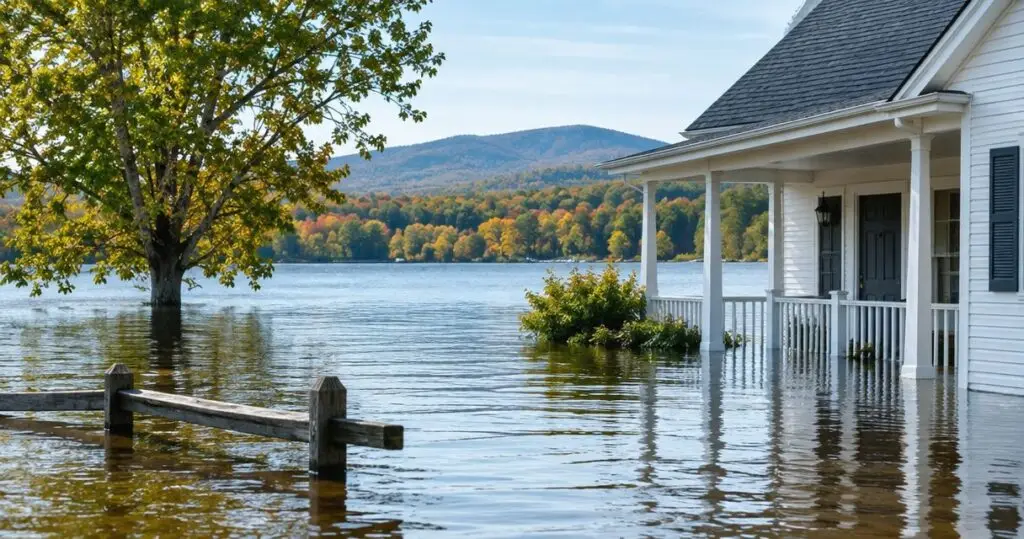
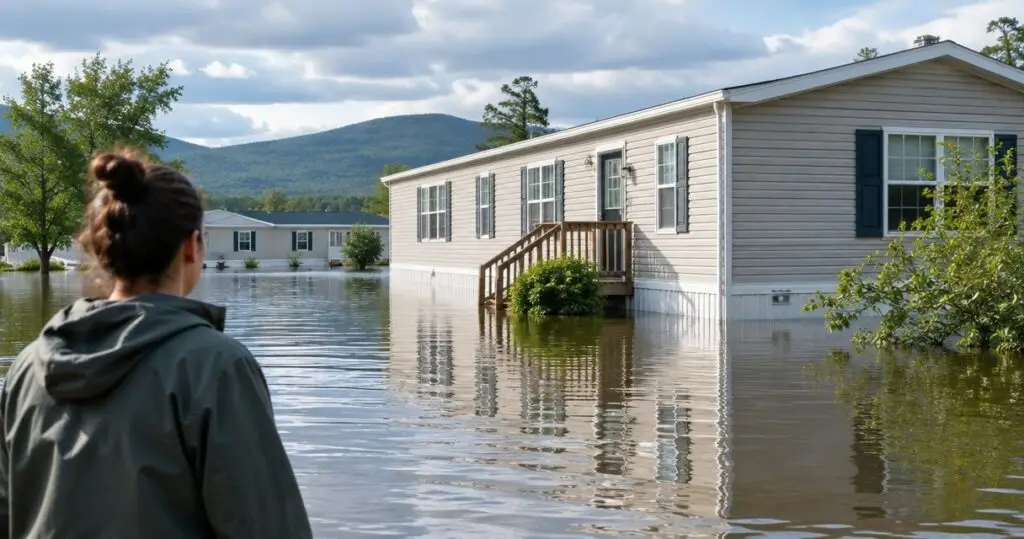
New Hampshire manufactured and mobile home flood insurance is separate property coverage designed to pay for direct physical damage caused by flooding, with the aim of restoring the home and replacing insured belongings. In 2026, owners must account for the home's classification, foundation, elevation, land arrangement, and lender requirements before choosing a policy.
- Flood insurance for mobile homes New Hampshire owners need is separate from a manufactured-home policy.
- NFIP residential limits reach $250,000 for the building and $100,000 for contents.
- Most NFIP policies have a 30-day waiting period, subject to recognized exceptions.
- Compare NFIP and private policies using identical building and contents limits.
- Verify the home classification, foundation, elevation, and ownership arrangement before requesting quotes.
Why flood insurance matters for manufactured home owners
A standard manufactured and mobile home insurance policy generally excludes flooding. That means the policy covering fire, theft, wind, and personal liability does not automatically pay when surface water, river overflow, or storm surge enters the home.
The distinction matters in 2026 because lenders apply separate flood requirements. If a manufactured home secures a federally backed loan and sits in a FEMA Special Flood Hazard Area, the lender generally requires flood insurance. A lender can also require coverage outside that area when its underwriting identifies additional risk.
Your FEMA flood zone is only one part of the decision. The home's elevation, distance from water, foundation type, replacement cost, and flood history can affect eligibility and policy terms. Manufactured home owners must also establish whether they own the home, the land, or both because flood coverage does not insure the land itself.
Flood insurance is not a replacement for manufactured-home insurance; the two policies cover different causes of loss. Reviewing both policies together is the practical way to find exclusions, mismatched limits, and different effective dates before water damage occurs.
How to choose flood insurance for a mobile home
Identify your home correctly
Confirm whether the property is legally classified as a mobile home, manufactured home, or modular home. HUD's federal manufactured-home construction standards took effect on June 15, 1976, so the build date affects which term applies and what documentation an insurer requests.
A modular home is normally built to state or local building codes and treated more like a site-built house. A manufactured home is built on a permanent chassis under federal standards. Those classifications are not interchangeable during underwriting.
- Find the construction date on the data plate, title, registration, purchase documents, or local property record.
- Record the manufacturer, model, dimensions, serial number, and current location exactly as the documents show them.
- Confirm whether the home is titled as personal property or recorded as real property with the municipality.
- Tell the insurer about additions, enclosed porches, decks, garages, and other structures connected to the home.
- Resolve conflicting records before requesting a final quote or submitting lender documents.
Check the flood zone and lender requirement
Use FEMA's Flood Map Service Center and your municipality's floodplain information to identify the mapped zone for the exact property address. Do not rely on a neighbor's zone, a real estate listing, or a map screenshot without the current panel information.
In 2026, being outside a Special Flood Hazard Area does not mean the property has no flood exposure. It means the federal mandatory-purchase rule may not apply. Your lender can still impose a requirement, and you can still buy coverage voluntarily.
- Save the current flood map panel number, zone designation, and effective date for your records.
- Ask the lender for its written flood determination instead of relying on a verbal answer.
- Confirm whether the requirement applies to the building, contents, or only the loan balance.
- Check municipal records for local drainage, floodplain, or elevation documents tied to the lot.
- Recheck the determination after refinancing, moving the home, or receiving a map-change notice.
Document the foundation and elevation
Insurers need to understand how the home is installed. A permanent foundation, piers, blocks, crawlspace, basement, enclosure, tie-down system, and utility placement create different underwriting questions.
An elevation certificate records measurements used to evaluate the structure against the mapped flood elevation. Not every property needs one to obtain a quote, but a lender or insurer can request it when existing records are incomplete or the property presents elevation questions.
- Photograph the foundation, anchoring, skirting, flood openings, stairs, and attached structures from several sides.
- Gather installation permits, certificates of occupancy, foundation plans, and inspection records that remain available.
- Locate any existing elevation certificate before paying for a new survey or assessment.
- Tell the agent where heating, electrical, plumbing, and water-heating equipment sit relative to the floor.
- Report changes made after installation, including additions, enclosed areas, grading work, and relocated utilities.
Set building and contents limits separately
Flood policies divide the home and personal belongings into separate coverage categories. Building coverage can address the insured structure and qualifying installed components, while contents coverage addresses eligible belongings inside the home.
For 2026, the NFIP residential maximum is $250,000 for building coverage and $100,000 for contents coverage. Those are maximum available limits, not automatic recommendations. Your selections should reflect the home's insurable replacement cost and the belongings you need protected.
- Request a current replacement-cost estimate for the home rather than using its sale price or loan balance.
- Make a room-by-room inventory of furniture, appliances, clothing, electronics, tools, and other belongings.
- Ask how the policy settles building and contents losses because replacement cost and actual cash value are different.
- Review limits for property stored below the elevated living area, in a basement, or inside an enclosure.
- Keep receipts, photographs, serial numbers, and ownership records somewhere a flood cannot destroy them.
Compare NFIP and private flood policies
Use the same address, home details, limits, deductibles, and requested effective date when comparing policies. Otherwise, a lower quote can simply reflect less coverage rather than a better option.
The NFIP provides a standardized federal policy with published coverage limits. Private flood insurance is issued by private carriers, so eligibility, forms, deductibles, and renewal terms vary. In 2026, your lender must review whether a private policy satisfies its flood-insurance requirements.
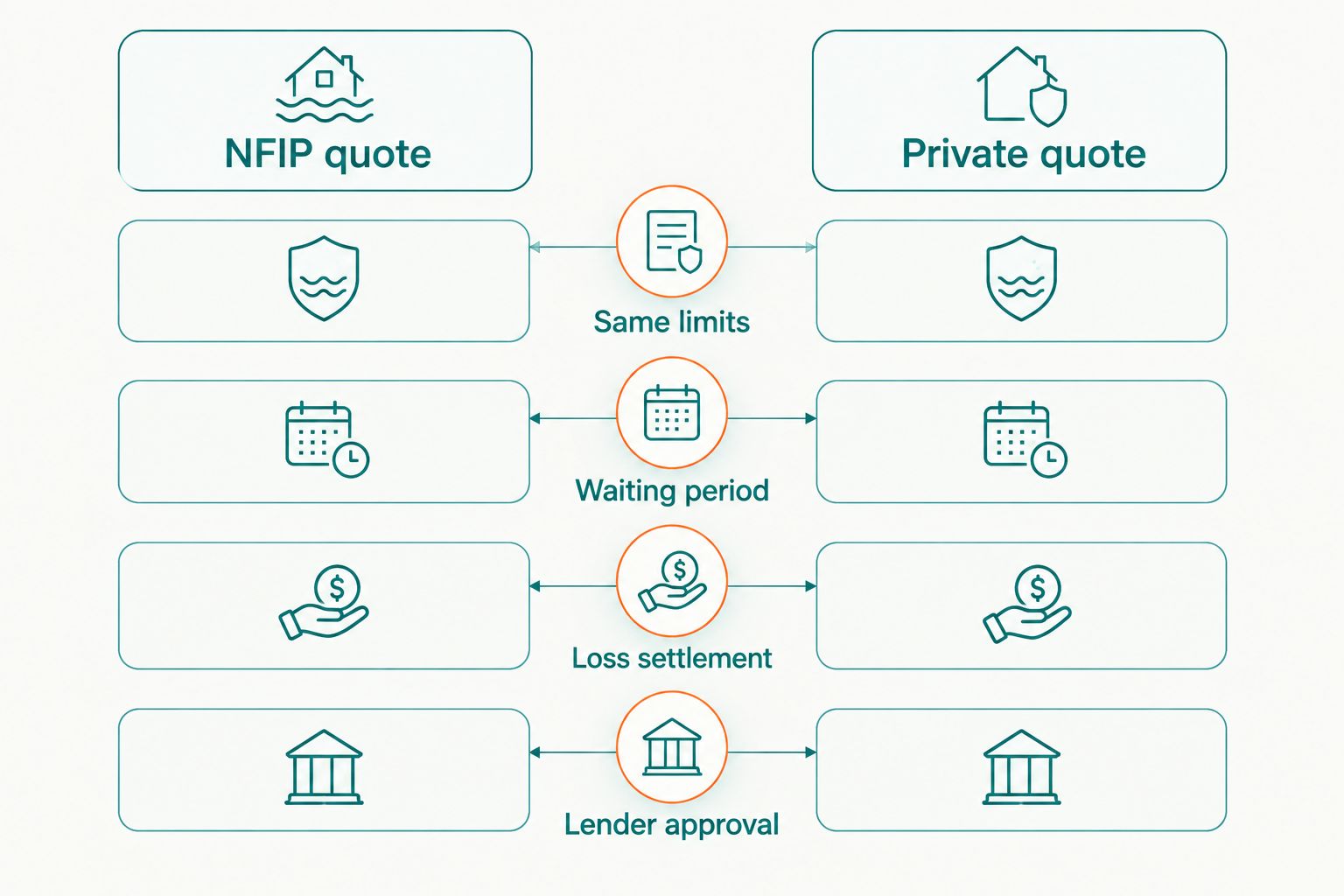
- Request an NFIP quote and at least one eligible private option for the same property details.
- Compare building coverage, contents coverage, deductibles, exclusions, waiting periods, and loss-settlement terms line by line.
- Ask the lender to approve a private policy before replacing coverage it already accepts.
- Check how each policy treats temporary living costs because flood forms do not provide identical benefits.
- Ask The Mello Agency to explain material differences without treating the least expensive quote as the automatic winner.
Coordinate flood and home coverage
A flood claim can involve more than one cause of damage. Wind can damage the roof while rising water enters at ground level, creating separate questions for the manufactured-home carrier and flood insurer.
Coordination does not combine the policies into one contract. It gives you a clear record of which policy addresses each cause of loss, whom to contact, and when coverage begins or renews.
- Store both declarations pages, policy forms, inventories, photographs, and agent contact details together.
- Record each policy's effective date, expiration date, deductible, limits, and claims telephone number.
- Review flood coverage for finished basements if the property includes below-grade finished space.
- Ask how each carrier handles damage involving both wind-driven openings and rising surface water.
- Report a loss promptly to every carrier that could have responsibility instead of choosing one without guidance.
Start coverage before the risk becomes immediate
Most new NFIP policies have a 30-day waiting period before coverage begins, although recognized exceptions apply. Private-policy waiting periods vary, so the effective date must be confirmed from the actual quote and binder.
Buying coverage after a watch, warning, or approaching storm can leave the home uninsured for that event. In 2026, plan around snowmelt, heavy rain, coastal storms, and lender deadlines rather than waiting for water levels to rise.
- Confirm the effective date in writing before treating the property as insured.
- Ask whether a loan closing, map revision, or other circumstance qualifies for a waiting-period exception.
- Keep existing coverage active until replacement coverage is confirmed and accepted by the lender.
- Review renewal documents early enough to correct an address, lender, limit, or property-description error.
- Recheck coverage after moving the home, changing the foundation, refinancing, or transferring ownership.
Flood insurance options compared
No single policy path is best for every manufactured home. The correct option depends on lender acceptance, the home's value, available limits, underwriting eligibility, waiting periods, and the coverage form offered for that address in 2026.
| Option | Best for | Main advantage | Key limitation |
|---|---|---|---|
| NFIP policy | Owners who want a standardized federal flood form or need lender-compliant coverage | Published rules and residential coverage limits | Building coverage cannot exceed $250,000 and contents cannot exceed $100,000 |
| Private flood policy | Owners whose property qualifies for private underwriting and whose lender accepts the form | Limits, deductibles, and included coverages can differ from NFIP | Eligibility and renewal terms vary by carrier and property |
| NFIP with excess coverage | Homes needing building limits above the NFIP maximum | Keeps an NFIP base while adding eligible coverage above its limit | Requires coordinating separate forms, deductibles, and claim responsibilities |
The Mello Agency is best for New Hampshire manufactured-home owners who want a flood insurance review alongside their existing home coverage. The practical limitation is that no reliable recommendation exists until the home's address, classification, foundation, limits, and lender requirements are known.
Review both policies together
Compare your manufactured-home and flood coverage using the same property details.
Common mistakes manufactured home owners make
Assuming the home policy includes flood
A manufactured-home policy and a flood policy address different causes of loss. Seeing water damage listed somewhere in the home policy does not mean rising surface water is covered. Read the flood exclusion and request a separate flood quote instead of relying on the policy name.
Choosing limits from the loan balance
The mortgage balance measures debt, not the cost of repairing or replacing the home. A low balance can produce inadequate building coverage, while a high balance can include land value that flood insurance does not cover. Base the discussion on insurable property and documented belongings.
Comparing quotes with different terms
A quote with a larger deductible, lower contents limit, or longer waiting period is not directly comparable to one offering broader terms. Put each quote into the same format before deciding. A quick The Mello Agency flood insurance review can identify those mismatches.
Ignoring the home's legal classification
Calling every factory-built property a mobile home can create errors in the application. The construction date, chassis, title status, building code, and installation documents determine how the property is classified. Give the insurer the documented classification rather than a casual description.
Treating the park owner's policy as personal coverage
A manufactured-home community can insure roads, common areas, offices, and property it owns. That coverage does not automatically insure a resident-owned home or the resident's belongings. Confirm your responsibility under the lease and insure the property you own.
FAQ
Does homeowners insurance cover flooding for a mobile home?
No, standard manufactured-home and homeowners policies generally exclude flooding caused by rising surface water. You need a separate NFIP or private flood policy for that exposure.
Is flood insurance required for a manufactured home in New Hampshire?
It is generally required when the home secures a federally backed loan and sits in a FEMA Special Flood Hazard Area. A lender can also require coverage in other locations under its own underwriting rules.
What’s the best flood insurance for a mobile home in New Hampshire?
The best option is the lender-approved policy that fits the home’s replacement cost, contents, foundation, elevation, and ownership arrangement. Compare NFIP and private forms using identical limits before choosing.
How much does mobile-home flood insurance cost in 2026?
The cost depends on the specific property, requested coverage, deductible, elevation, distance from water, and other rating factors. The Mello Agency compares flood insurance only after collecting those property details.
How long is the NFIP waiting period?
Most new NFIP policies have a 30-day waiting period before coverage begins. Recognized exceptions exist, including certain coverage obtained in connection with a loan transaction.
What are the NFIP coverage limits for a manufactured home?
The 2026 NFIP residential limits are $250,000 for the building and $100,000 for contents. Building and contents coverage must be selected separately.
Can I buy flood insurance outside a high-risk flood zone?
Yes, flood insurance is available outside FEMA Special Flood Hazard Areas. A lower mapped risk does not prevent flooding or stop a lender from requiring coverage.
Does a mobile-home park’s insurance cover my home?
Not automatically. A park’s policy covers property and responsibilities belonging to the park, while a resident normally needs separate coverage for a resident-owned home and belongings.
One last thing
Do not submit the flood application with a shortened address, outdated unit number, or different home classification from the mortgage and property records. A small mismatch can delay lender approval or create questions during a claim.
For a 2026 review, place the flood determination, home declarations page, title or property record, installation documents, elevation certificate, and contents inventory in one file. Bring that file to The Mello Agency so the flood and manufactured-home coverage can be checked against the same facts.
Related guides
- Flood insurance for New Hampshire lake homes
- Home insurance for New Hampshire coastal properties
- How to insure a seasonal camp in New Hampshire