
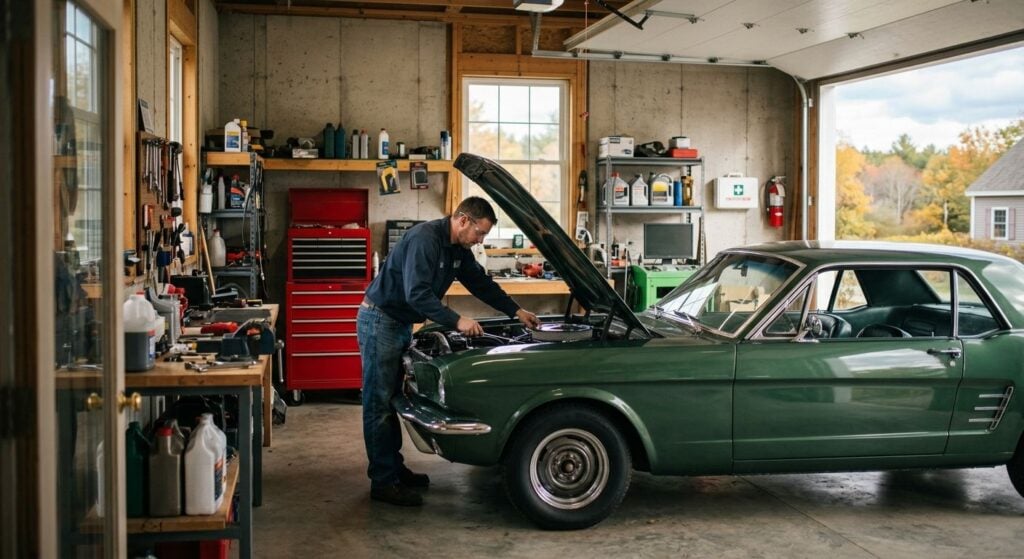
To insure a garage workshop in New Hampshire in 2026, disclose how you use the space, insure tools and improvements under the correct property coverage, and keep every vehicle on its own auto or collector policy. A personal workshop can fit under homeowners coverage, while paid repairs, customer vehicles, parts sales, or other commercial activity require business insurance.
- How to insure a garage workshop NH: disclose the space, inventory tools, and separate personal use from business use.
- Homeowners coverage does not replace auto coverage for a project car or business coverage for paid repairs.
- Themelloagency verdict: garage workshop insurance starts with home coverage, then separates vehicles and commercial activity.
- Review fire, theft, liability, vehicle, weather, and flood exposures before changing the space in 2026.
Why this matters
A garage workshop combines property, vehicle, injury, fire, and weather exposures in one room. Your policy needs to reflect the actual use of that room, not simply describe it as a garage.
Start with your building and personal property limits using this guide to determining home insurance coverage needs in New Hampshire. Then review the workshop separately because tools, permanent equipment, project cars, and paid work can fall under different policy sections or exclusions.
How to insure a garage workshop in NH
Use these seven steps for a 2026 coverage review. The goal is to give the insurer a clear description of the building, its contents, the vehicles inside, and every activity performed there.
-
Define exactly how you use the garage. Write down whether you repair only your own vehicles, help friends without payment, accept paid work, sell parts, restore cars for resale, or store vehicles belonging to other people. Personal and commercial activities require different coverage, even when they happen at the same workbench.
-
Describe the structure. Tell the insurer whether the garage is attached or detached and whether it has permanent heat, upgraded electrical service, fuel storage, a vehicle lift, welding equipment, or other installed features. Detached garages are commonly listed under other-structures coverage, while an attached garage is normally part of the dwelling. The declarations page and endorsements show how your specific policy treats each one.
-
Create a workshop inventory. List hand tools, power tools, diagnostic equipment, compressors, welders, lifts, spare parts, wheels, tires, cabinets, and safety equipment. Keep receipts, serial numbers, and clear photos. Separate personal tools from anything used to earn income because business property can face different limits or exclusions under a homeowners policy.
-
Insure every vehicle separately. Homeowners insurance generally excludes damage to registered motor vehicles, so the garage policy does not replace auto coverage. A restoration or collector vehicle can require classic car insurance for New Hampshire collectors when its use and eligibility fit the policy terms. New Hampshire RSA 264:15 sets minimum limits for an issued auto liability policy at $25,000 per person, $50,000 per accident for bodily injury, and $25,000 for property damage; those road liability limits do not insure the workshop, its tools, or physical damage to your own vehicle.
-
Review liability for everyone entering the space. Tell the insurer if friends, neighbors, customers, delivery drivers, or paid helpers enter the garage. Personal liability can address covered injuries tied to personal activity, but business exclusions can apply when an injury arises from paid work. Commercial operations also need to address completed work and vehicles left in your care.
-
Check each major cause of loss. Ask how the policy responds to fire, smoke, theft, vandalism, wind, falling objects, water damage, and flooding. Standard homeowners insurance excludes flooding, so flood exposure needs a separate review. Do not assume a vehicle policy covers loose tools, building improvements, or spare parts stored beside the car.
-
Get the coverage decision in writing. Give the insurer a plain description of the workshop and ask which policy form, endorsement, limit, and deductible applies. Review the setup again after adding expensive equipment, changing the heating system, accepting paid work, or storing someone else's vehicle. A correct 2026 answer can become outdated when the workshop use changes.
Which coverage path fits your garage workshop?
The right route depends on whether the space is personal, mixed-use, or commercial. This table separates the main options without assuming every carrier uses identical forms.
| Workshop setup | Coverage path to review | Best for | Main advantage | Main drawback |
|---|---|---|---|---|
| Personal projects only | Homeowners policy plus applicable endorsements | Auto hobbyists working only on household vehicles | Keeps the structure and personal tools with home coverage | Does not cover commercial activity or replace auto insurance |
| Occasional sales or paid work | Home-based business or small-business coverage | Hobbyists earning side income | Addresses business property and liability directly | Requires a clear separation between personal and commercial use |
| Regular repair operation | Commercial property, general liability, and trade-specific coverage | Workshops serving paying customers | Can address customer access, business tools, and operations | A homeowners endorsement is not a substitute |
| Collector vehicle storage | Home coverage for the building plus separate collector coverage | Eligible restoration, show, or collector vehicles | Separates the car's insured value from the garage | Eligibility and use restrictions vary by policy |
Personal workshop coverage
A personal garage workshop is one used for your vehicles and household projects without customer work, parts sales, or other income-producing activity. The home policy can cover the structure and qualifying personal property, subject to its terms, limits, exclusions, and deductibles.
The advantage is simplicity: the building and personal tools remain part of the home insurance review. The limitation is equally clear. Homeowners coverage does not become auto insurance for the vehicle, and it does not automatically follow the workshop into commercial use.
Best for: New Hampshire auto hobbyists who work only on their own or household vehicles. Verdict: use the homeowners route, but schedule a quick review of tools, installed equipment, liability, and flood exposure.
Mixed personal and paid workshop use
A garage becomes mixed-use when personal projects share space with paid repairs, online parts sales, vehicle flipping, fabrication for customers, or another income-producing activity. Calling the work occasional does not remove the business exposure. The policy needs an accurate description of what you do and what property belongs to the activity.
A home-based business insurance review helps separate home property from business tools, inventory, and liability. Its advantage is coverage built around commercial activity. Its drawback is that it still might not address every auto-trade exposure, especially customer vehicles in your care.
Best for: Hobbyists who have started earning income without operating a full repair shop. Verdict: move beyond a personal-use endorsement before accepting more paid work.
Commercial garage workshop coverage
A workshop serving regular customers needs commercial coverage designed around the operation. The review can include commercial property for business tools and equipment, general liability for premises and operations, completed-operations coverage, and garagekeepers coverage when customer vehicles are left in the business's care.
If workers are involved, the business also needs to address employment-related requirements rather than relying on personal liability. Commercial coverage is more involved because the insurer needs details about operations, property, vehicle custody, workers, and the building.
Best for: New Hampshire repair businesses and side operations that have grown into regular customer work. Verdict: use a trade-specific business policy instead of trying to extend homeowners coverage past its purpose.
Themelloagency is best for New Hampshire households that want home, auto, and business exposures reviewed together in plain language. A Themelloagency garage workshop insurance review should identify which risks stay personal and which need separate coverage without treating every hobby space like a repair business.
Review your workshop coverage
Match your garage, tools, vehicles, and workshop activity to the right policies.
Why garage workshop insurance varies
- Personal versus commercial use: Working only on household vehicles creates a different exposure from charging for labor, selling parts, or restoring vehicles for resale.
- Attached versus detached construction: The policy can place an attached garage under dwelling coverage and a detached building under other-structures coverage.
- Tools and installed equipment: Portable hand tools, business equipment, permanently installed lifts, wiring upgrades, and heating systems are not automatically treated the same way.
- Vehicle ownership and use: A daily driver, unregistered project car, eligible collector vehicle, and customer vehicle each require a separate coverage decision.
- Who enters the garage: Household members, unpaid friends, customers, delivery drivers, and workers create different liability questions.
- Cause of damage: Fire, theft, wind, water, and flood claims can fall under different forms, limits, deductibles, or exclusions.
Do not choose coverage from the size of the garage alone. A small workshop doing paid customer work can require broader liability protection than a larger building used only for personal restoration.
Does homeowners insurance cover garage workshop tools?
Homeowners insurance can cover personal tools against covered causes of loss, subject to the policy's limits, deductible, and exclusions. Tools used for paid work, inventory held for sale, and specialized business equipment need a separate review because the home policy can limit or exclude business property.
Create separate inventory lists for personal tools and business property in 2026. That distinction gives the insurer a cleaner basis for selecting limits and endorsements.
Do I need business insurance if I only work on my own cars?
You generally do not need business insurance when the workshop is strictly personal and produces no income. You still need home coverage for the building and qualifying tools, auto or collector coverage for each vehicle, and adequate personal liability protection.
The answer changes when you accept payment, trade labor for something of value, sell parts regularly, or keep customer vehicles. Tell the insurer before the activity expands rather than after a loss.
Is a friend's car covered while I work on it?
Your friend's auto policy, your auto policy, and your homeowners policy do not automatically create complete coverage for damage that occurs while the vehicle is in your garage. Unpaid help can still create property-damage and injury questions, while paid work can trigger business exclusions and the need for garagekeepers coverage.
Get a written answer based on the exact arrangement. The correct setup depends on whether you are helping socially, running a business, or taking responsibility for the vehicle.
FAQ
What’s the best way to insure a garage workshop in NH in 2026?
The best route is to insure the building and personal tools through appropriate home coverage, insure each vehicle separately, and add business coverage for paid activity. The exact forms and limits depend on how the garage is built and used.
Does homeowners insurance cover an auto hobby workshop?
Homeowners insurance can cover a personal auto hobby workshop when the activity is not commercial, subject to the policy terms. It does not replace vehicle coverage or automatically cover business tools and paid repairs.
Do I need to tell my insurer about a vehicle lift or welder?
Yes, disclose a vehicle lift, welder, electrical upgrade, permanent heating system, and other major workshop equipment. The insurer needs those details to classify the property and evaluate the exposure correctly.
Does home insurance cover a project car stored in the garage?
Home insurance generally does not cover physical damage to a motor vehicle that requires auto or collector coverage. Ask how an unregistered restoration vehicle must be insured before relying on its storage location.
When does a hobby garage become a business for insurance purposes?
A hobby garage creates a business exposure when it earns income through repairs, parts sales, fabrication, storage, or vehicle resale activity. Report occasional paid work as well as regular customer work.
Does garage workshop insurance cover flooding?
Standard homeowners insurance excludes flood damage, so a workshop with flood exposure needs a separate flood coverage review. Confirm how the building, tools, parts, and vehicles would each be treated.
Can personal umbrella insurance cover a garage workshop accident?
Personal umbrella insurance can extend eligible personal liability but generally does not replace business liability coverage. Confirm that the workshop activity and underlying policy qualify before depending on an umbrella policy.
Can Themelloagency review home, auto, and business coverage together?
Themelloagency offers home, auto, flood, and business insurance, allowing related garage workshop exposures to be reviewed together. The review should still place each building, vehicle, tool, and commercial activity under the appropriate policy.
One last thing
The most useful document for a 2026 workshop insurance review is not a tool receipt. It is a one-page description of what happens in the garage: who enters, which vehicles stay there, what equipment is installed, whether money changes hands, and what could be damaged.
Send that description with current photos and the inventory. Themelloagency can then review the garage workshop insurance question against the actual activity instead of relying on a vague label such as hobby space.
Related guides
- Business insurance for New Hampshire auto repair shops
- Umbrella insurance for New Hampshire homeowners