Short-term rental insurance for New Hampshire Airbnb hosts fills the gap between what a standard homeowners policy covers and what actually happens when strangers pay to sleep in your house. NH hosts renting a spare room, a Lakes Region camp, or a full house on weekends need liability, property, and business-income protection that a typical HO-3 policy simply does not include.
- Standard NH homeowners policies exclude short-term rental income, so Airbnb hosts need a rental endorsement or a landlord policy.
- Platform host protection plans do not replace your own coverage for property damage, theft, or loss of rental income.
- NFIP flood coverage carries a 30-day waiting period, so lake-area hosts in New Hampshire need to buy it before booking season.
- A landlord or short-term rental endorsement typically costs less than canceling and rewriting a full commercial policy.
- Umbrella coverage matters more for hosts than for owner-occupants because guest turnover raises the odds of a liability claim.
Why short-term rental insurance matters for New Hampshire Airbnb hosts
New Hampshire has no statewide short-term rental registry, which means insurers rely on your own disclosure to know a property is being rented out. If you don't tell your carrier you're hosting on Airbnb, a claim after a guest slip-and-fall or a kitchen fire can get denied outright for undisclosed business use. That's the single biggest risk NH hosts carry into 2026: a policy that looks active but won't actually pay.
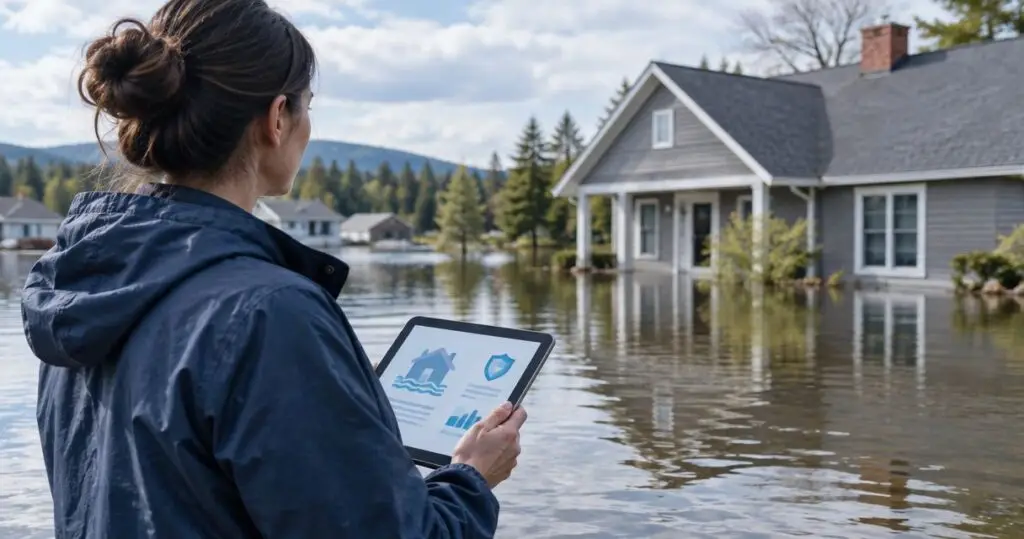
Lakes Region and White Mountains hosts face a second layer of risk that inland landlords don't: seasonal camps and lake homes sit in or near FEMA flood zones, and a standard homeowners or landlord policy excludes flood damage entirely. Hosts who list a camp on Winnipesaukee, Squam, or Sunapee for weekend rentals need flood coverage bought separately, and NFIP policies carry a 30-day waiting period before coverage starts — buy in April, not the week before Memorial Day.
“If your homeowners agent doesn’t know you’re hosting on Airbnb, your policy isn’t protecting you the way you think it is.”
Update your homeowners policy before you list the property
Most NH homeowners policies contain a "business pursuits" or "rental use" exclusion that voids coverage the moment you accept payment for overnight stays. Fixing this is the first move, not an afterthought.
- Call your current carrier and disclose the Airbnb or VRBO listing in writing
- Ask specifically whether a short-term rental endorsement is available on your existing homeowners policy
- Confirm whether the endorsement covers occasional hosting (a few weekends a year) versus year-round rental use
- Get the denial language in writing if your insurer says no, so you know exactly what's excluded
- Compare the endorsement cost against switching to a landlord policy built for rental property owners
Cover guest liability separately from your personal liability
Personal liability limits on a standard homeowners policy (often $100,000 to $300,000) were built around family and invited-guest risk, not paying strangers cycling through your home every few days. Short-term hosting statistically increases the number of people on your property, which increases the number of chances for a fall, a dog bite, or a pool accident.
- Raise your liability limit to at least $300,000, and consider $500,000 if you host a pool, hot tub, or dock
- Ask whether the policy covers medical payments to guests regardless of fault, separate from liability defense costs
- Confirm coverage extends to shared spaces like driveways, decks, and stairwells guests use to access the unit
- If you have a dog on-site, check that liability coverage doesn't exclude your breed — some NH carriers do
- Layer in dog liability coverage if your current policy carries a breed exclusion
Insure the dwelling for business-level use, not personal-only use
A property rented on Airbnb sees more wear, more turnover, and more risk of theft or vandalism between bookings than an owner-occupied home. Dwelling coverage written for personal use can pay out at a lower rate — or get denied — once the insurer learns the property was a short-term rental at the time of loss.
- Rebuild-cost coverage should reflect current NH construction costs, not the original purchase price
- Ask whether vandalism and theft are covered during periods the unit sits vacant between bookings
- Confirm smart lock, keypad, and lockbox equipment are covered if damaged or stolen
- Check that the policy doesn't require the owner to occupy the home a minimum number of nights per year
Protect contents and furnishings guests actually use
Everything from the mattress to the coffee maker takes more damage under rotating guest use than it would under a single family living in the home year-round. Standard contents limits are often too low once you've furnished a unit specifically for hosting.
- Inventory furniture, appliances, and linens with photos and receipts, stored outside the property
- Raise personal property limits to match what you'd actually spend to refurnish the unit
- Ask about replacement-cost versus actual-cash-value payout on furnishings — replacement cost pays more
- Cover outdoor items separately: grills, patio furniture, and hot tubs are common Airbnb-specific losses
Add flood coverage if the property sits near water
New Hampshire's lake towns and river corridors put a meaningful share of short-term rentals inside or near mapped flood zones, and homeowners and landlord policies both exclude flood damage by default. This is the step hosts skip most often because it requires a separate purchase and a waiting period.
- Check your property's flood zone status before listing season starts, not after a storm
- Buy NFIP or private flood coverage at least 30 days before your first spring or summer booking
- If the unit is a seasonal camp, pair flood coverage with a policy built for seasonal camps in New Hampshire
- Lake-adjacent hosts should also review flood insurance for New Hampshire lake homes before renewal
Replace lost booking income after a covered loss
If a pipe bursts or a fire damages the unit, you lose rental income while repairs happen — a cost a standard homeowners policy never reimburses. Business income (or loss-of-rents) coverage is built specifically for this gap.
- Confirm the policy pays lost booking revenue, not just repair costs, during the shutdown period
- Ask how the insurer calculates lost income — average nightly rate, prior 12 months of bookings, or a flat estimate
- Check the maximum number of months covered while the unit is unrentable
- If you own more than one rental unit, review coverage under a policy built for New Hampshire rental property owners rather than stacking single-unit endorsements
Stack umbrella coverage once liability limits max out
Hosting increases foot traffic and increases the odds of a serious claim, and a single lawsuit can exceed even a raised liability limit. An umbrella policy sits on top of your existing home and auto liability and extends the ceiling.
- Umbrella policies typically require $250,000-$300,000 of underlying home liability before they'll attach
- Confirm the umbrella specifically names the short-term rental property, not just your primary residence
- Ask whether guest injury claims at the rental are excluded if the underlying policy doesn't disclose Airbnb use
- Review umbrella insurance for New Hampshire homeowners if you host more than one property or carry a pool or dock
Get your Airbnb coverage reviewed
A quick call or text confirms what’s covered before your next booking.
Comparing short-term rental insurance options for New Hampshire hosts
| Option | Best for | Key limitation |
|---|---|---|
| Homeowners policy + rental endorsement | Occasional hosts renting a room or unit a few weeks a year | Many NH carriers cap how many nights per year the endorsement allows |
| Landlord policy | Hosts renting the unit most of the year or owning multiple units | Doesn't automatically include flood or umbrella coverage |
| Platform host protection (Airbnb's program) | A backstop layered on top of real coverage, not a replacement | Doesn't cover lost booking income or your own liability outside guest-caused damage |
| Standalone short-term rental policy | Full-time hosts or vacation-home owners renting year-round | Costs more than an endorsement on an existing homeowners policy |
The verdict: New Hampshire Airbnb hosts need a disclosed rental endorsement or landlord policy plus separate flood and umbrella coverage — platform host protection alone leaves lost income and undisclosed-use denials on the table.
Common mistakes New Hampshire Airbnb hosts make
- Not disclosing the rental to the carrier — this is the fastest way to get a claim denied after the fact
- Assuming Airbnb's host protection replaces personal coverage — it doesn't cover lost booking income or damage that happens between guest stays
- Skipping flood coverage on lake and river properties — then discovering the 30-day waiting period after a storm already hit
- Underinsuring furnishings bought specifically for the listing — replacement cost on guest-use furniture runs higher than personal-use contents limits assume
- Treating a seasonal camp like a full-time rental — camps used only in summer months need different seasonal-property terms than year-round short-term rentals
FAQ
Does homeowners insurance cover Airbnb hosting in New Hampshire?
No, standard New Hampshire homeowners policies exclude business or rental use, which includes Airbnb hosting. You need a rental endorsement added to your existing policy or a separate landlord/short-term rental policy to keep coverage active.
What’s the best insurance for a New Hampshire Airbnb host?
A homeowners policy with a disclosed short-term rental endorsement works for occasional hosts, while a landlord policy fits hosts renting most of the year. Lake-area and seasonal camp hosts should add flood coverage on top of either option.
Is Airbnb’s host protection insurance enough on its own?
No, platform host protection is a backstop for guest-caused damage and liability, not a replacement for your own policy. It typically doesn’t cover lost booking income, theft between stays, or damage during vacancy periods.
Do I need flood insurance for a New Hampshire lake rental?
Yes if the property sits in or near a mapped flood zone, since homeowners and landlord policies both exclude flood damage. NFIP flood policies carry a 30-day waiting period, so buy coverage well before your first spring booking.
How much liability coverage does a short-term rental need?
Most New Hampshire hosts should carry at least $300,000 in liability, with $500,000 recommended if the property has a pool, hot tub, or dock. An umbrella policy on top extends that ceiling further for a serious guest injury claim.
Will my insurer cancel my policy if they find out I’m hosting on Airbnb?
An undisclosed rental can lead to a denied claim or non-renewal once the insurer learns about it after a loss. Disclosing the listing upfront and adding the right endorsement avoids that outcome entirely.
Does short-term rental insurance cover lost income if the property is damaged?
Only if the policy includes business income or loss-of-rents coverage, which standard homeowners policies don’t carry. This coverage reimburses lost booking revenue while repairs are underway after a covered loss.
One last thing
The 30-day NFIP waiting period is the detail hosts miss most in New Hampshire's Lakes Region: buying flood coverage the week before a holiday weekend booking does nothing if a storm hits during that window. Lock in flood and rental endorsements in early spring, well before the 2026 booking season ramps up, not after the first reservation lands.
Related guides
- Landlord insurance for New Hampshire rental property owners
- Vacation home insurance for out-of-state owners in New Hampshire
- How to determine home insurance coverage needs in New Hampshire
- Flood insurance for New Hampshire lake homes
- Umbrella insurance for New Hampshire homeowners